VIDEO: Fronte Aereo - In un campo con i piloti del ANR 2° Gruppo Caccia Italiano.
Posted: Tue May 07, 2024 6:35 pm
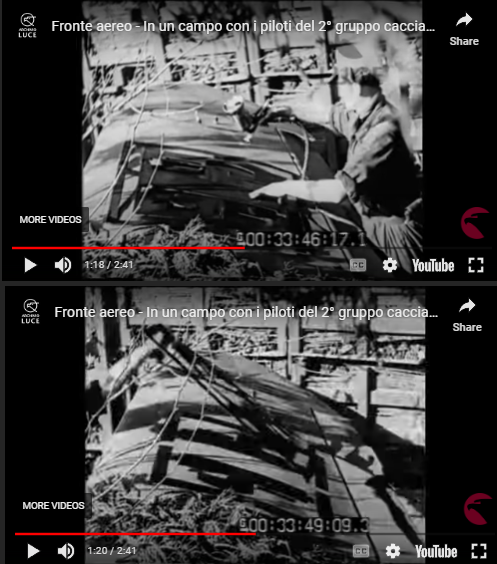
Some may recognize the images in the following Luce film (unfortunately there's no sound) of ANR 2o Gruppo from Ferdinando D'Amico's book (now sadly passed away) "Camouflage and Markings of the Aeronautica Nazionale Repubblicana 1943-1945" - Ferdinando used frames from this film in his book. The images originate from the first week of November 1944 when photographers, including some from SMAR and an Istituto Luce film crew, visited Villafranca to film and photograph the crew of 2o Gruppo which had returned to action 19 October 1944 following Operation Phonix; the German plan to incorporate Italian units directly into the Luftwaffe which resulted in the destruction of all G.55 and C.205Vs, incredibly, destroyed by the Germans themselves, planes that had proven effective in the first half of 1944. The disruption to Io Gruppo was even greater because they now needed to be retrained on the Bf.109 and had to wait 2 1/2 months to do this and wouldn't become operational until 7 March 1945.
Anyway, the planes in the film are late Bf.109 G-6 variants (with the exception of what appears to be a G-4, likely the lone G-4 used by 2o Gr for training and interestingly doesn't show up as a plane on charge at this time), some newly arrived and still in their German markings, all the planes have spiral spinners, 74/75/76 camo and belonged to Nucleo Comando, 2a Sq (yellow) and 3a Sq (white). The unit would move to Aviano on 12 Nov 1944 where on 18 Nov 1944, airfields in north-eastern Italy suffered a series of heavy bombing and strafing attacks from USAAF 15th AF. At Aviano the Italians lost 14 aircraft on the ground but had the unexpected result of having their lost planes (by now worn-out G-6s) replaced in one week with new G-14s and later, the far more capable and powerful G-14/AS equipped with the DB.605 ASM that put the plane on an equal footing with Allied planes until the end of the war. 2o Gruppo would put these planes, and subsequent deliveries of the G-10 DB 605 DCM to good use, proving to be effective until the final days of the war in late April; flying 44 combat missions with the Bf.109, at least 90 enemy aircraft were destroyed, many more damaged, thirty-six pilots and 89 aircraft were lost facing overwhelming odds.
A thing to note at this time is that the ANR put up an effective air defense until the end of the war, which mirrored the Axis-defense on the ground, using flak and radar to vector pilots unto targets, often forcing unescorted Allied bombers to drop their payloads early - they were effective enough to get the attention of the "German High Command, was impressed by the excellent results achieved by Italian pilots, continued to provide them with still more new equipment." The last Luftwaffe fighter unit departed Italy in the first week of September 1944 leaving the ANR to defend southern airspace. The other thing to note is that at no point, even until the very end, did the Germans have difficulty replacing losses quickly with the latest variant of their famous fighter.
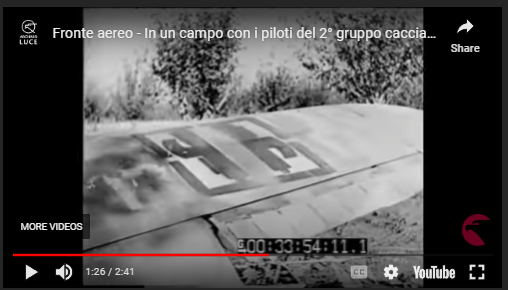
Markings: note the stencil used to spray the top wing fasci and the unusual white background on the outer lateral edges of the fasci and inside border. Also note how the tricolor flag yellow-fringes were painted onto the fuselage, and the now combined German-Italian markings (beginning from October 1944, and only to 2o Gr planes, 1o Gr painted over the fuselage Balkenkreuz), with Italian fuselage and rudder flags painted next to the fuselage and underwing Balkenkreuz; top wing Balkenkreuz were painted over with fasci. Small white individual aircraft number painted on the noses of some aircraft that characterized planes of 3a Sq. Toward the end of the war the top wing Balkenkreuz would stay on and unit insignia disappeared.
Enjoy the video.
Anyway, the planes in the film are late Bf.109 G-6 variants (with the exception of what appears to be a G-4, likely the lone G-4 used by 2o Gr for training and interestingly doesn't show up as a plane on charge at this time), some newly arrived and still in their German markings, all the planes have spiral spinners, 74/75/76 camo and belonged to Nucleo Comando, 2a Sq (yellow) and 3a Sq (white). The unit would move to Aviano on 12 Nov 1944 where on 18 Nov 1944, airfields in north-eastern Italy suffered a series of heavy bombing and strafing attacks from USAAF 15th AF. At Aviano the Italians lost 14 aircraft on the ground but had the unexpected result of having their lost planes (by now worn-out G-6s) replaced in one week with new G-14s and later, the far more capable and powerful G-14/AS equipped with the DB.605 ASM that put the plane on an equal footing with Allied planes until the end of the war. 2o Gruppo would put these planes, and subsequent deliveries of the G-10 DB 605 DCM to good use, proving to be effective until the final days of the war in late April; flying 44 combat missions with the Bf.109, at least 90 enemy aircraft were destroyed, many more damaged, thirty-six pilots and 89 aircraft were lost facing overwhelming odds.
A thing to note at this time is that the ANR put up an effective air defense until the end of the war, which mirrored the Axis-defense on the ground, using flak and radar to vector pilots unto targets, often forcing unescorted Allied bombers to drop their payloads early - they were effective enough to get the attention of the "German High Command, was impressed by the excellent results achieved by Italian pilots, continued to provide them with still more new equipment." The last Luftwaffe fighter unit departed Italy in the first week of September 1944 leaving the ANR to defend southern airspace. The other thing to note is that at no point, even until the very end, did the Germans have difficulty replacing losses quickly with the latest variant of their famous fighter.
Markings: note the stencil used to spray the top wing fasci and the unusual white background on the outer lateral edges of the fasci and inside border. Also note how the tricolor flag yellow-fringes were painted onto the fuselage, and the now combined German-Italian markings (beginning from October 1944, and only to 2o Gr planes, 1o Gr painted over the fuselage Balkenkreuz), with Italian fuselage and rudder flags painted next to the fuselage and underwing Balkenkreuz; top wing Balkenkreuz were painted over with fasci. Small white individual aircraft number painted on the noses of some aircraft that characterized planes of 3a Sq. Toward the end of the war the top wing Balkenkreuz would stay on and unit insignia disappeared.
Enjoy the video.