At the beginning of WWII the situation of the
Regia Aeronautica in AOI was far from adequate, with but a single
Stormo assigned to the area. This situation was recognized at the
higher levels of the Regia Aeronautica and a program was initiated
in 1939 to reinforce these units both quantitatively and
qualitatively as follows:
1) The transport of 41° Stormo to AOI
consisting of 36 SM.79s via air from Italy to AOI
through
Egypt
2) Transport via sea of another 36 SM.79s in
order to replace one Stormo of Ca 133s
3) A sufficient shipment via sea of materials,
fuel and ammunition for one year of operations.
The course of events that would follow would
only allow for this program to be partially executed. Only 18 SM.79
could be transferred in flight because of restricted flights through
English airspace (
Egypt
) in January 1940
imposed by the British. 36 Fiat CR 42s were sent via sea from
Naples in place
of the 36 SM.79 because of the closing of sea traffic through the
Suez
Canal. Fuel, materials and ammunition would
also not reach the colony.
The Comando Aeronautica A.O.I.
based in Adis Abeba were organized into three Sectors:
Northern Sector (Asmara), Central Sector (Adis Abeba), Southern Sector (Mogadishu) and
the total forces available to those sectors were as follows:
-14 bomber squadrons of Caproni Ca 133s with 6 aircraft each
-7 bomber squadrons of SM.81s with 6 aircraft
each
-2 bomber squadrons of SM.79s with 6 aircraft
each
-2 fighter squadrons of Fiat CR 32s with 9
aircraft each
-2 fighter squadrons of Fiat CR 42s with 9
aircraft each
-1 reconnaissance squadron of IMAM Ro 37s with
9 aircraft

Fiat CR.42s over Eritrea, 1940. These fighters
took a considerable toll on
Blenheims and Wellesley's (Shores)
In total there were 138 bombers, 36 fighters
and 9 reconnaissance aircraft.
In reserve there were 140 aircraft of which 59
were flight worthy:
35 Ca133
1SM81
1 SM79
5 CR32
2 Ro37
Remaining aircraft were in a state of repair
with about 48 aircraft being used for replacement parts:
1Ca133
16 SM81
2 SM79
11CR32
2 CR42
2 RO37
A nucleus of air transports was also available
and was composed of:
9 SM73
9 Ca133
6 Ca185
1 Fokker FVII
These aircraft were used for the transport of
staff and materials, but not outfitted for combat.
On 10 June 1940 the following inventories of
material were available:
-107,000 tons of aviation fuel
-5,300 tons of bombs
-8,620,000 cartridges for machine-guns
-500 aviation motors of varied types (ground
reserve).
Aircraft repair shops were provided through
local workshops of Piaggio and Caproni, as well as from SRAM, servicing
capability included the overhaul of 15 aircraft on a monthly
basis.
SuperAereo
expected an impending conflict and data
gathered on enemy forces facing the Regia Aeronautica were exact and
as follows:
-8th Fighter Sqd with 71 Blenheims of the RAF
-94th Fighter Sqd with 34 Hurricanes of the RAF
-11 fighter bombers, Blenheims of the RAF
-15 Wellesley
bombers of the RAF
- In Nairobi
53 bombers between Hart,
Audax, Blenheims of the RSAF
- In Gibuti, 15 bombers Potez 63, 15 reconnaissance aircraft
Potez 25, 11 Fighters
Morane Ms 4, 11
Fighters Morane Ms
406 (French AdlA)
The RAF with its Blenheims and Hurricanes had a modern
qualitative superiority over the Regia Aeronautica types together
with the advantage of being able to supply these planes with fuel
and replacement parts from the motherland, this being most difficult
for the Regia Aeronautica. To its disadvantage, the Commonwealth
airbases were dispersed which made it relatively difficult to
provide adequate aerial cover or to reinforce each other. The
antiquated Hart and Audax were considered less effective,
but still served the function as ground decoys.
The high command of the Armed Forces
FF.AA.
in A.O.I. had prepared a meticulous plan for
the conquest of Somalia that began 3 August 1940, giving priority to
the Regia Aeronautica, to which mainly the task was entrusted to
neutralize the enemy air forces, the enemy land forces were not
considered a problem.
Aerial reconnaissance at the beginning of the
hostilities indicated Commonwealth air bases were concentrated
mainly in the Aden sector and did not have bases sufficiently
forward in order to effectively disrupt any major Italian advance,
however, for the same reasons the RA was also restricted in its
capacity to halt any major Allied advance which would prove to be
the case later on in the war
The operations plan for the RA, approved by
S.A.R., the Viceroy Amedeo di Savoia, Duca of Aosta would be carried out as
follows:
1) Pin down enemy forces in Somalia to allow
unrestricted flow of reinforcements through
Sudan
via air.
2) Eliminate or attack forward airfields and
support points near Aden
so as to force the enemy to operate from bases further
from the front, and so render the support of its air forces for land
operations as ineffectual.
3) Impede the eventual arrival of
reinforcements via sea by attacking ports of arrival.
4) Render the support to our troops in as
timely a manner as possible by occupying opposing air fields as
quickly as possible.
The plan seemed logical, however it did not take into
account of capability to Italian aircraft in this theater.Fortunately at
this time, the English had little interest in Somalia, and
they were more preoccupied with transporting their Hurricanes and
older Blenheims into
Sudan
than to intercept RA aircraft. For this plan,
there were 85 aircraft consisting of 19 SM81, 11 SM79, 21 Ca 133, 9
Ro37, 9 CR32 and 16 CR42. On 20 July, intense aerial reconnaissance
was begun over a large region preceding the Italian ground
offensive. The build up of Italian ground forces did not escape the
Commonwealth who had carried out various ground attack missions on
Italian air fields and troops, however causing little damage. During
this period Italian aircraft succeeded in shooting down two enemy
aircraft.
On the evening of 3 August the Regio Esercito begun its
offensive and continued its advance until 7 August without
encountering any resistance.Some resistance was encountered near
Karrin, however
Allied forces were eventually overcome on 19 August and the Italians
reached Berber. The RA at this time carried out ground support
missions without meeting much resistance, and bombers attacked the
ports of
Aden
and Berbera as well as the
airfields of Hargheisa, Burao and Faruk. From 7 August air activity
increased in which RA bombers met for the first time enemy fighters
at
Aden
.Reconnaissance
had indicated the presence of enemy aircraft at this airfield as
well the airfield at Faruk with the consequent destruction of
all the enemy aircraft destroyed on the ground. At this point the RA
focused its support on ground troop movements, until the occupation
of the Somaliland ended.
Given this success, the Commonwealth aircraft
destroyed on the ground were mostly antiquated biplanes, and in some
cases WWI surplus, Hurricanes and Blenheims having been flown to
Egypt
.
In total during the conquest of British Somaliland, 935
hours were flown, of which 376hrs were flown in ground attack and
strafing missions, 204 hours were flown in interception missions and
355 hours flown in reconnaissance missions. The Italians reported
the following : in total 14 enemy aircraft were destroyed, 9
destroyed on the ground and 5 shot down in air to air combat,
against 4 losses, 2 SM81, 1 SM79, 1 CR32, with 6 officers killed in
action, 2 NCOs and 12 regulars.
To the Commonwealth forces, a report issued to
General Wavell by
Vice Air Marshal Reid, commander of the air forces of Aden in which
he indicated the RAF had carried out 19 aerial reconnaissance
missions, 26 ground attack missions and 8 interceptions employing
all 184 aircraft, losing 10 aircraft on the ground and 4 in the air,
while destroying 4 enemy aircraft (an almost exact appraisal of
Italian claims), although it should be pointed out the main task of
the British Commonwealth air forces at this time was to protect the
evacuation of its troops towards the port of Aden.
Until the end of September 1940 there was a
lull period in combat, the short but remarkable effort made for the
conquest of the Somalia
had created an
acute shortage of materials which forced the Italian High Command
unto the defensive from this point forward. In October the
British
Commonwealth air forces launched attacks at the bases of
Assab and Massaua as well as harrying
ground troops. During this time the Commonwealth forces had received
a good number of reinforcements, and to make matters worse for the
Italians, there was a total absence of air defense that allowed
Commonwealth bombers to operate almost unimpeded, except for a few
CR32s equipped as night fighters.
To the defense of Mogadishu
, 9 Ro37 reconnaissance
aircraft were assigned and used in the fighter and interception
roles because of a lack of fighters in this area. However, in
spite of the chronic shortage of aircraft and fuel, the Regia
Aeronautica still remained active, and during the month of September
missions were carried out against convoys that journeyed through the
Red Sea as well as isolated night time missions of SM 81s and Ca
133s on the Port of
Sudan.In October, 84
aircraft were lost with a further 85 damaged or in repair, against
40 Commonwealth aircraft destroyed. The loss of aircrew was always
devastating, however even more so in this theater were the loss of
any aircraft because of the unlikelihood of replacements, and to
this end the Viceroy sent urgent requests for the shipment of 60 SM
79 and 50 Fiat CR 42.
If we consider the influence and importance of
supplies on the conduct of the war, it is worthwhile mentioning this
aspect of operations. In spite of the loss of the ports in
Somalia
, the Commonwealth still could reinforce its troops with
men and equipment as well as supplies almost unabated, something the
Italians found practically impossible, especially considering its
own limited national economic resources. In regard to its bombers,
the resupply of
aircraft to AOI was certainly possible although not easy. For
example, the SM79 required a certain level of technical support on
air fields located in extreme locations in Cirenaica.It was
necessary to set aside on these air fields, fuel, parts, and
aircraft engines.However, remotely located air fields in
Cirenaica were too
small and exposed to Commonwealth attack to store large supplies of
materials.The net result was that only flights of
three aircraft could be made at any one time.
In regard to fighters, the in flight transfer
of aircraft was not possible due to the limited range of the
fighters. Moreover, not all transport aircraft were equipped for
transferring heavy equipment. Only the SM82 had the ability to
embark aircraft by disassembling Fiat CR42s for example. However
from 10 June 1940 to 14 November of the same year, 37 SM 79 were
transferred to AOI and 13 CR 42.Transfers ceased temporarily at the end
of 1940 because of the loss of airfields in Cirenaica. In February 1941 only 5 CR 42
reached AOI. In March 1941, through extreme efforts 15 CR 42s
arrived at
Asmara
. It is
interesting to note the dispachtes between the Viceroy and the
High Command in
Rome
during
this time: (G
fonte G.Santoro- L'Aeronautica Italiana nella
Seconda Guerra Mondiale vol.II - Ed. Esse
)
"n.42563 - In the operations commencing 17
January, the Air Forces of the Empire have sustained the following
losses: lost aircraft due to combat, aircraft destroyed on the
ground 17; aircraft lost due to air-to-air combat 3; 24 aircraft
damaged and will not be operational until March. In total 44
aircraft in the 13 days of combat have been destroyed or rendered
unusable in the near term. The following aircraft are operational as
of 31 January 7 x S.79, 6 x S.81. 37 x Ca 133, 17 x CR 32, 8 x CR 42, 2 x Ro 37,
1 x S 82 for a total of 82 aircraft. Pongo assess the enemy strength to have
been greatly enhanced via the introduction of modern fighter types
such as the "Hurricane" and Gloster. Operating the Ca 133 without
proper fighter escort is impossible rendering the type unusable and
further eroding our capacity to wage war. Considering this
situation, continuing operations in the case of the Air Force of the
Empire and its employment is sustainable only for another 15 days.
Please put this to your attention a matter of urgent necessity to
send an adequate number of aircraft and supplies to A.O.I. If the
situation can not be rectified shortly I propose using remaining
personnel of the Regia Aeronautica in forming a ground unit “
Divisione Azzurra”
composed of military national and indigenous
troops. The division will be employed in land operations to flank
our armed forces and share their fate.
AMEDEO OF SAVOIA"
Dated communication 4 February 1941:
“n. 42744 - In operations, a further number of
aircraft have been lost, 8 Ca 133 and 3 CR 42, 29 Ca 133 are
remaining whose serviceability is well known; however the staff will
continue forward until the extreme sacrifice.
AMEDEO OF SAVOIA."
Dated communication 17 March 1941:
"n. 46558/1 - Today, the entire English
effort is now concentrated upon us, aircraft have been reduced to 3
S.79, 2 S.81, 9 Ca 133. Excluded are the Ca 133 which may only be
used for transport operations and the S.81 for limited operations. I
have at my disposal only 3 S.79 to support the battle at Keren, the adversary
employs tens upon tens of aircraft, and bomb and strafe our lines
continuously unmolested. The indigenous troops only fear aerial
strafing, consequently affecting their moral resulting in widespread
desertion. Yesterday 105° and 112° battalions, units still operating
with some efficiency were nearly annihilated by severe bombing and
strafing attacks. We can not conduct attacks at this time. If help
is to be sent, please do not send one aircraft at a time, but tens.
Since 2 February only one aircraft has been received, I repeat only
one S.79, while having withdrawn 12 aircrews to
Italy
for operations
elsewhere. If you do not want to run serious risks in compromising
the battle of Keren,
you must send sufficient supplies of aircraft and crew at all
costs.
AMEDEO OF SAVOIA."
Personal answer of Mussolini: "7361 Op. For the Viceroy. In
reference to communication n.46558, our forces have encountered some
difficulty to use the intermediate ports of call of Cufra and Auenat, and it was
necessary to prepare fuel installations at new bases, which have
resulted in the delayed shipment of S.79 aircraft. A further
attempt to reinforce your units using the port of
Rodi
turned
out unfruitful and resulted in a further loss of two aircraft.
Another attempt is being made in order to satisfy necessity;
currently Pirenaica
is transferring 6 S.79. Another 30 aircraft have begun transfer with
the maximum of speed. You are sure every possible effort is being
made to sustain your forces.
MUSSOLINI."
However the reality of the situation in
Rome
was
different, as seen in a follow-up minutes issued from a meeting of
the S.M. Generale M.
held in March: " ...
Ecc
. Guzzoni provides a reading of the last
telegram sent from A.O.I., deliberating on how much aid could be
provided; it was viewed the campaign in AOI could not be won and
what aid could be provided represented but a drop in the sea. Gen.
Pricolo (C.S.M. of
the N.d.R
Aeronautics.) considered what could be sent and decided on a
shipment of 6 S.79 and 30 CR42."
In this meeting some consideration was also
given to sending the Re.2000 in place of the CR 42, Pricolo knowing the
characteristics of this optimal Reggiane fighter and knowing that it
might have been used in all theaters of operations in Africa if not
for lengthy and costly modifications; eventually decided against
this consideration, sending instead tropicalized CR.42s that were ready for
shipment.
28 March "n.001079/Op. The commander of the Air
Forces of A.O.I. communicates the situation in Eritrea, put into effect
to suspend all shipments of aircraft to the A.O.I."
Following this message, another was issued in
April 14 in which the possibility of using Massawa as a base was suggested to land
the S.79s, however in Rome 27 April, it was decided all attempts to
resupply AOI would be
suspended and the Amedeo di Savoia himself soon ended all further
requests for resupply.
In the months of October and November 1940, in
preparation for their final attack in the Northern Sector of AOI,
the Commonwealth aerial activity intensified against civilian and
military targets, in particular against military airfields.The
Commonwealth using the same tactics, night attacks, a pair of
aircraft, or a maximum of three, would bomb military targets using
incendiary bombs.RA fighters without the aid of
searchlights or radar equipment would oppose these attacks using
only elderly modified CR 32s. However the Commonwealth incursions
achieved no tangible results destroying only three CR 42s on the
ground, against which RA aircraft succeeded in attacking the
airfield at Ghedaref
using the CR 42 destroying 11 Commonwealth aircraft on the ground.
6 November a surprise attack was made on Gallabat while RA aircraft
were supporting of its land forces, however the RA still succeeded
to repulsing the attack. Two days later Ca 133s destroyed 7
Commonwealth aircraft for the loss of 2 Ca 133.Although
successful, it was obvious, the effort was enormous, in more so that
the Commonwealth forces were advancing in other sectors. The
Commonwealth attacks ceased during this time, and it would have been
opportune time to carry out counterattacks on the port of Sudan
Port, however remaining aircraft would not permit this. The Air
Force of the A.O.I. was not in any condition to allow further
losses, and was already imposing the criterion of economy on men and
means, the consequence
was that losses incurred were light, however not because of the
enemy but a consequence of RA inactivity.
Returning to 10 January 1941, the number of
airworthy aircraft was 164 Ca 133, 4 SM 81, 5 SM 79, 2 CR 32, 2 CR
42, 1 SM 82, in repair were 40 Ca 133, 10 SM 81, 12 SM 79, 5 CR 32,
10 CR 42, 3 Ro 37 therefore 158 aircraft were operationally ready
and 80 in repair. Other concerns were the scarcity of fuel, only
6500 tons was available.
19 January the Commonwealth forces began their
advance into Eritrea
, towards Cassala Agordat and Barentu without encountering much
resistance, the Air Forces of the AOI being unable to support its
ground troops.8 February the Commonwealth Forces
stopped their advance in front of the stronghold of Keren, and there they would
remain for 54 long days, the stronghold being defended under the
skillful leadership of General Carmineo.
In the southern sectors, the Commonwealth
forces pressed home their attacks to prevent reinforcements or
support of Italian troops at Keren. Against the Commonwealth aerial
attacks, no defense could be mounted, the old Ca 133 however were flung into battle with
much courage against the Commonwealth columns inflicting damage but
enduring serious losses. 5 CR 42s were still operational at this
time, however could do little. 14 February, all aircraft were in
repair 23 Ca133, 7 SM 81, 9 SM 79, 11 CR 32, 13 CR 42. At this
point, under pressure from the enemy, aircrew abandoned airfields
and withdrew towards
Asmara
.On 15 March all
aircraft remaining in AOI were as follows: 10 Ca 133, 3 SM 81, 4 SM
79, 8 CR 32, 15 CR 42.On the same day Keren fell, however some isolated
victories were recorded on 6 March, and the Air Forces of the A.O.I.
ceased to exist.

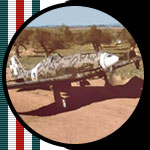
Caproni Ca.133 Colonial Bomber, 1941
At this point air personnel were absorbed into
ground units of the so-called the "Reparti
Azzurri
" and used to defend the last bastions
of the empire, with 3 battalions totaling approximately 1,100
troops. Thirty pilots and ground crew however did succeed in using
two old SM 73s to escape from Adis Abeba and arrived at a neutral airport
in Saudi
Arabia from whence they re-entered
Italy
.
On 2 May the Air Force Commander of A.O.I.,
together with S.A.R. were taken captive followed by the Viceroy at
Amba Algi, on 17 May. On the
first of June the commander of the Southern Sector and the Governor
of Galla and the
Sidama were forced to
withdraw while ordering the garrison of Aggarò to remain in place. This garrison
was formed from troops of the “Reparti Azzurri”, and a mixed group of national
and indigenous troops, equipped mainly with machine-guns taken from
aircraft and a some
provisions. 17 June the fortress at Aggaro was besieged with about 8000
Ethopian "soldiers”
who promptly abandoned any kind of resistance on 21 June. At
Gondar
the last
stronghold still in Italian hands housed 10,000 liters of aviation
fuel and 1 Ca 133 and two CR
42 in air worthy condition. One of the two CR.42s was made flight worthy
from parts taken from two Commonwealth aircraft shot down and from
another aircraft abandoned, as well as parts from a Hawker
Hurricane. The
Caproni
, was used to resupply the
isolated garrison of Uolchefit. The CR 42s succeeded in
shooting down two
Wellingtons
during this time and
the lone Ca 133 was damaged on the ground during an attack by the
Commonwealth. The CR 42s were then transformed into transports, and
so equipped with canisters containing 30 kg of provisions and
continued the resupply of Uolchefit. 10 September the lone Ca 133
was made flight worthy again and resumed the supply of Uolchefit. 21 September the
“Old and Glorious” Caproni was destroyed as result of an
accidental ground fire. 15 October the Second lieutenant Ildebrando Malavolti and Marshal
Giuseppe Mottet
offered volunteers for a desperate attack on
Asmara
and Gura, after which making their attack
the pilots were to parachute from their aircraft, however one of the
two CR 42s was destroyed on the ground before the mission was
carried out, the other taking off and the pilot KIA. The day after
the attack, pilots of the RSAF dropped the following message at
Gondar
: "Honor
to the pilot of the agile Fiat, he was valorous and courageous.
The Pilots of the Royal South
African Air Force." On 27 November,
Gondar
falls to the Commonwealth forces and with
this loss the Empire was also lost.
Mario
Visintini
I'd like to write a few words on Mario
Visintini and with him, that we remember all the pilots and airmen
of whatever order and degree who fought in that very difficult
theatre; having given themselves totally to the cause of their
countries.

Born at Istria on 26 April, 1913, Capitano
Mario Visintini became the most famous fighter pilot of the East
African campaign.
On completing his higher-education, he applied to
the Academia Aeronautica but
failed the medical exam. Undaunted, Visintini entered the
air training center at Caproni di Taliedo
in the spring of
1936. Transferred to
Lecce
, Visintini followed the usual training
program. He began flying a Breda Ba 25, then moved to aerobatic training,
and then spent 30 hours training on a CR 20. In 1937 Visintini was
assigned to the famous Italian squadron, the 97a Sq. of Francesco
Baracca (the highest scoring
Italian Ace of WWI) at
Gorizia. Visintini
volunteered for
Spain
in the 1938
and claimed 4 victories. He was then assigned to 4° Stormo C.T.
In
January of 1940 he was promoted to Lieutenant and three months later
he was transferred to
Eritrea
. From his
training, one could see a passionate and avid aviator, those who knew
him were greatly impressed by his character, a humble and quite
individual, not pretentious, he was methodical, precise and very
professional. Visintini was assigned to 412a Sq., and the CO Raffi, in as much as all
his pilots came from 4° Stormo, would choose the 4° Stormo insignia
of the “C
avallino Rampante”
as the squadrons emblem, except that a black
background would be adopted representing the continent of Africa set
against the distinctive “C
avallino Rampante” furnished in
red. From 10 June 1940 Visintini was involved
in twenty interceptions shooting down two bombers and earning
himself the Silver medal. Other victories followed in which a
Vickers Wellesley was forced down intact; forced to land on an
island garrisoned by the Regia Marina. With his commander Raffi, Visintini would
capture the imagination of the Italian public in an episode marked
by brazen flare and courage when on 12 December 1940, after
attacking the British airfield at Goz Refeb, the CR.42 of Raffi had been forced down behind enemy
lines near the airfield of Goz Refeb.Visintini without hesitation landed his
aircraft and recovered his CO under enemy fire and returned safely
with his CO on his lap. Following some time off Visintini returned
to action this time destroying three armored cars attempting to
destroy Italian aircraft and setting the armored cars afire and
unusable. For this action Visintini was promoted to Captain.
However, by now the situation in the horn of Africa was worsening, and
in the air, if before there was some numerical parity, now it was
more difficult to survive in duels against such aircraft as the
Hurricane. Nonetheless attacks continued on
opposing airfields unabated with Visintini destroying many enemy
aircraft on the ground. Visintini would be confirmed with 32 shared
aircraft destroyed on the ground. On 10 February after completing a
ground attack mission near
Keren,
and after destroying a Hurricane,
while flying over the area of Sabarguma searching for two missing
airmen, Visintini accidentally crashed his aircraft into a mountain
under low visibility conditions. Visintini was 26 years old, he is confirmed with 17
and 2 destroyed aircraft, 1 probable in fifty combat missions.
Technical
Aspects
It is not the intent here to provide a detailed
technical analysis of the aircraft engaged in this theatre because
hundreds of books already exist covering this material, but suffice
to say that Italian pilots of the Air Forces of the AOI flew, in
general, with aircraft 10 years older in design than their
respective English counter parts. Without radios, without up to date
navigational equipment, and aircraft sometimes 150 km/h slower than
their respective counter parts, RA pilots made due with what they
had, however some times courage alone is not enough. The following
is a table with aircraft specifications of the main aircraft
employed in aerial actions from June 1940 to the November 1941.
BOMBERS/ATTACK AIRCRAFT
|
|
Caproni Ca.133
|
Savoia Marchetti SM.79
|
Savoia Marchetti SM.81
|
Bristol Blenheim
Mk.I/IV
|
Vickers Wellesley Mk.I
|
|
Altitude
|
5500 m
|
7000 m
|
7000 m
|
6700 m
|
10000 m
|
|
Range
|
1350 km
|
1400 km
|
1800 km
|
2350 km
|
1780 km
|
|
Armament
|
4 mtg da 7,7
450
kg di bombe
|
2 mtg da 12,7
3
mtg da 7,7
1250 kg di bombe
|
5 mtg da 7,7
650
kg di bombe
|
4/8 mtg da 7,7
2000 kg di bombe
|
2 mtg da 7,7
905
kg di bombe
|
|
Engine
|
3 Piaggio Stella P.VII C16 radiali da 450
hp
|
3 Alfa Romeo R.C.126 radiali da 750
hp
|
3 Alfa Romeo R.C.125 radiali da 680
hp
|
2 Bristol Mercury XX radiali da 920
hp
|
1 Bristol Pegasus XX radiale da 925
hp
|
|
Crew
|
4
|
6
|
6
|
3
|
2
|
|
Max Speed
|
288 km/h
|
430 km/h
|
340 km/h
|
428 km/h
|
367 km/h
|
|
First Flight
|
1932
|
1937
|
1935
|
1939
|
1937
|
Immediately evident is the main aircraft for
ground attack and strafing, the Ca 133 is clearly inferior to the
Blenheim and also the older Wellesley. The SM 81 was designed for
the dual role of transport and bombing, and although it was more
modern than the Ca.133, and a very rugged machine, it was basically
a "colonial" aircraft where no aerial opposition was expected.
Nevertheless theirs crews were flung against the Commonwealth
forces. The SM 79 was a very successful aircraft of real war value
with great speed, good payload, however the plane was used
primarily in the ground attack role, although it was successful in
this role at Keren.
The numbers of SM 79s unfortunately did not cover the operating
necessities. The Wellesley was found in Kenya and
Sudan
since it was declared obsolete for European
operations as well as Pacific, RA aircraft succeeded in downing
several of these aircraft. Five of the 17 victories of Visintini
were obtained against these bombers. The Blenheim was put into good
effect as a ground attack aircraft and its payload allowed for 4
additional machines in the ventral position for defense.
TRASPORT
|
|
Savoia Marchetti Sm 82
|
Bristol Bombay
|
|
Altitude
|
6000 m
|
7600 m
|
|
Range
|
3000 km
|
1415 km
|
|
Armament
|
4 mtg da 12,7
4000 kg di bombe
|
2 mtg da 12,7
2
mtg da 7,7
900 kg di bombe
|
|
Engine
|
3 Alfa Romeo R.C.128 radiali da 860
hp
|
2 Bristol Pegasus XXii radiali da 1010
hp
|
|
Crew
|
4
|
4
|
|
Max Speed
|
370 km/h
|
309 km/h
|
|
Payload
|
5000 kg di materiali o
28 paracadutisti equipaggiati o
un Fiat Cr42 completo e due motori di
ricambio.
|
1500 kg di materiali o
29 soldati equipaggiati
|
|
First Flight
|
1939
|
1939
|
The SM82 "Marsupiale" was
a purpose built transport
aircraft, the first of its kind, and was a remarkable aircraft with
incredible cargo capacity and long range, and thanks to this
aircraft, supply of the Empire, particularly in remote locations was
assured to some extent. The SM.82 could also be employed as a
heavy-bomber, but it was not intended for this role. The Bristol Bombay
was an operational failure, both as a transport aircraft and as
bomber. The
Bombay
was an
aircraft in the same class as the Ca 133 and SM 81 but greatly
inferior in maximum speed, and was perhaps too delicate a machine to
operate as a colonial airplane, however again, it had insufficient
performance in order to operate in other theatres. In comparison,
the Marsupiale was
designed to operate exclusively from air fields in Africa, the plane
also carried out missions and raids from Rome to Adis Abeba, on several occasions crews bombed
the port of Aden on the route to Rome after having unloaded
transported material to the colony.
FIGHTERS
|
|
Fiat CR.32
|
Fiat CR.42 Falco
|
Gloster Gladiator
Mk.I
|
Hawker Hurricane Mk.I
|
|
Altitude
|
9000 m
|
10500 m
|
10200 m
|
10180 m
|
|
Range
|
750 km
|
785 km
|
715 km
|
845 km
|
|
Armament
|
2 mtg da 7,7
|
2 mtg da 12,7
|
4 mtg da 7,7
|
8 mtg da 7,7
|
|
Engine
|
1 Fiat A30 in linea da 600 hp
|
1 Fiat A74 RC Radiale da 850 hp
|
1 Bristol Mercury VIII radielae da 840
hp
|
1 Rolls Royce Merlin il linea da 1030
hp
|
|
Crew
|
1
|
1
|
1
|
1
|
|
Max Speed
|
375 km/h
|
440 km/h
|
414 km/h
|
550 km/h
|
|
First Flight
|
1933
|
1939
|
1937
|
1937
|
In regard to fighters, and at least until the
appearance of the Hurricane during the English offensive of January
of 1941, the situation was not dramatic and the CR42 could perform
valid combat service against the Gladiator.The CR32 so
equipped with two 50 kg bombs from pylons mounted under the center
forward fuselage performed some sterling work as a ground attack
aircraft. As soon as the Hurricane appeared in greater numbers, RA
fighters could do little against this quantitative and qualitative
advantage.

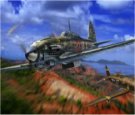
Fiat CR.42 of 413 Sq., 1941
The only aircraft specifically designed for
reconnaissance duty in this theatre was the Ro37 (the Commonwealth
forces had none). The Ro.37 was a sturdy biplane, excellent in its
role but requiring some escort. For reconnaissance, the Commonwealth
forces used unarmed Blenheims and would fly an army observer
in place of the bomber. French aircraft in Gibuti were not used militarily and
therefore are not listed here.
References
[1] MACH1 Enciclopedia dell'aviazione
Vol.2-
AA.VV, ed.EDIPEM, 1977.
[2] L'Aeronautica Italiana nella Seconda Guerra
Mondiale, G.Santoro, ed. Danesi, 1960.
[3] Dimensione Cielo Vol 1/2/3, M.Caso,
B.Benvenuti, E.Brotzu, ed. Bizzarri, 1975.
[4] Le grandi Battaglie del XX secolo, A.
Petacco, ed. Curcio, 1985.
[5] Storia della Seconda Guerra Mondiale
Author: AA.VV, ed. Purnell-Rizzoli, 1960.
Photo
Credits
[1]
Italian Aces of World War 2, Osprey Publishing, G. Massimello and G.
Apostolo, 2000.
[2]
The Regia Aeronautica Part I, Squadron Signal Publications, C. Shores,
1976.
|
|

|
Giulio Gobbi is 43 years
old and is a Senior Software Analyst who lives and
works in Rome. Giulio has been married to his wife Nadia for 15
years and is the proud father of two beautiful
children, Elena (12) and Leonardo (8). His many
interests include Italian history, aircraft, modeling, math and music. Giulio
is also a Webmaster of Modellismo Piu’,
M+” (www.modellismopiu.com), the largest online modeling website in
Italy. Giulio spends his free-time on historical research, static modeling
and playing the guitar. |
|
|