|
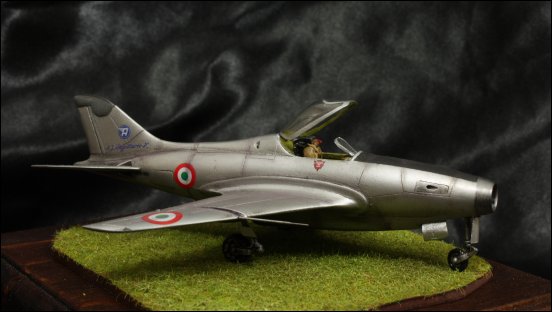
SEM Model 1/72 Aerfer Sagittario II by Salvatore Barresi |
|

Click the STORMO! Eagle to return to the Gallery |
|
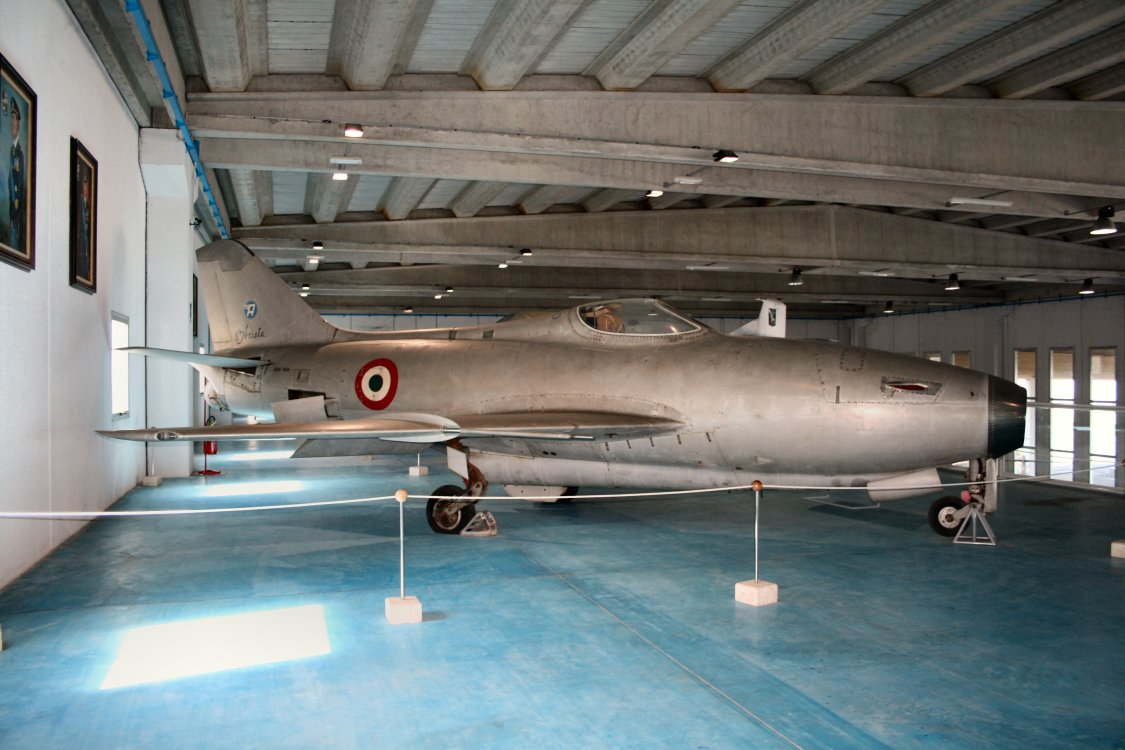
On December 4, 1956, for the first time, an aircraft designed and built in Italy exceeded supersonic speed in a dive. The aircraft was the Sagittario II, a light fighter designed by Sergio Stefanutti in the first half of the 1950s, aimed at equipping the AMI. This did not happen, as the Fiat G.91 was selected at the competition held by NATO in 1953 for the production of a tactical support fighter. As a result the Sagittario remained at the prototype stage. Stefanutti had started thinking about this project in earnest in 1949, and in spite of numerous financial problems had built an initial propeller-driven experimental aircraft (the 1952 Freccia). This was designed to study the behaviour of the wing, then a jet-powered prototype (Sagittario I), which flew in January 5, 1953. The Sagittario II flew in 1956, and the Ariete and Leone prototypes derived from it. |
|
|
|
|
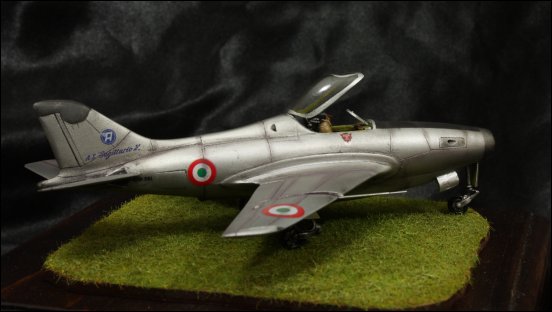
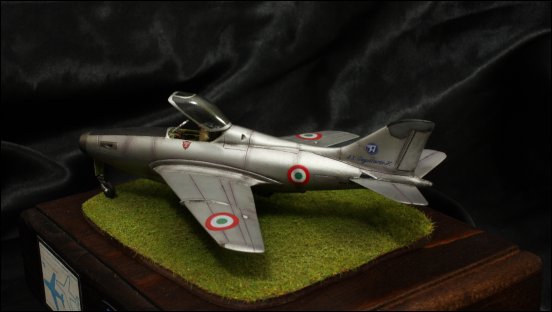
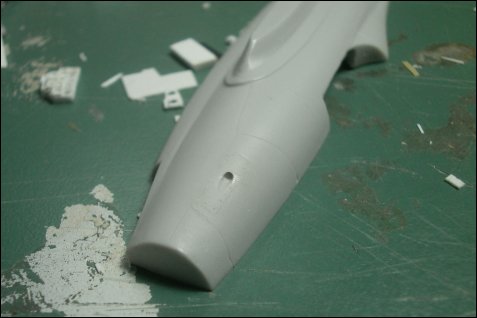
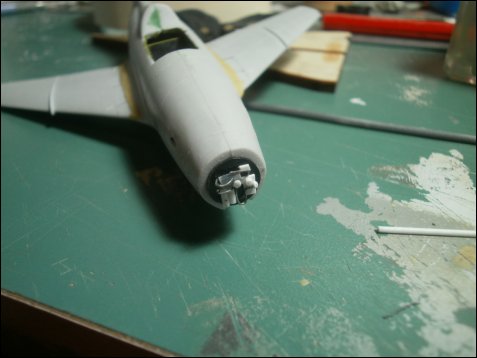
The Sagittario II was a light-fighter prototype, the first development of what was later to become the Ariete II and Leone, entries for a light attack aircraft requirement to be produced by NATO, and funded primarily by the USA. Only the Sagittario II and the Ariete II left the drawing boards with the Sagittario II becoming the first Italian aircraft to break the sound barrier. This series of aircraft were designed by Ing. Sergio Stefanutti, a gifted engineer, known for his briliant light-weight fighters of WWII such as the SS.4 and the SAI 207, which thanks to careful aerodynamic design and refinement, provided exceptional performance despite the low engine power availble. Powered by a Rolls Royce Derwent providing 1,650 kg of thrust and placed in the front of the aircraft, the plane reached 1,050 km/h. The plane was manufactured by AERFER of Pomigliano D'Arco in Naples. AERFER being the combined entities of Industrie Meccaniche Aeronautiche (AER) Meridionale (aerospace) IMAM and Officine Ferroviarie (FER) Meridionali (railway construction). This is the SEM Model Aerfer Saggittario II made from a very workable resin, the shapes and dimensions are accurate although some work is required. The box comes with gloves, a dust mask, a CD and other utlities to help with the handling of resin parts, a nice touch. The first step is to clean and sand the fuselage halves and dry fit the corresponding parts using wet sand paper to absorb the resin dust. Next I built the cockpit, the dashboard and the ejection seat (MB. Mk4). The seat was made using parts of the Aeroclub's ejection seats, modifying the padding with a two-component filler. I made the seat-belts and buckles with putty. The fuselage halves were rescribed and detailed, at this stage I drilled the 30 mm cannons.
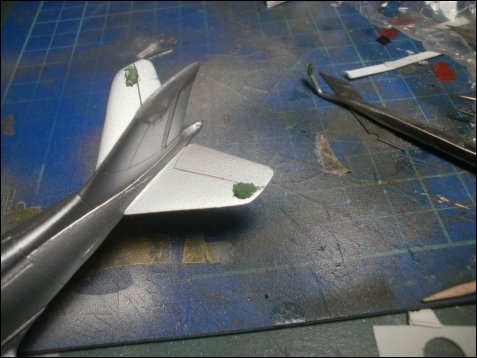
The fuselage halves were glued together using a two-part epoxy glue. I then added a tail light (see below for photo sequence) and rear turbine from an Academy MIG 15. Tail light construction (photo sequence): The wings were secured to the fuselage with copper tubing and two-part expoxy glue. Before gluing the front air inlet it is necessary to detail its interior.
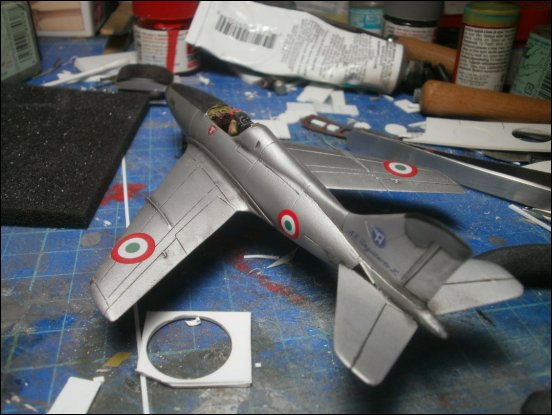
After applying a coat of primer, some assembly defects and bubbles emerged (bubbles). Do not use the cynoacrylate to fill these bubbles because the hardness of the resin is lower than the glue and you risk altering the shape of the model. Using Alclad aluminum I finally painted the model. Before applying the decals I applied a wash with black oils and a slight shading with dark gray artist pastels. The decals were applied using Mr. Mark Softer directly on the aluminum color with excellent final results. |
|
|
|
Aircraft: Aerfer Sagittario II Manufacturer: Industrie Meccaniche Aeronautiche Meridionale & Officine Ferroviarie Meridionali Type: Fighter Year: 1956 Engine: One Rolls-Royce Derwent 9 turbojet, 3,640 lb (1,650 kg) thrust Wingspan: 24 ft 7 in (7.5 m) Length: 31 ft 2 in (9.50 m) Height: 6 ft 8 in (2.02 m) Weight: 7,275 lb (3,300 kg) (Loaded) Maximum Speed: 625 mph (1,006 km/h) Ceiling: 40,000 ft (12,000 m) Range: --- Armament: 2 x 30 mm canons; 1,100 lb (500 kg) of bombs Crew: 1 |
|
|
|
|
|
|

|

|
|
|
|
|
|
December, 2017 STORMO! © 2017 |