×
Special Hobby 1/32 FIAT G.50bis/AS
Freccia (Arrow)
by Bogdan Zajączkowski


Click the STORMO! Eagle to
return to the Gallery


The FIAT G.50bis/AS
The first prototype of an improved version, the G.50bis, was first flown on 9th September 1940. This model was similar to the original G.50, but featured increased fuel capacity, a new radio installation (R.B.30 one-way reciever + 24 volt generator), a slightly modified rear-fuselage profile, armour for the pilot's seat, the bomb-bay was now closed to accommodate an extra fuel tank, the tailwheel was retractable, small changes to the canopy design and a rudder of new design with increased chord and reduced height. The design was considered from 1938 but only materialsed in February 1940 with delieveries beginning in April 1941. In all, 421 (472 [2]) G.50bis aircraft were built by C.M.A.S.A. and Fiat-Aeritalia at Turin. Fiat built 350 machines [2] (MM5933-6247 and MM8561-8595) while the remaining 122 [2] were produced by C.M.A.S.A. (MM5461-5485, MM6328-6414, MM6953-6962). Nine were supplied to Croatia, but its not known if they were used in combat. The G.50bis was mainly used in Libya, with the addition of anti-sand filters for the carburettor air intake and the oil radiators. The first G.50bis machines arrived in Libya late in December 1940 with the 358o Squadriglia, later absorbed into the 20 Gruppo (150o and 152o Squadriglie). They were followed in January 1941 by the 155o Gruppo CT which reported problems with sand. Aeritalia and C.M.A.S.A. thus modified the G.50 by installing a filter-equipped air intake and modifications to the landing gear and bearings, the machines modified were designated "G.50 A.S." AS=Africa Settentrionale (North Africa). The Fiats participated in the Italian withdrawl to Tripolitania and the re-conquest of Cyrenaica. During this period a number of G.50s were modified in the field as fighter-bombers, racks being installed underwing to accommodate small bombs. These fighter-bombers were particularly active over the Sidi Barrani area, where they achieved mixed success in combat with Hurricanes and P-40s.


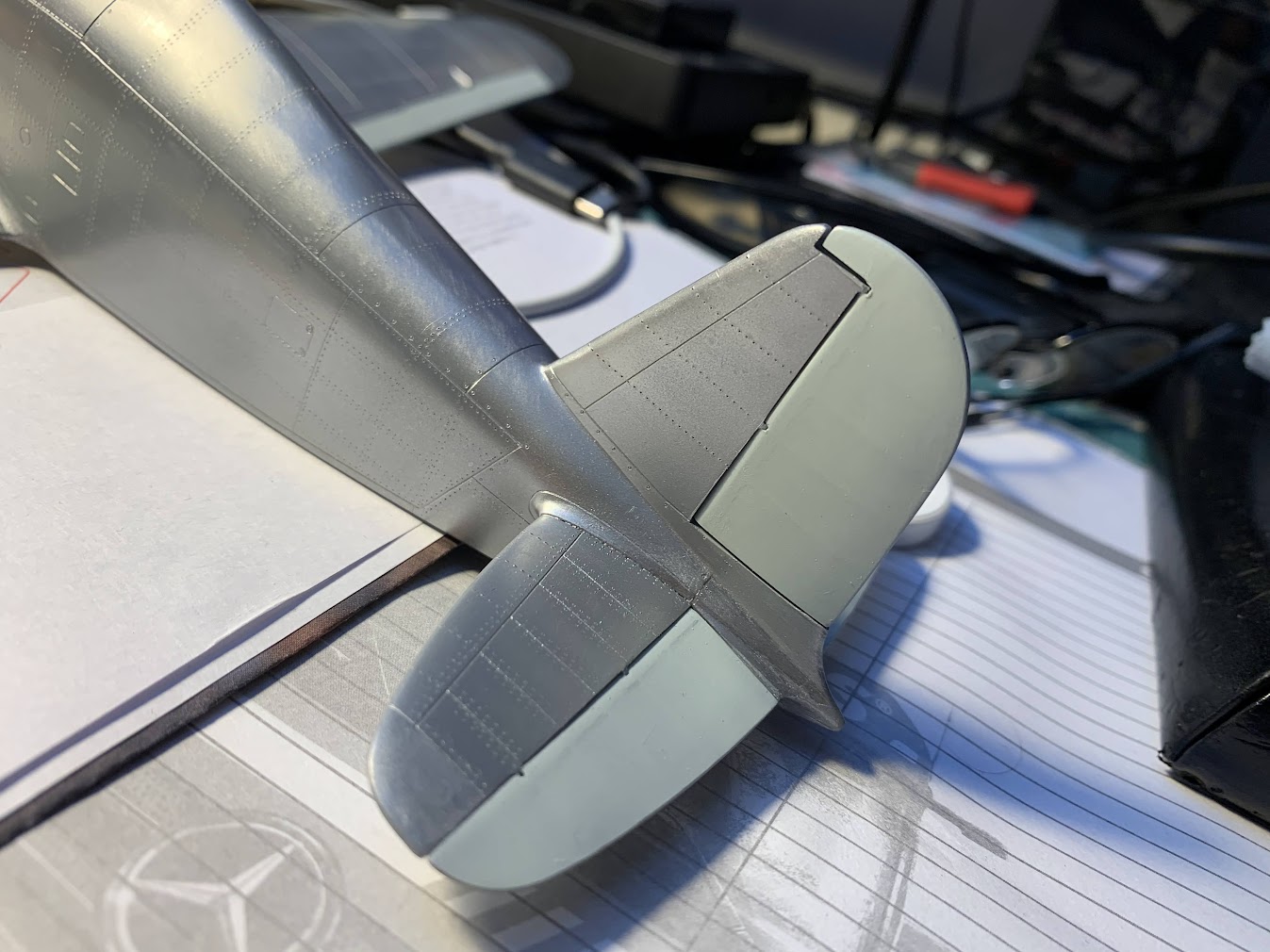
FIAT G.50bis rudder modifications. The G.50bis rudder was of a new design with increased chord and reduced height. G.50bis production commeneced with Serie V through Serie VII for a total of 472 [2] aircraft.

C.200 and later the C.202 permitted the withdrawal of the G.50bis from first-line service in North Africa, and in December 1941, the only unit in this theatre with the type was the 12o Gruppo C. T. based at Castelbenito (Tripoli). The number of G.50bis aircraft in Libya varied from 20 in February 1941 to a maximum of 80 in October and 35 in December. Similarly, the G.50bis was relegated to second-line and local-defence duties in other theatres, as in Sardinia (24o Gruppo C.T.), in Greece (151o Gruppo C.T.) and in the Aegean (154o Gruppo C.T.). The last batches of aircraft equipped the 158o and 159o Gruppi Assalto in 1943 pending the introduction of the Re.2000. Among the last actions of the G.50bis were those fought by the 368o Squadriglia around Sfax in Tunisia and the desperate missions flown against the Allied landings in Sicily where Fiats of the Gruppi Assalto (attack units) attacked landing craft south of Augusta Bay. On the date of the Armistice only 48 G.50s remained (17 were serviceable), distributed as follows:

Italy: 19 a/c at Lonate Pozzolo with the 50o Stormo Assalto.
Corsica: 1 a/c at Ajaccio with the 160o Gruppo C.T.

With the aim of improving the basic characteristics of the G.50, the C.M.A.S.A. company experimented with some reworked versions that did not proceed beyond the prototype stage. The first was the G.50ter powered by the 1,000 h.p. Fiat A.76 engine and first flying on 17th July 1941. However the development of this engine was abandoned before the aircraft's first flight and the G.50ter was still-born. On 25th August 1941 the G.50V made its first flight; this variant featured a completely new forward fuselage section and was powered by a Daimler-Benz DB 601 in-line engine. This experimental aircraft was intended as a first step towards the construction of the G.52, then on the drawing-board, but this was superseded by the more promising G.55.

The last variant developed was the Fiat G.50bis/A two-seat fighter-bomber which made its first flight on 3rd October 1942. The wingspan was increased by about 4 ft. 6 in. by the insertion of rectangular sections between the wing centre-section and each outer panel, each one carrying a 0.5 in. machine-gun with 250 rounds and racks for 330 lb. bombs. This version was intended as a carrier fighter-bomber aboard the "Aquila", an aircraft-carrier then being built, and to this end an arrester-hook was installed. The Armistice stopped any further development of the Italian aircraft-carrier programme and the Fiat G.50bis/A was likewise abandoned.


FIAT G.50bis/A wing, the wingspan was increased by about 4 ft. 6 in. by the insertion of rectangular sections between the wing centre-section and each outer panel, each one carrying a 0.5 in. machine-gun with 250 rounds and racks for 330 lb. bombs.

References:
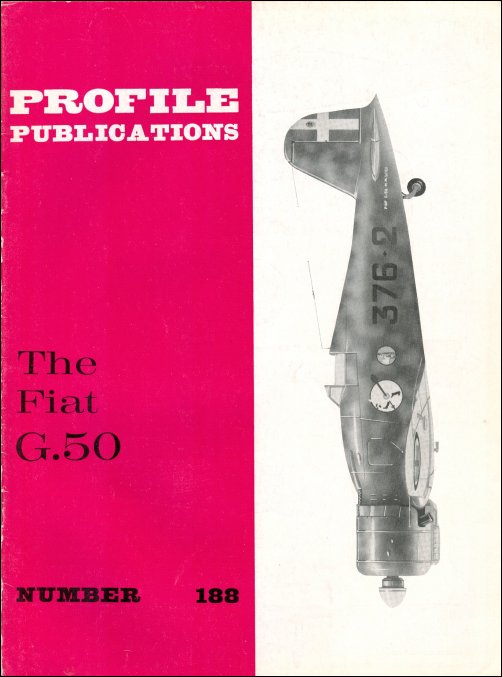
1) Cattaneo G., "The Fiat G.50", Profile Publications, Leatherhead, Surrey, England, 1967.
2) Vergnano P., "Fiat G 50", Ali D'Italia, La Bancarella Aeronautica, Torino, Italy, 1997.


FIAT G.50bis/AS Serie V, MM.5947 352-3, 352a Sq., 20o Gruppo, 51o Stormo. AERITALIA built machine. Cyrenaica, Summer 1941. Note the partially over-painted original Savoy cross on the leading edge of the vertical stabilizer (CMASA? MM?).

Construction

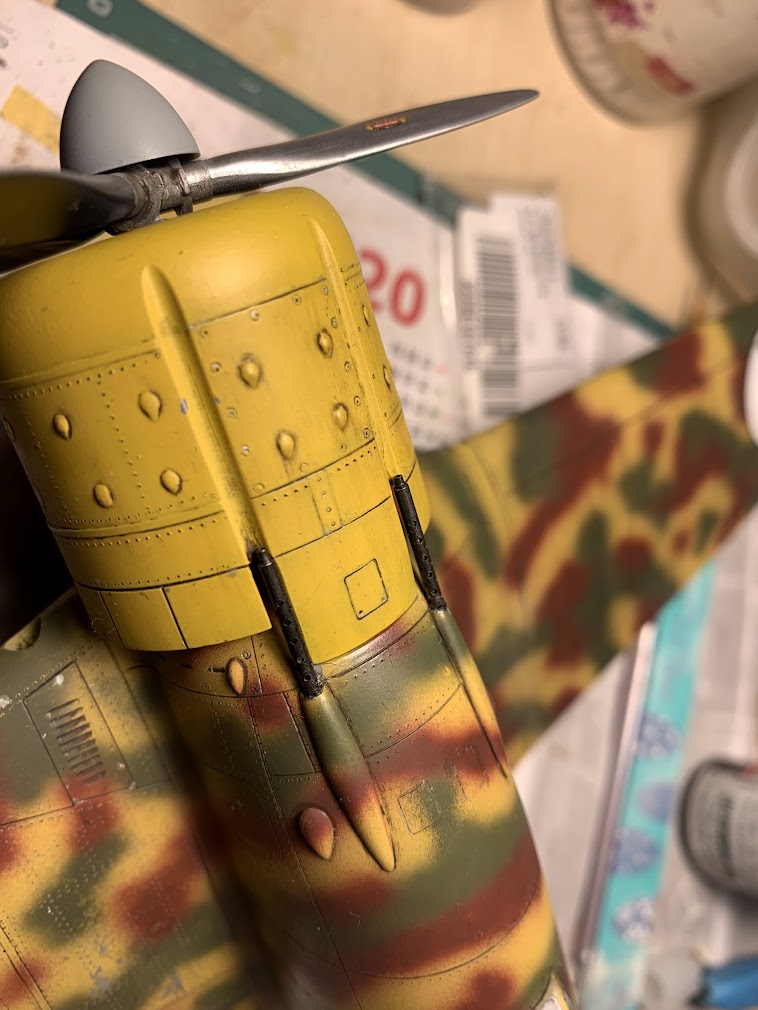
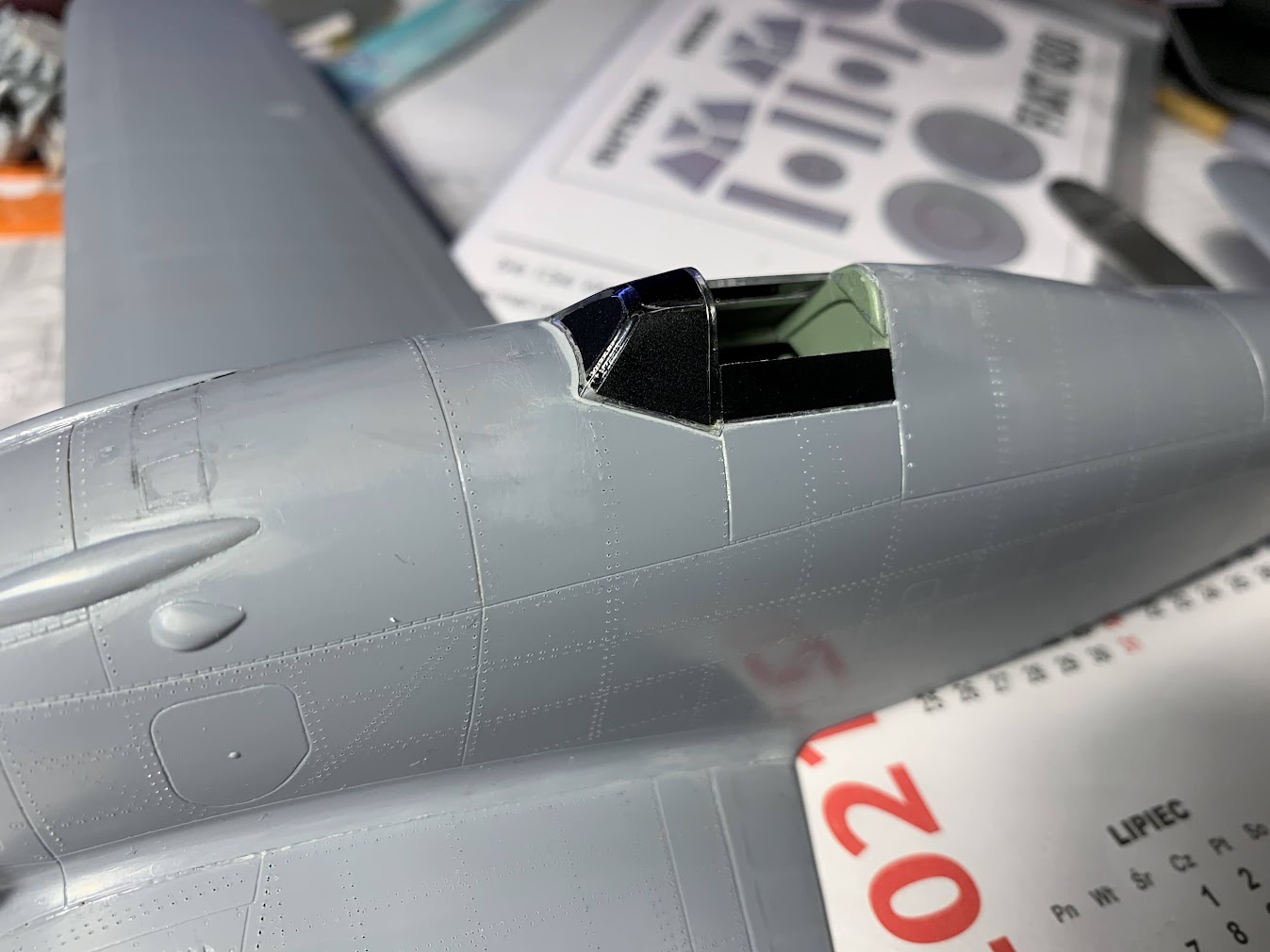
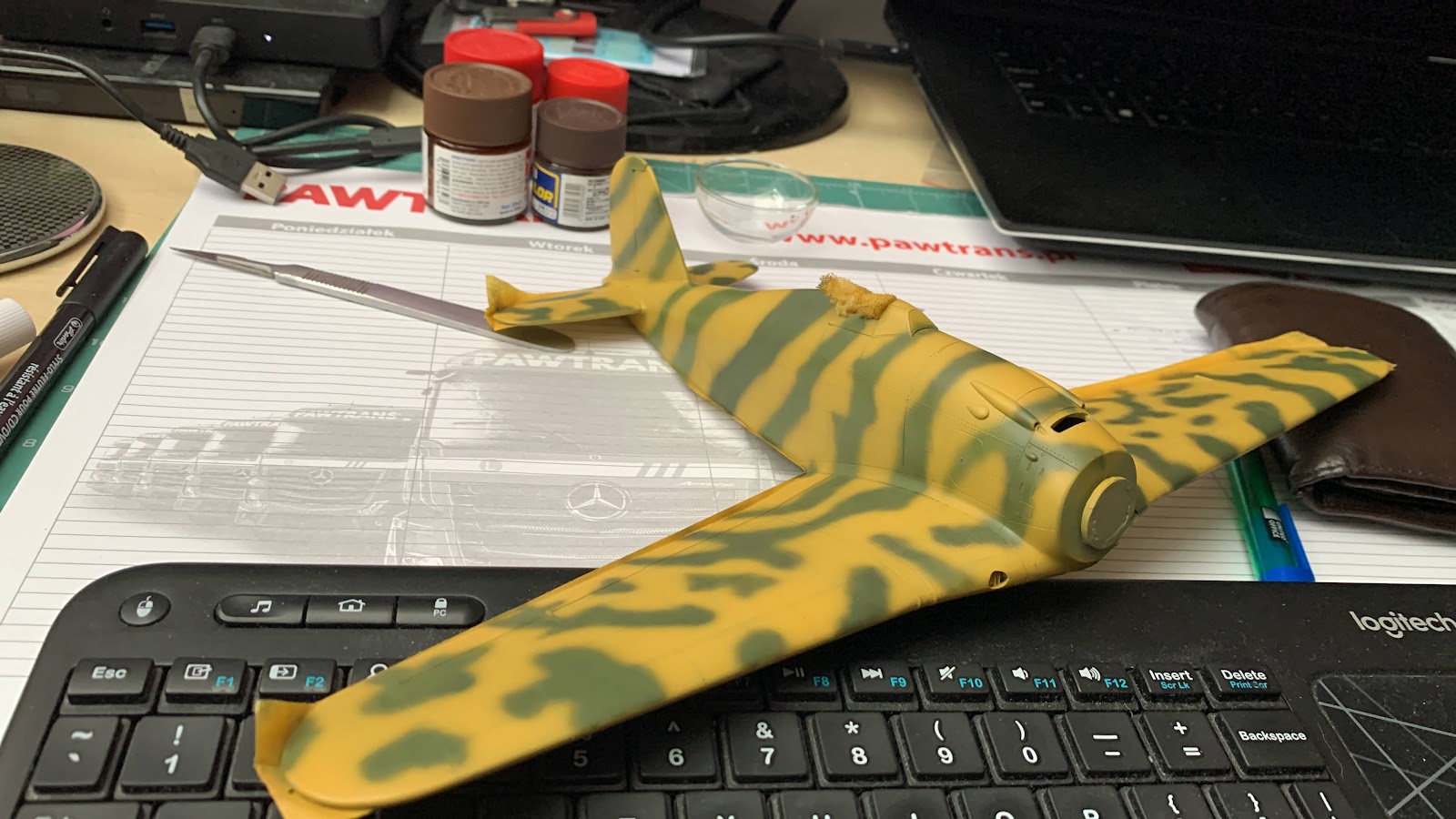
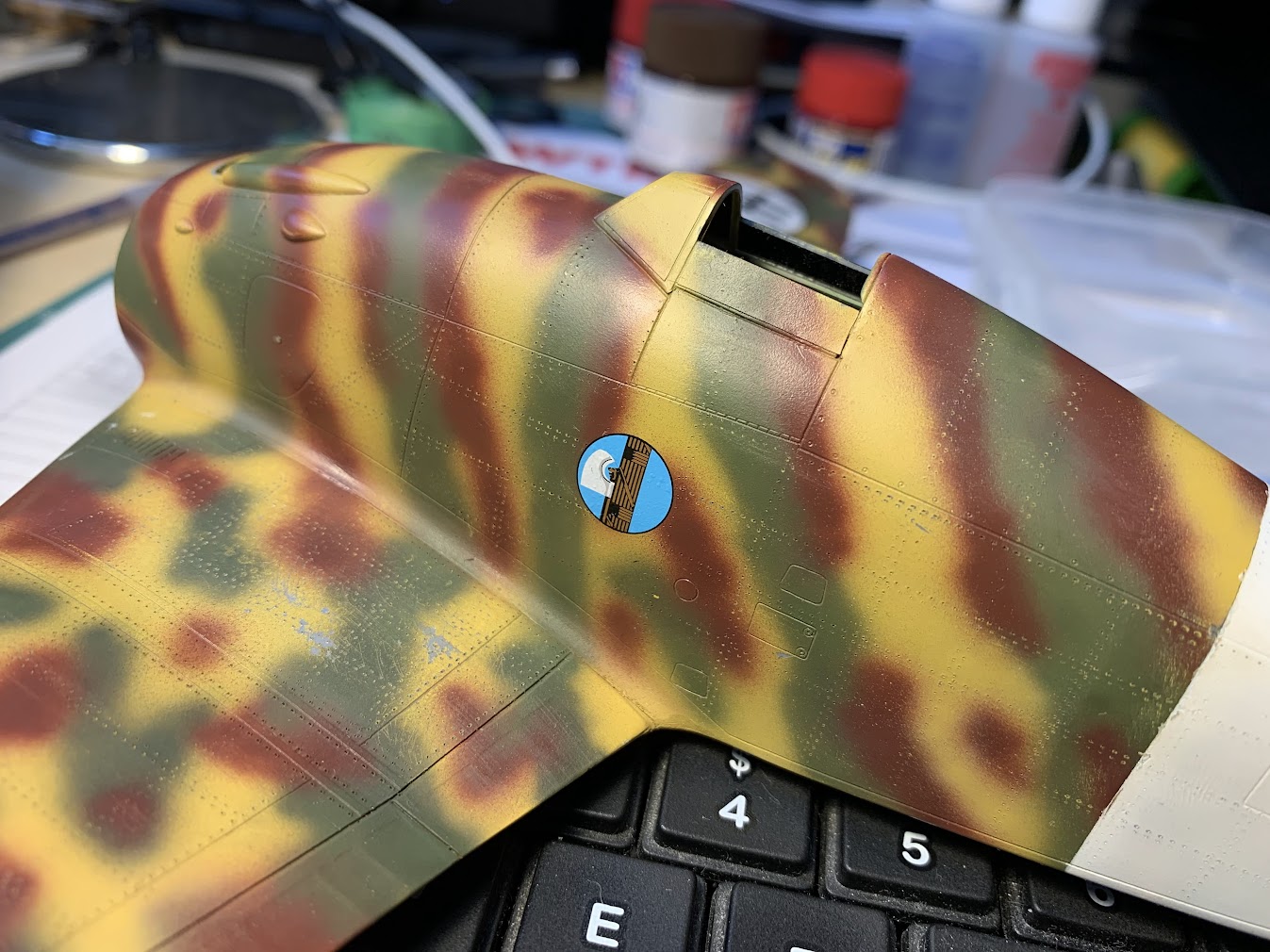
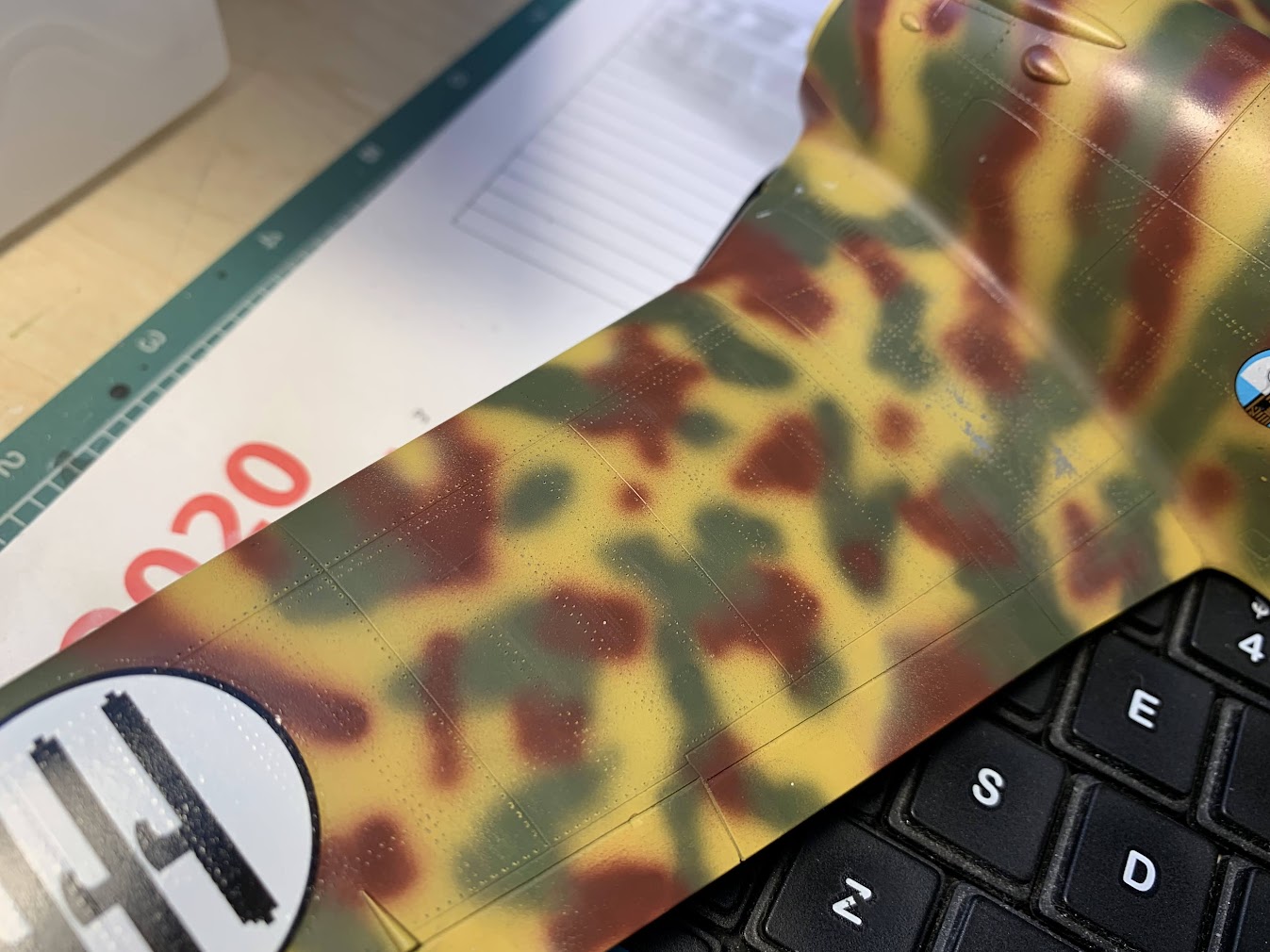
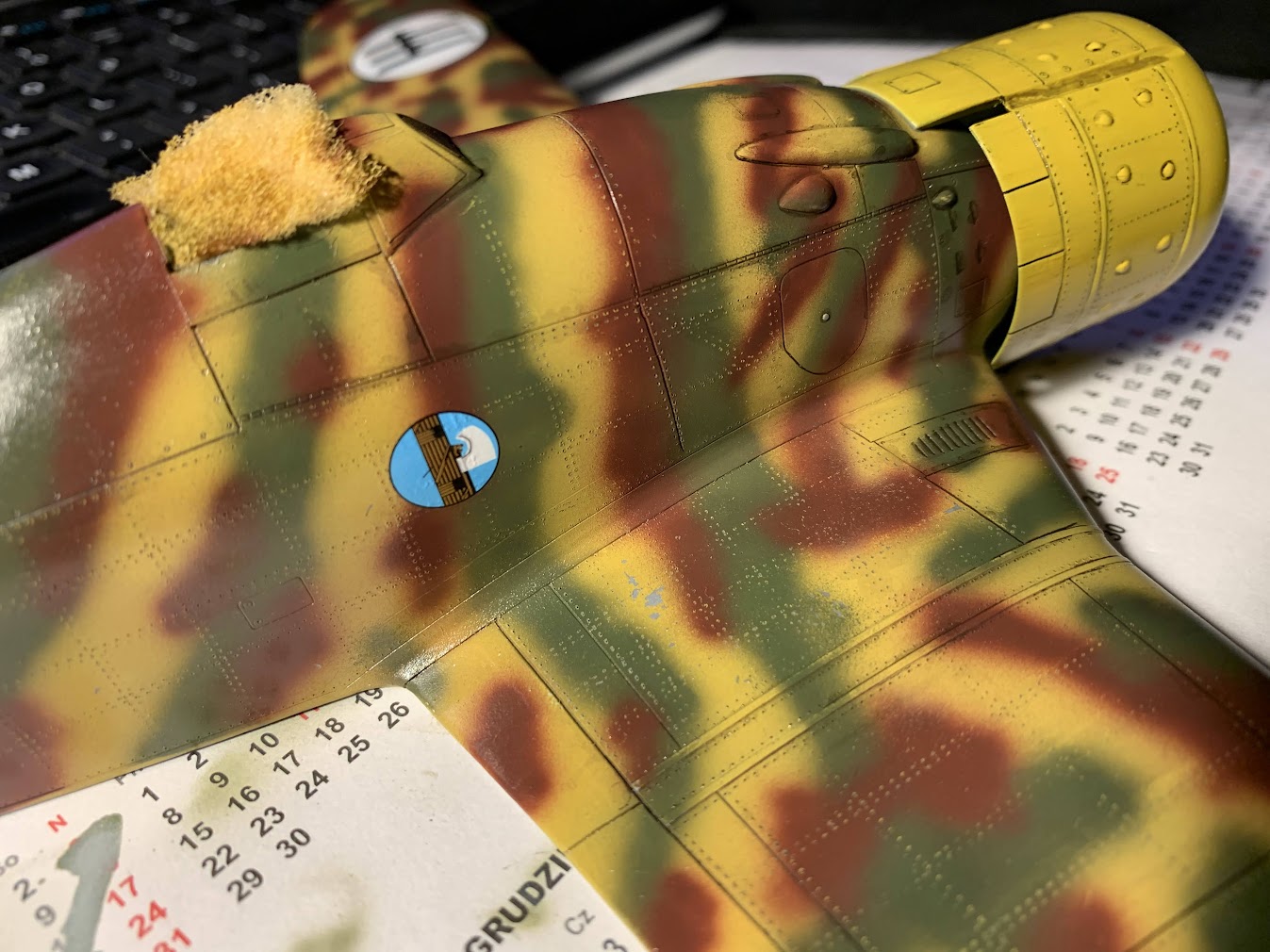
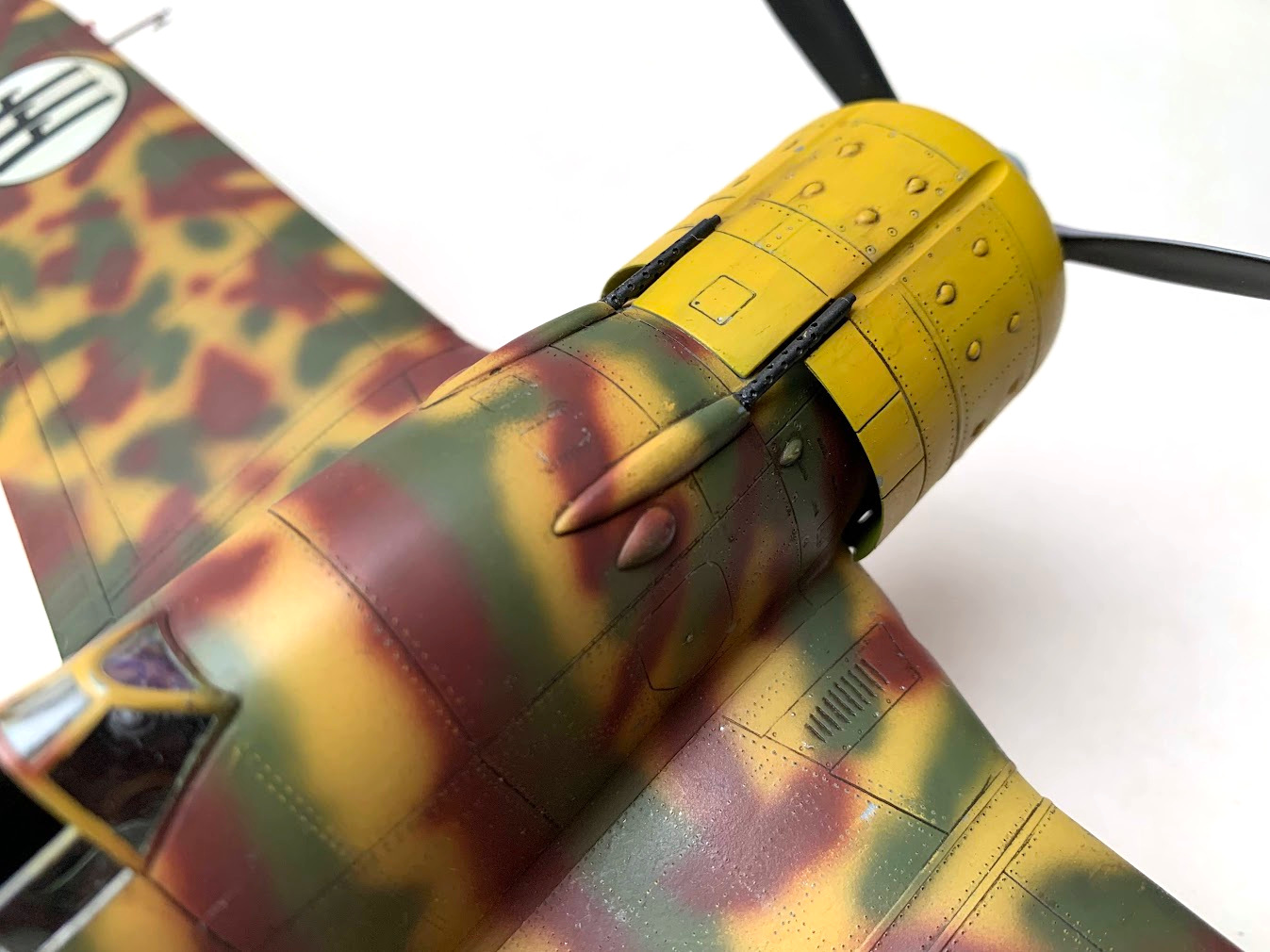
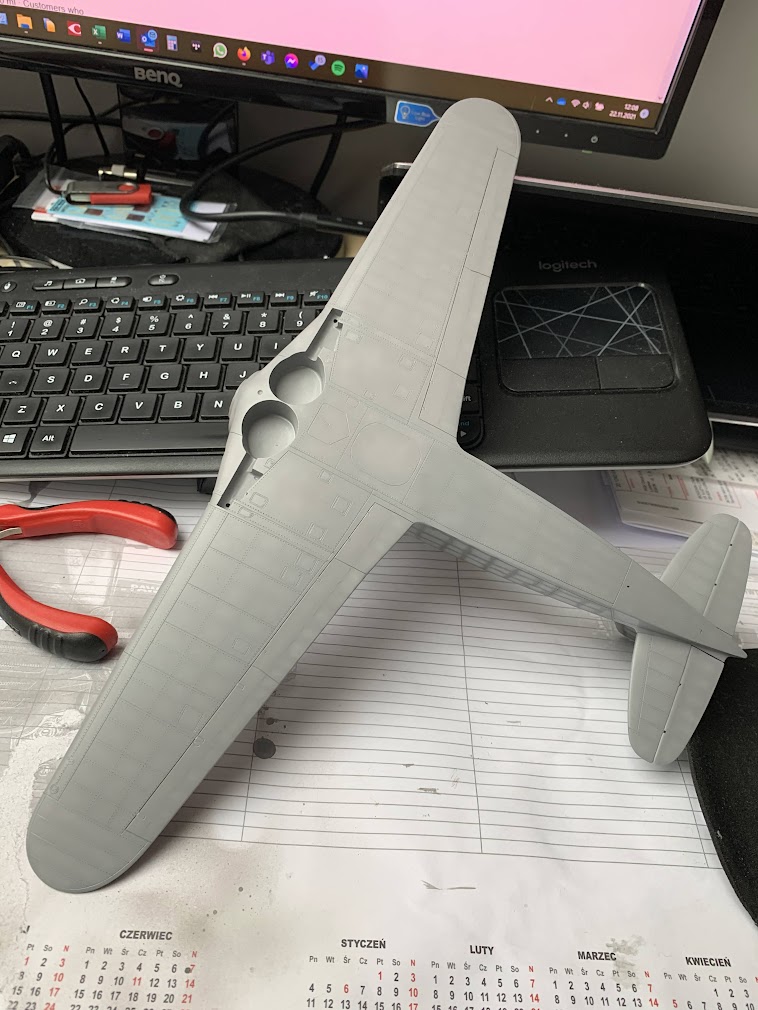
I'll not write about the plane history - there are many much better experts on this forum. It's only about the build - this was a really long - and somehow complicated - project. Complicated not because of kit's quality - which is actually really good - but because of my strange ideas to change this kit's "destiny" during the build. I bought this kit as the Special Hobby 1/32 Fiat G.50-II SO32061 - its not the "bis" - and initially I was was going to build it in Finnish markings. After the cockpit was done and the fuselage halves glued together suddenly I decided to make it Italian. Actually - an Italian G.50bis because of the camo scheme I chose - 352 Squadriglia, 20 Gruppo Autonomo C.T. Martuba, July 1941. So I had to make all the small blisters on engine cowling because there was no such option in the kit. After several days of deliberating I came to the simplest possible solution - I just put small drops of Microsol Krystal Clear on carefully degreased surface, let it dry for 24 hours - and voila! Another task was to cut out the short tail cone of the G.50-II and replace it with the longer one for the G.50 Bis. Next came the riveting tool ... thousands of rivets - double line. Rosie the Riveter come with help. I really wanted to expose somehow this riveting work - so after the model was airbrushed I treated the surface with 1200 grade water sand paper - very delicate touch. I think the result is satisfying.


×


×


Technical Data

Aircraft: Fiat G.50bis Serie VII
Manufacturer: Fiat S.A.
Type: Fighter
Year: 1939
Engine: Fiat A.74 RC 38, 14-cyclinder radial, air-cooled, 870hp
Wingspan: 36 ft 11/16 (10.99 m)
Length: 27 ft 2 3/8 in (8.29 m)
Height: 10 ft 9 1/8 in (3.28 m)
Weight: 5560 lb (2,522 kg) (Loaded)
Maximum Speed: 294 mph (473 km/h) at 19,685 ft (6,000 m)
Ceiling: 35,200 ft (10,700 m)
Range: 277 miles (445 km)
Armament: 2 x 12.7mm (0.5 in) SAFAT machine guns
Crew: 1

Additional Images


STORMO! Products


January, 2023
STORMO! © 2023