|
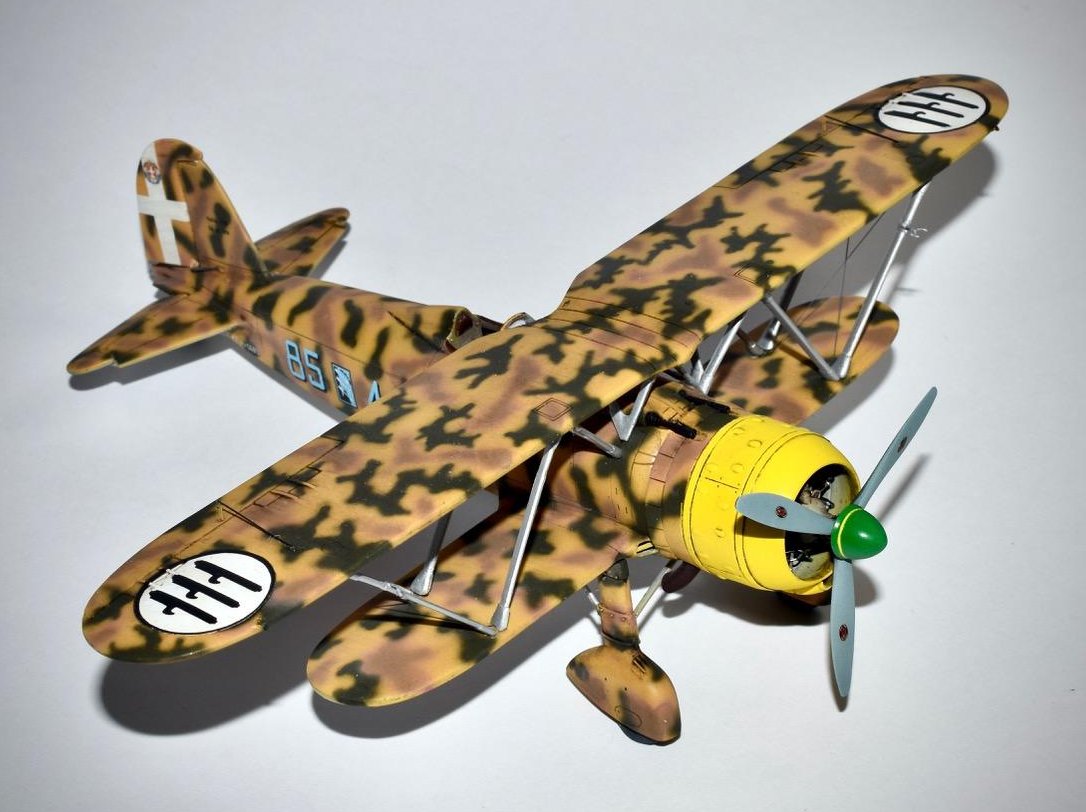
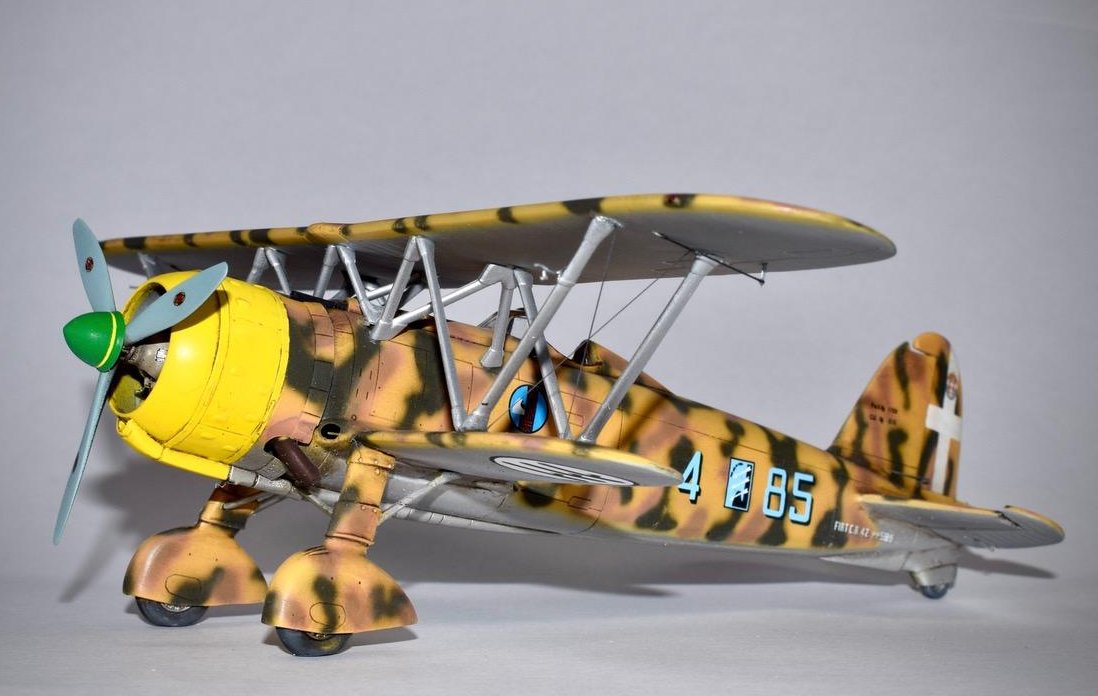
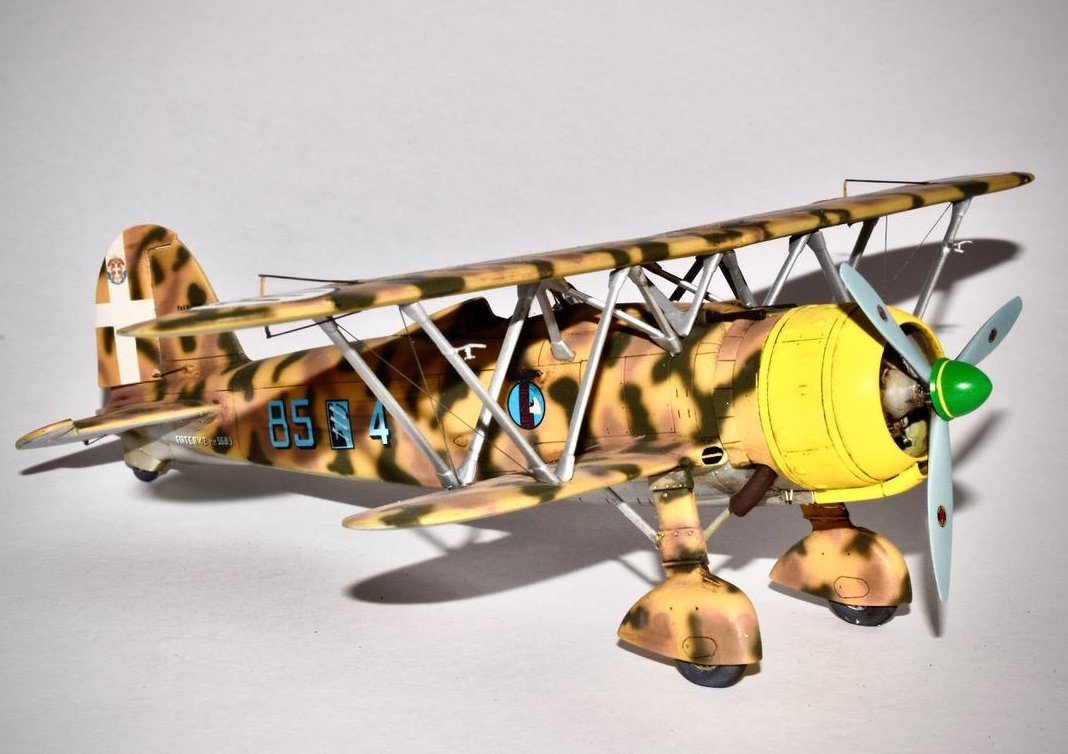
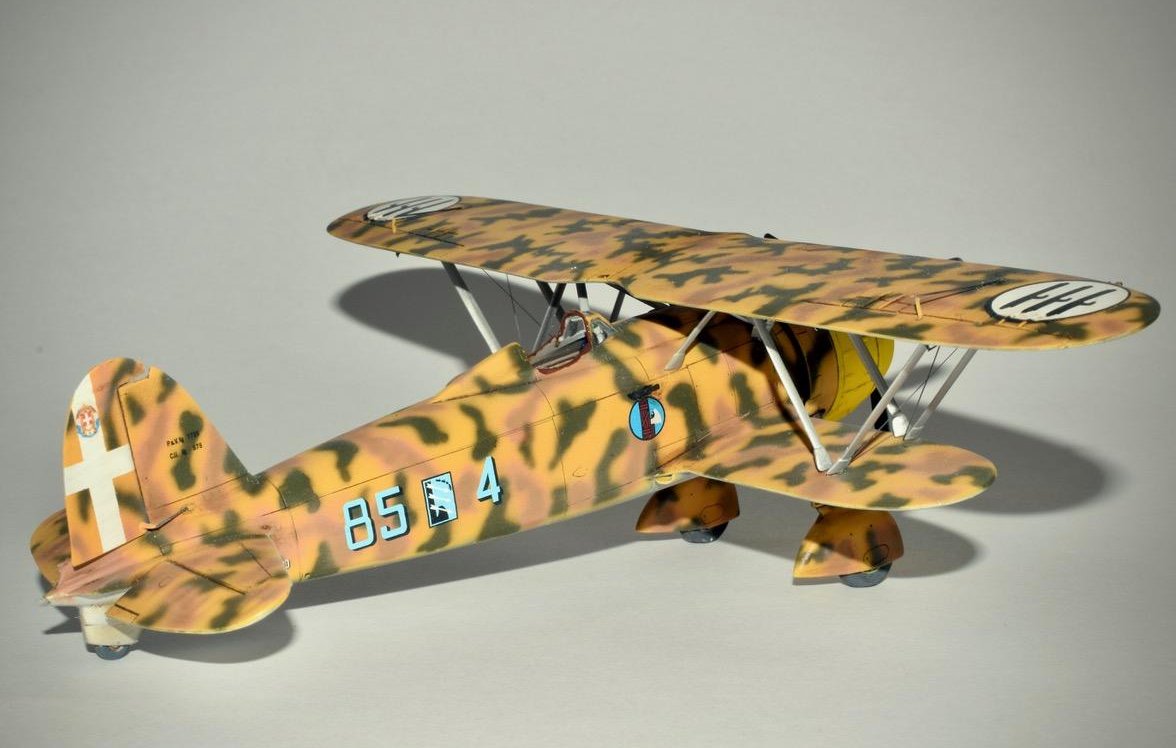
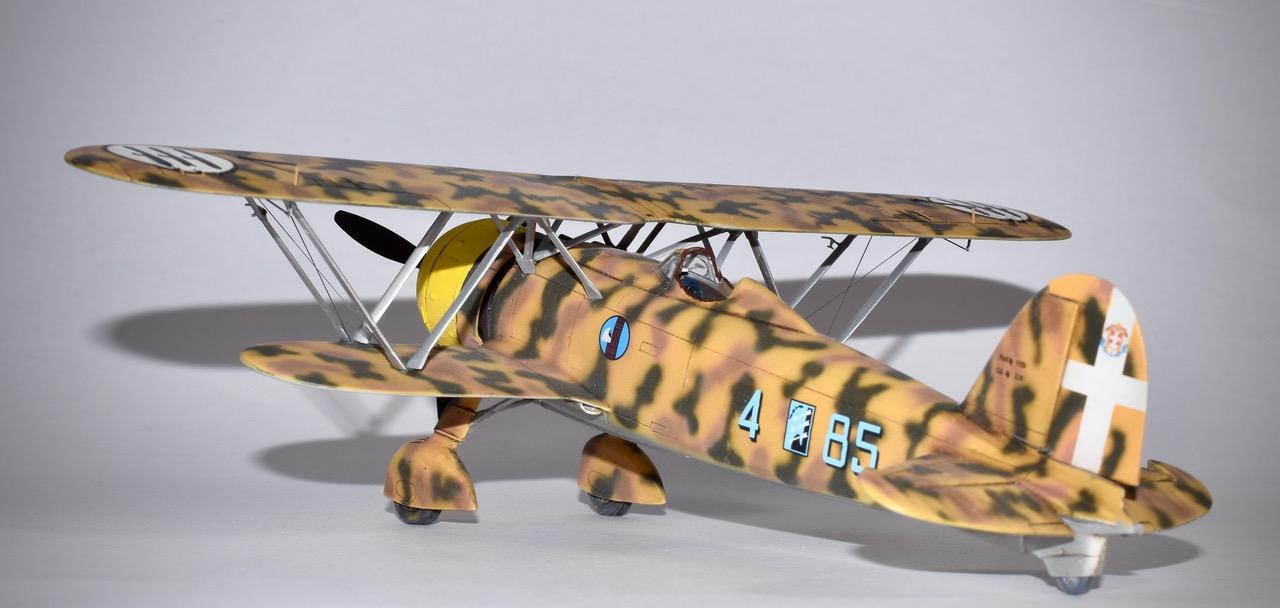
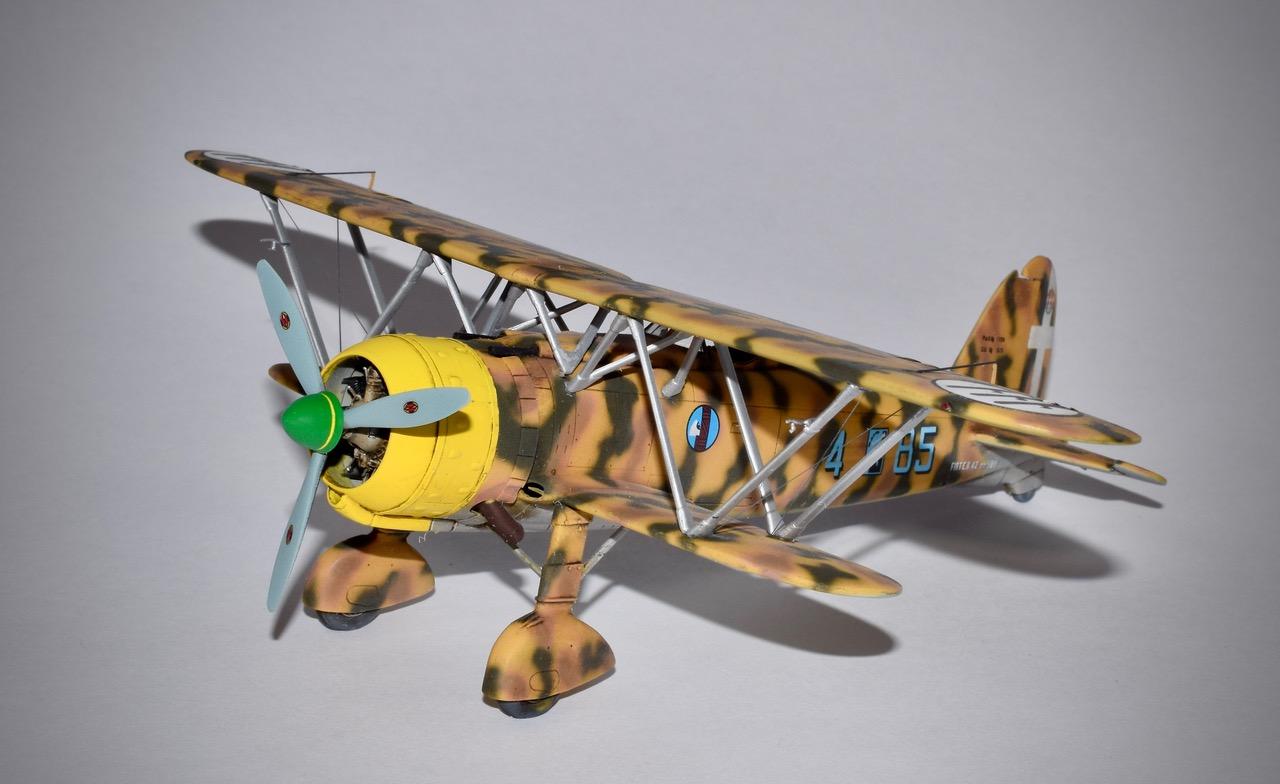
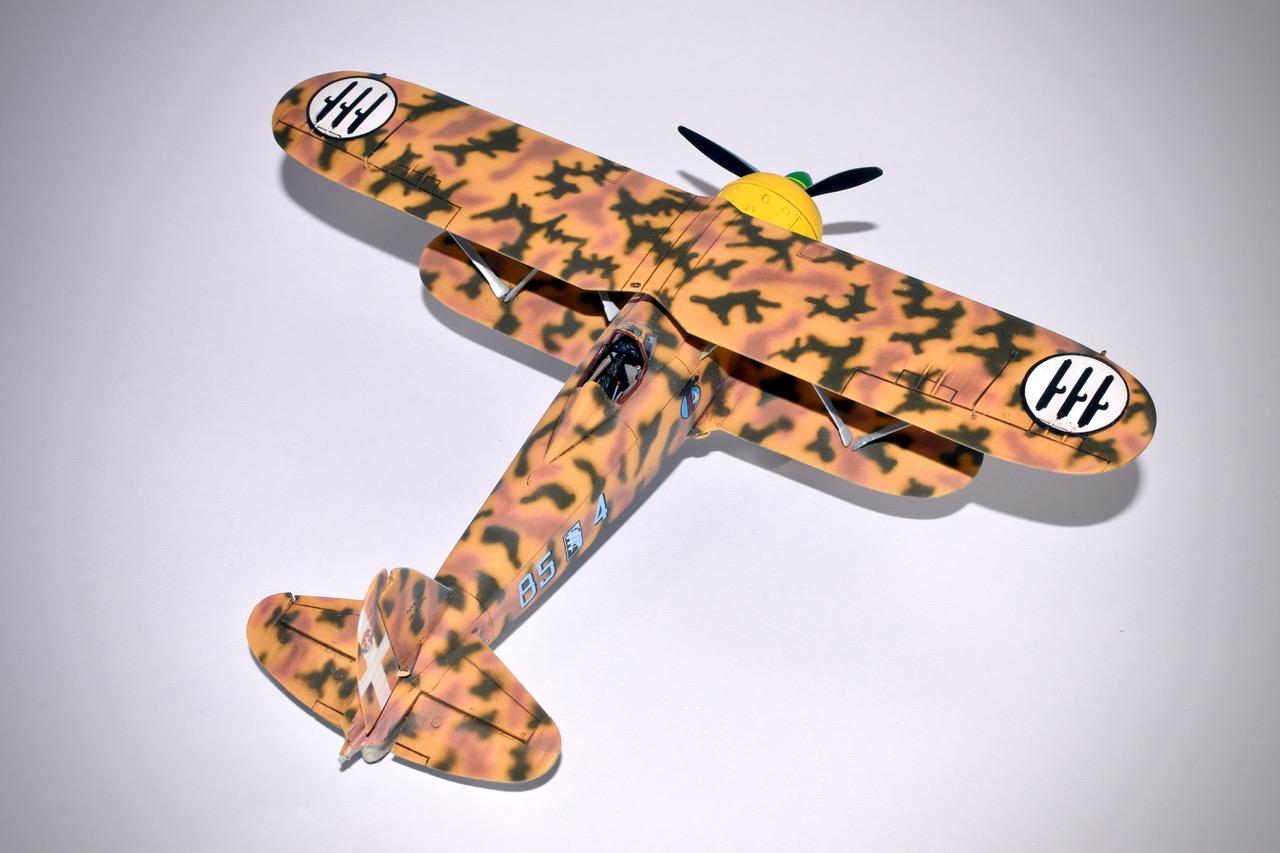
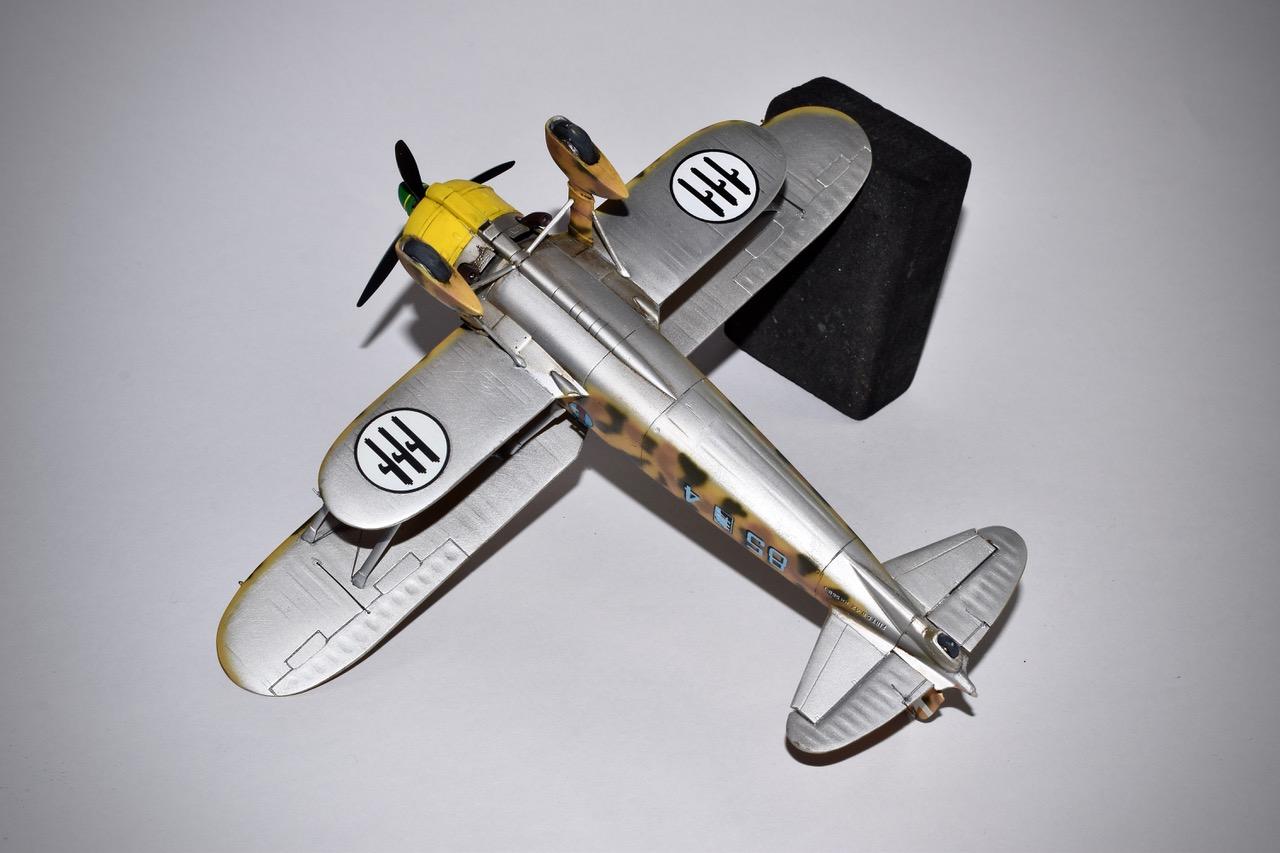
Italeri 1/48 FIAT CR.42 Battle of Britain by Jean Barby |
|

Click the STORMO! Eagle to return to the Gallery |
|
Designed as an interim fighter until the Italian monoplane fighters were available in sufficient numbers, the Fiat CR.42 was a modern biplane fighter that served the Regia Aeronautica in a multitude of roles including fighter, ground attack and night fighter duties. The Fiat CR.42 was also used by several foreign air forces who put the plane to good use and production was even resumed by the Germans in 1944. The Fiat CR.42 represented the culmination of a design formula that had begun in the 1920s. Designed by Celestino Rosatelli, the Fiat CR.42 was an aerodynamically refined aircraft, its clean lines hinted at what might have been had the fighter developed along the same lines as the Grumman F4F Wildcat; the F4F having started out life as a biplane. The Fiat CR.42 was used as a fighter by the Regia Aeronautica in the early phases of WWII over France, the English Channel, Greece and North Africa. Battle of Britain Over 300 FIAT CR 42s equipped nine Regia Aeronautica Gruppi (Groups) when Italy entered World War II on 10 June 1940. The new fighter made its operational debut during the 14 day Italian campaign in southern France. CR 42s of 23o and 151o Gruppi escorted FIAT BR 20 bombers attacking the French air bases of Hyeres and Fayence on 13 June. The Italian fighters damaged 20 French aircraft on the ground and destroyed one fighter in the air with no losses to themselves. Two days later, CR 42s shot down three Bloch 152 and five Dewoitine D 520 fighters over the Cote d' Azur (the Blue Coast in southern France). The Italians lost five fighters and one bomber in this engagement. The Italian fighters continued to fly escort missions until the French surrender on 24 June. In October 1940 Italy deployed the Corpo Aereo Italiano (CAI; the Italian Air Corps) to Belgium in support of the Luftwaffe's attacks on Great Britain. The CAI's fighter component consisted of 18o Gruppo equipped with CR 42s and 20o Gruppo equipped with FIAT G 50s. The 50 CR 42s of 18o Gruppo fitted with cockpit armor deployed to Maldegen on 19 October. The crews were instructed about the operational sector, weather conditions, air traffic and British tactics. On 29 October the first CAI combat mission was flown with 39 CR 42s escorting 15 BR 20 bombers sent to attack Ramsgate. The bombing mission was successful and all aircraft returned safely to Belgium following the attack. On 11 November an Italian formation of 10 BR 20s escorted by 40 CR 42s bound for Harwich was intercepted by 30 RAF Hawker Hurricanes. The British shot down three bombers and two fighters and a third force landed (British pilots claimed 8 German, 7 Italian planes destroyed and 3 force landed) with no losses (2 Hurricanes damaged) although the CAI pilots claimed nine Hurricanes destroyed (Italian Ace Giuseppe Ruzzin claiming a Hurricane destroyed after it was hit and trailing smoke and falling away) and four more probably destroyed with the bombers completing the mission. Fuel shortages and the short range of the CR 42 (limiting loiter time) as well as bad weather resulted in 18 of the CR 42s returning to their base due to forced landings, although all but two of the remaining aircraft were eventually recovered. One of the CR.42s MM.5701, flown by Sgt. Pietro Salvadori of 95a Squadriglia made a forced landing on a beach on Suffolk after his engine had overheated due to a failure in the oil duct prior to combat and as a result lost his place in formation and landed. His aircraft was repaired and flown by the RAF for tests. This aircraft now resides in the Battle of Britain Museum at Hendon. A final fighter sweep by 29 CR 42s was made against Margate and Folkestone on 23 November with two CR 42s not returning (RAF 603 Squadron claimed 7 shot down and 2 probables); CAI pilots claimed five enemy aircraft destroyed. After the battle Squadron Leader George Denholm, CO 603 Squadron commented: I must say this about the Italians, they showed fight in a way the Germans have never done with our squadron.Reference: Fiat CR 32/CR 42 in Action, Aircraft Number 172, Squadron/Signal Publications. |

|
|
|
|
|
|
|
Here are the pics of my lastest CR 42 which I did after the great informations given by Stefano Lazzarro on the camos of the CAI in Belgium during the Battle of Britain. I had very good photos of the Falco restored in Duxford and I did find that it was striking enough to give a try. So here is my personal rendition and I assume any mistake that could emerge. We all know by now the weaknesses of the Italeri kit and building this one makes you regret sometimes the old Classic Airframe. The yellow used on the engine cover is the German temporary one so it is more lemon than the RLM04. The plane belongs to the 85° Squadriglia 18° Gruppo, MM.5680 piloted Sottonente Guiseppe Re. This plane was involved in the raid on Harwich on 11 November 1940 when 40 CR 42s escorting 10 BR 20s encountered 30 RAF Hurricanes. Low on fuel after combat, Re overturned his 85-4 when he force-landed near Dunderlewe. 85-4 is a rare machine displaying the early Fiat (light) Serie Mimetica colors MM1, VM2 over GM1 with Alluminio undersurfaces. Best regards and keep safe! Editor's Note: here's the pertient Forum discussion regarding the camouflage scheme of this plane: Blue color for CR.42 95a Sq. codes (BoB) |
Aircraft: Fiat CR.42 Manufacturer: FIAT S.A. Type: Fighter Year: 1939 Engine: FIAT A.74 RC 38, 14-cyclinder radial, air-cooled, 870hp Wingspan: 31 ft 10 in (9.70 m) Length: 27 ft 3 in (8.30 m) Height: 10 ft 10 in (3.30 m) Weight: 5,060 lb (2,295 kg) (Loaded) Maximum Speed: 273 mph (440 km/h) at 19,685 ft (6,000 m) Ceiling: 34,450 ft (10,500 m) Range: 490 miles (785 km) Armament: 2 x 12.7mm SAFAT machine guns; 2 x 220.5 lb (100 kg) bombs Crew: 1 |
|
|
|
|
|
|
|
|
|
|


|


|
|
|
|
|
|
|
|
April, 2021 STORMO! © 2021 |