|
Hasegawa 1/32 Messerschmitt Bf.109F4 Italian Friedrick by Bogdan Zajączkowski |

 |

Click the STORMO! Eagle to return to the Gallery |
|
With the introduction of the F-4, the "Friedrick" series finally reached its development
apogee-what it was intended to be from the beginning. It was powered by the powerful
DB 601 E engine mounting the MG 151/20MM cannon. The pair of cowl mounted MG 17s
together with the MG 151 firing through the propeller hub meant a great deal of centrally
located fire power, which even a novice pilot could often wield effectively. Pilot protection
was increased with the addition of a 6MM armor plate behind and above the pilot's head.
R-1 MG 151/20MM cannon under each wing The Regia Aeronautca received 15 F-4 models. Deliveries began on April 19, 1943. The planes were older machines built in 1941 and were mostly drawn from German units deployed in Greece. The planes were assigned to 363a Squadriglia, 150o Gruppo Autonomo based at Sciacca, Sicily in May-June 1943 (this unit was also equipped with the Bf.109G) and were used primarily for training. References: [1] Beaman J. R. Jr. and D. Greer, "Messerschmitt Bf.109 in action, Part 2", Squadron Signal Publications, Aircraft Number 57, 1983 [2] Alegi G. and M. Gueli, "Ali Straniere in Italia, Messerschmitt Bf.109 Italiani", La Bancarella Aeronautica, Torino, 2002
|
|

|
|
|
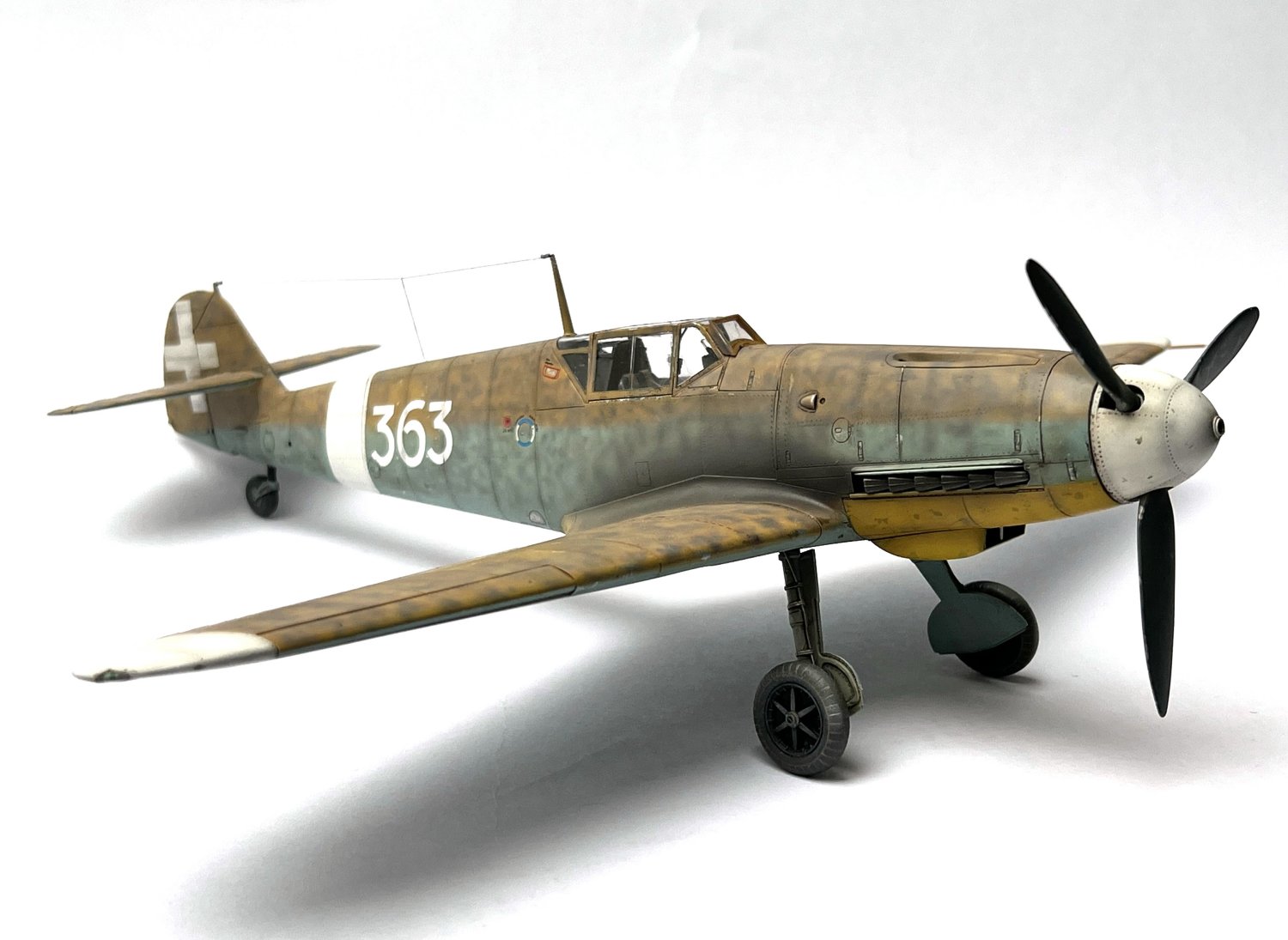
The Hasegawa 1/32 Messerschmitt Bf-109F-4 is known to most in this scale. A well-designed, simple-to-build model. I built this model basically
out of the box. The only changes are: riveting of all surfaces with Rosie the Riveter tool, pilot's seat from Quickboost and landing gear wheels
from Aires. I spent most of the time airbrushing the kit. The whole kit was primed by Mr.Finishing Surfacer 1500 Black for the black basing technique.
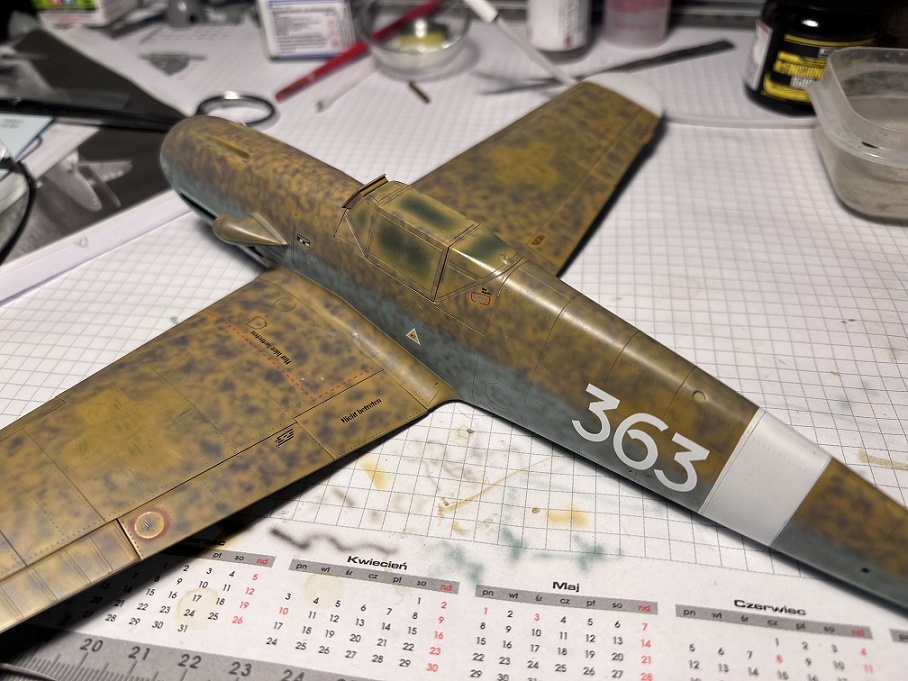
On such prepared surfaces I sprayed standard Luftwaffe desert camouflage RLM 79 / RLM 78. From that moment, consultations with Vince and
Stefano began. I decided to build a Bf-109F-4 from 363 Squadriglia 150o Gruppo Autonomo at the Sciacca airfield in Sicily in June - July 1943.
In the book "Ali Straniere in Italia No1 Messerschmitt Bf-109" there are 4 photos of (probably) this aircraft - none of them provide 100%
sufficient reference to recreate the camouflage of this aircraft. The result of the discussion on the forum was as follows: the standard
Luftwaffe desert camouflage was sprayed with gray spots / squiggles - at least that's what the analysis of the only available color photo showed.
We decided that the camouflage was almost certainly of German origin, applied in field conditions. There are a lot of photos of Bf-109F
and Bf-109G-2 in such non-regulation squiggles. The logical choice was therefore to use RLM 75. In various internet profiles of Friedrich from
353o Gruppo Grigio Azzurro Chiaro is usually suggested - but it does not match the photo, it's too light, too grey. Besides, we thought it's rather
unlikely that at that time so much effort would be wasted on "fancy" painting of a machine used mainly for training. I've airbrushed the
camouflage freehand using a Harder&Steenbeck Infinity airbrush with a 0.15 nozzle at very low pressure using MRP paint RLM 75. It turned out
to be very easy - to my surprise. Another problem concerned German crosses - or rather traces of them. And again - most sources suggest
overpainting the crosses with GAC1 - that's what I did at first, but .... Stefano said that looking at the photos - it's hard to see traces of
such overpainting. Probably the German markings were scratched / washed off by Italian mechanics. Well - I did the same with my kit. I
sanded off the gray paint with 2000 water sandpaper and corrected my work with RLM 79. Next using sponge and vinyl masks I applied delicate
traces of white paint in the places where the German crosses were before. The result is quite satisfactory to me. All stencils are HGW wet
transfers - and they worked just great. The rest of the markings are painted with an airbrush. Panel lines have been accented with Tamiya Panel
Line dark brown. Finally, all kit has been airbrushed with a delicate mist of Light Dust Ammo Mig filter. And here it is - an old war-weary
Messerschmitt Bf-109F-4 - as pictured with Lieutenant Antonio Camaioni at the controls. I hope you like it. Click here for the correspondng Forum discussion.
And some marbling: 
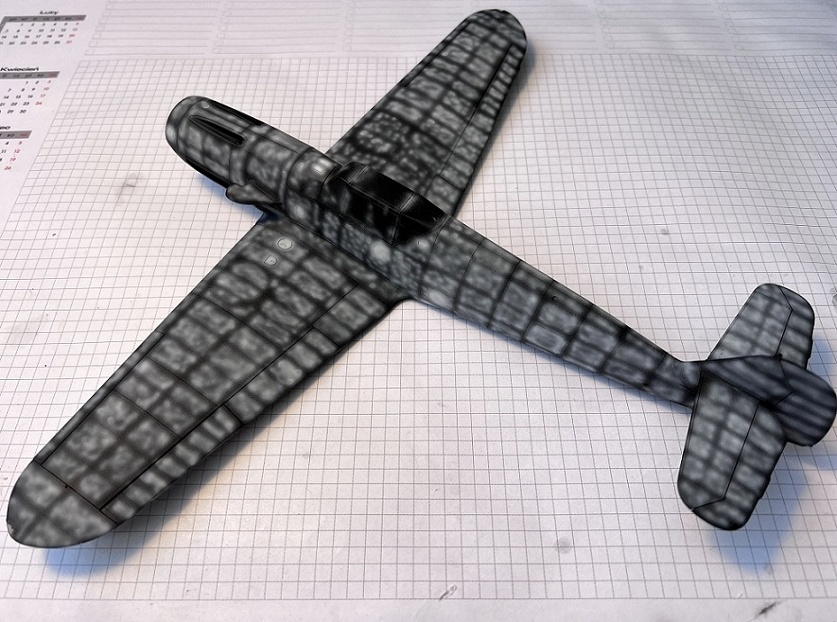
I've taken a totally different approach - just tried to be consistent - i.e. the same pattern on fuselage and wings. German crosses have been painted over with GAC1. So far - no decals have been used, just some wet transfer stencils before applying RLM 75. 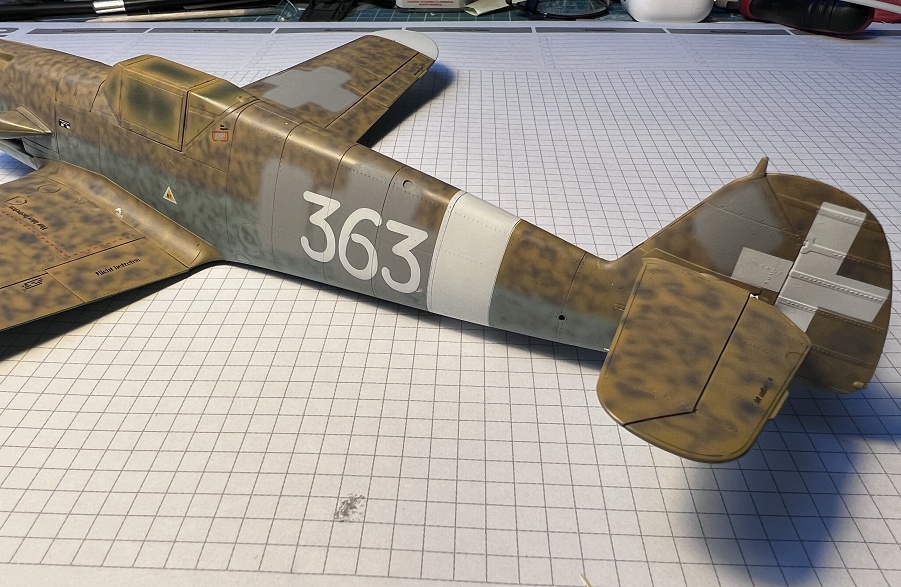


After some discussion I've decided to take different approach to German crosses on my F-4. I sanded down GAC1 from wings and fuselage with 1500 grit water sandopaper. Then - I had new idea, I painted my camo once again, then I painted simplified black crosses - carefully sanded them down leaving just delicate traces of black paint - and that's the result - scrubbed down / washed away German markings on Italian plane.
And the final result after some finishing touches with a small piece of sponge and white paint: 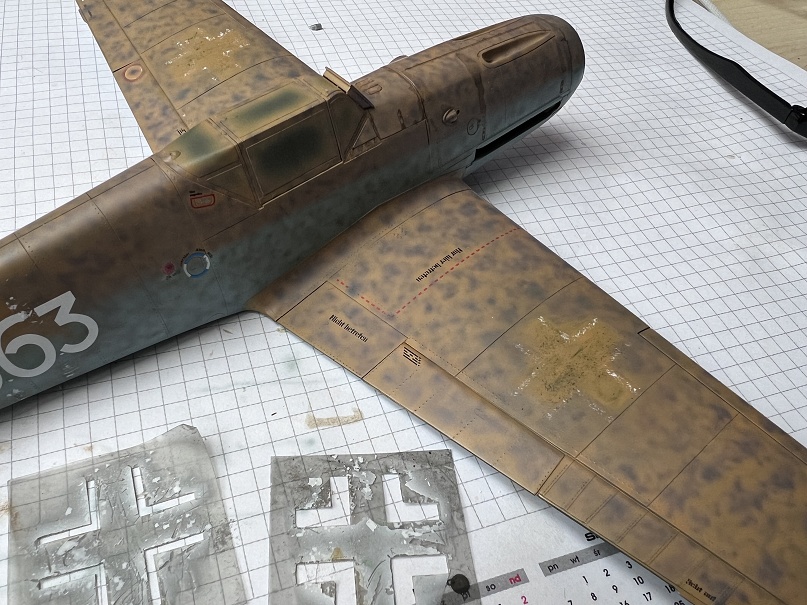

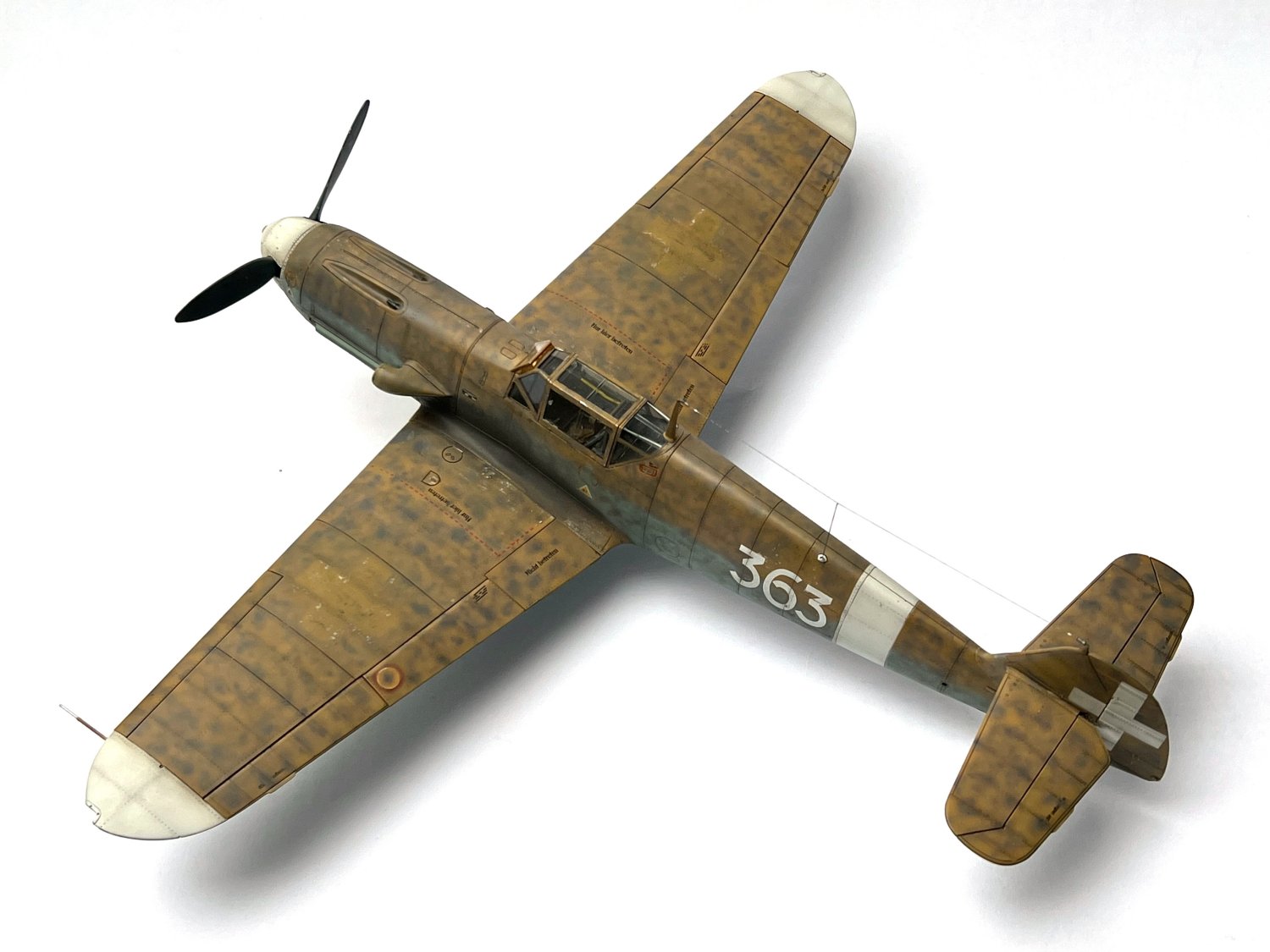
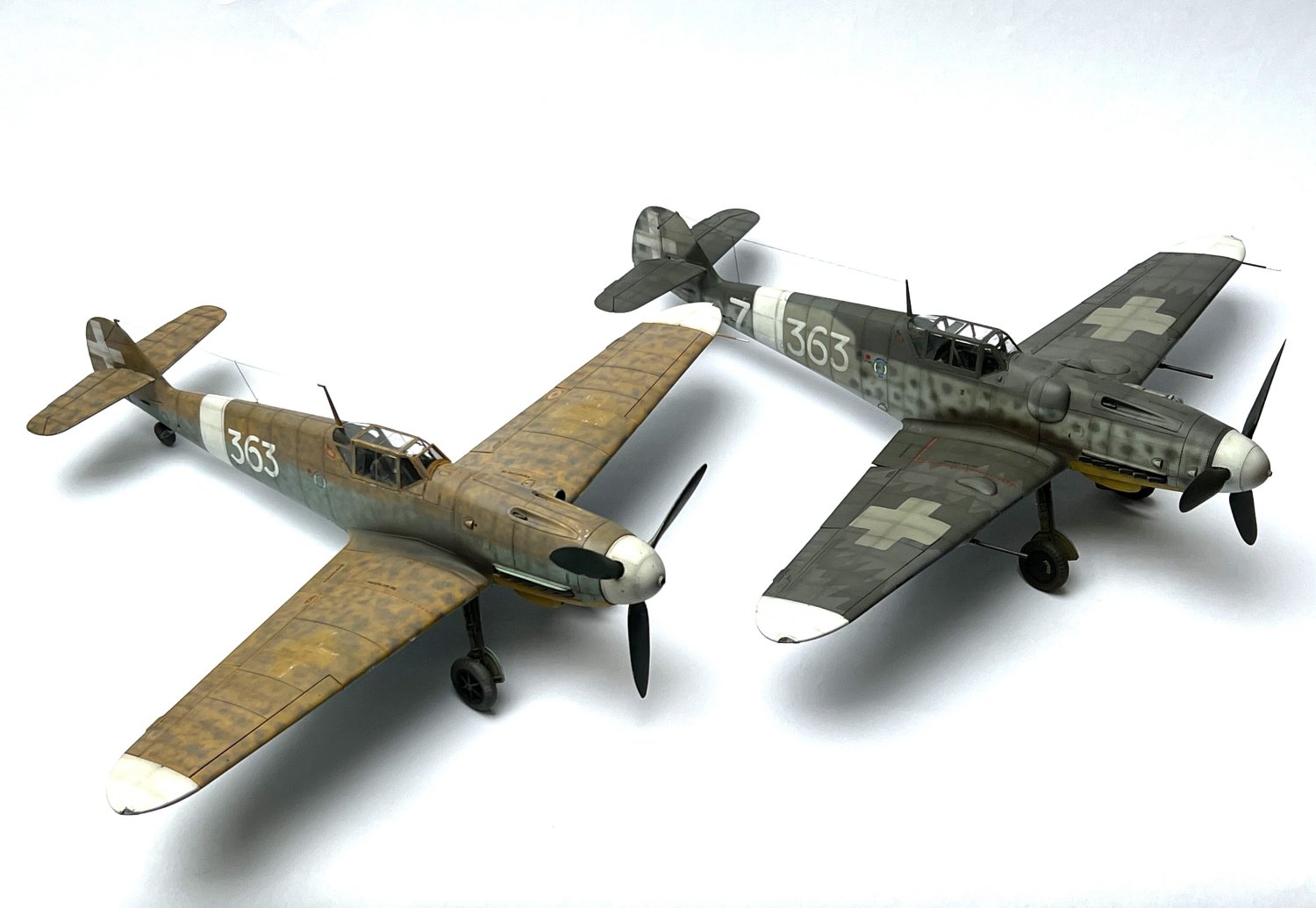
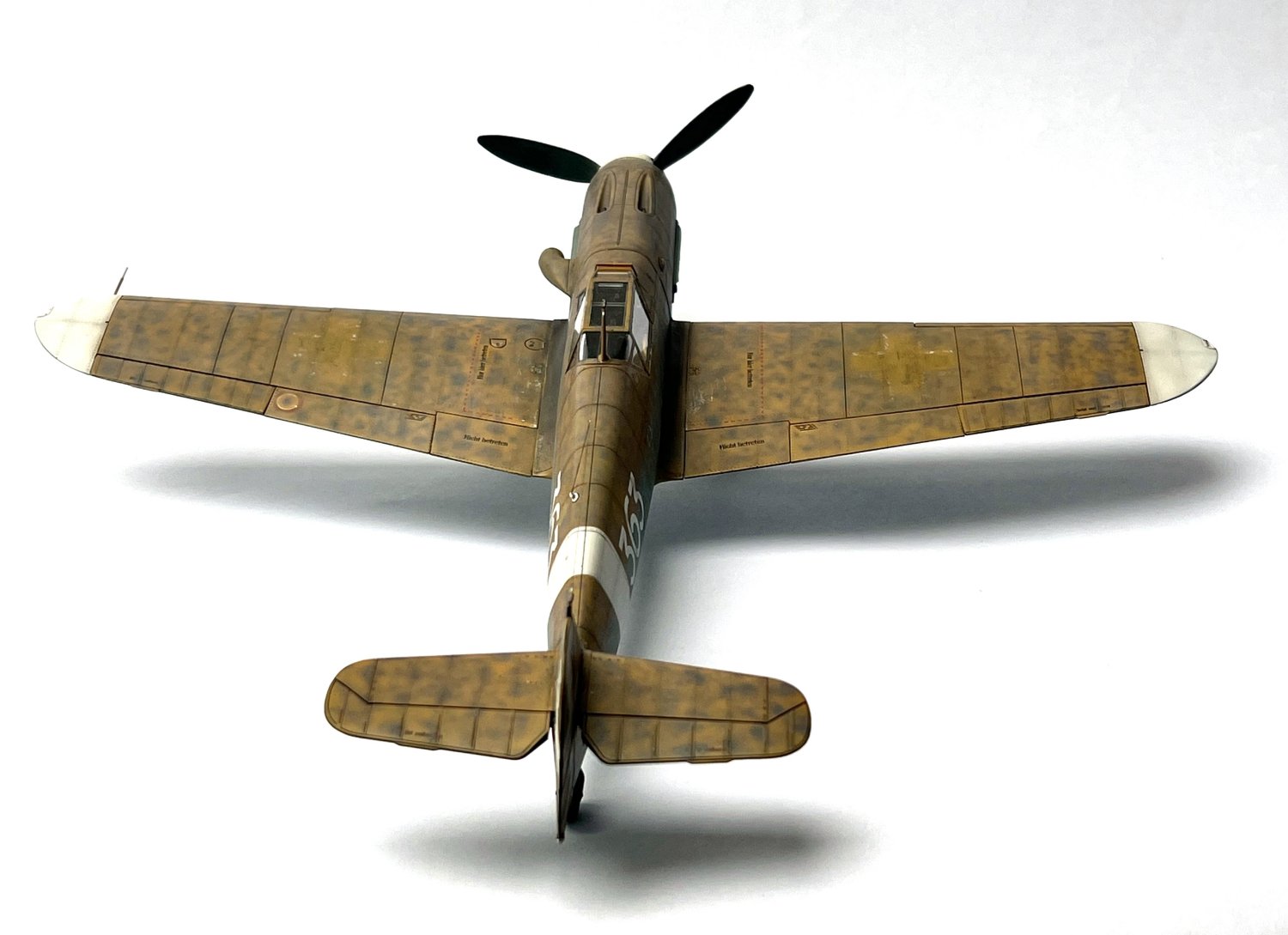
Almost ready. Still need some exhaust and guns smoke stains and general dust filter. But the result is more or less predictable. Old, war weary Messerschmitt.
And the final result:



|
|
|
Aircraft: Messerschmitt Bf.109F2 Manufacturer: Messerschmitt A. G. Type: Fighter Year: 1941 Engine: Damiler Benz DB 601N, 12-cylinder V, liquid-cooled 1,200 hp Wingspan: 32 ft 6 in (9.90 m) Length: 29 ft (8.84 m) Height: 8 ft 6 in (2.59 m) Weight: 6,173 lb (2,800 kg) (Loaded) Maximum Speed: 373 mph (600 km/h) at 19,685 ft (6,000 m) Ceiling: 36,000 ft (10,970 m) Range: 440 miles (708 km) Armament: 2 x 7.92 mm MG 17 MGs, 1 x MG 151/15mm cannon Crew: 1 |


|
|
|
|
|
|

|
|
|


|


|
|
|
|
March, 2023 STORMO! © 2023 |