|
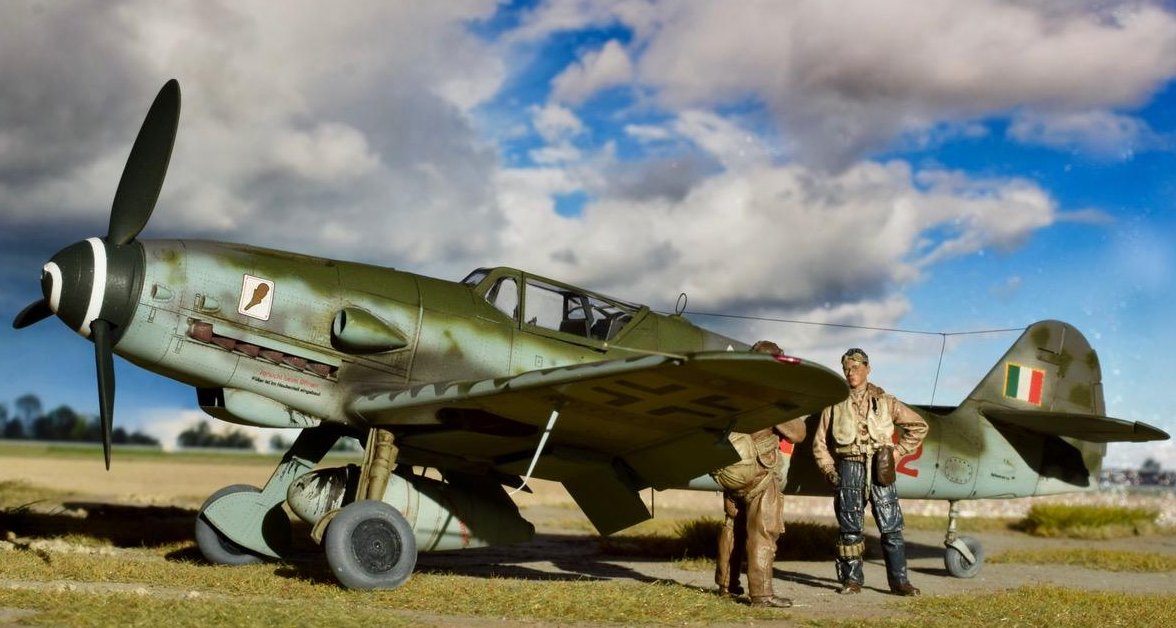
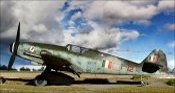
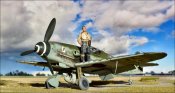
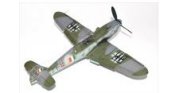
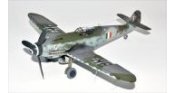
Eduard 1/48 Messerschmitt Bf.109G10U4R3 Italian Ace Dino Forlani by Jean Barby |
|

Click the STORMO! Eagle to return to the Gallery |
|
By 1944 the Bf 109G was overweight and slow. In the hands of the legendary "experten" it was still capable of besting its opponents, but the average Luftwaffe pilot was simply incapable of accomplishing this. In an attempt to increase the speed of the 109G, the DB 605D engine was developed. Similar to the DB 605AS, the DB 605D's supercharger was increased in size, and again, the compression ratio was increased as well as the displacement. The MW 50 boost was retained, and as a result, the G-10 was the fastest of the entire G series. Standard equipment for the G-10 was the FuG 25a IFF, a OF loop, the tall wooden tail, the erla haube canopy, and the FuG 16ZY with the Moranne mast under the left wing. The DB 605D employed the refined cowling, enlarged supercharger intake, deeper oil cooler, and wider propeller blades all of which appeared on the G-14AS. One further difference in the appearance of the G-10 was the addition of two bulges on either side of the lower cowling resulting from enlarged oil sumps and camshaft covers. Some production models of the G-10 received wings with the normal size wheel well bulges and tires of the G-6/14 type. These aircraft also had the long shaft, fixed tailwheel and no external trim tabs on the rudder. The extended length tailwheel was another attempt to help the pilot see over the cowl and give a better angle of attack during take-off. Other G-10 aircraft received the larger, wider main wheels with the wings having large uppersurface rectangular wheel well bulges. These aircraft had two external, fixed rudder trim tabs and the normal, short fixed tailwheels. The manuals stated that these G-10s were to be fitted with the extended length tailwheels at field modification centers and many were. The G-10/U4 incorporated a 30 mm/1.18 MK 108 Motorkanone engine cannon. The R3 Rustsatze conversion allowed for a 300 liter droptank to be carried underneath the fuselage. The G-10 was issued to units in early fall, 1944, coinciding with a slight resurgence of the Luftwaffe day fighter units. More aircraft were produced in November, 1944 than at any time during the war, many of them being Bf 109s. However, a fuel shorrtage and poorly trained pilots combined to prevent any dramatic reversal of fortune. Units known to have operated the G-10 are the Italian ANR Io and IIo Gruppo Caccia, Luftwaffe JG 1, JG 3, JG 4, JG 5, JG 6, JG 11, JG 27, JG 52, JG 53, JG 300, some Hungarian and Croatian units. References [1] Beaman Jr., J. R. and Greer D., "Messerschmitt Bf.109 in action, Part 2", Squadron Signal Publications, Aircraft Number 57, 1983 |
|
|
|
|
|
|
|
|
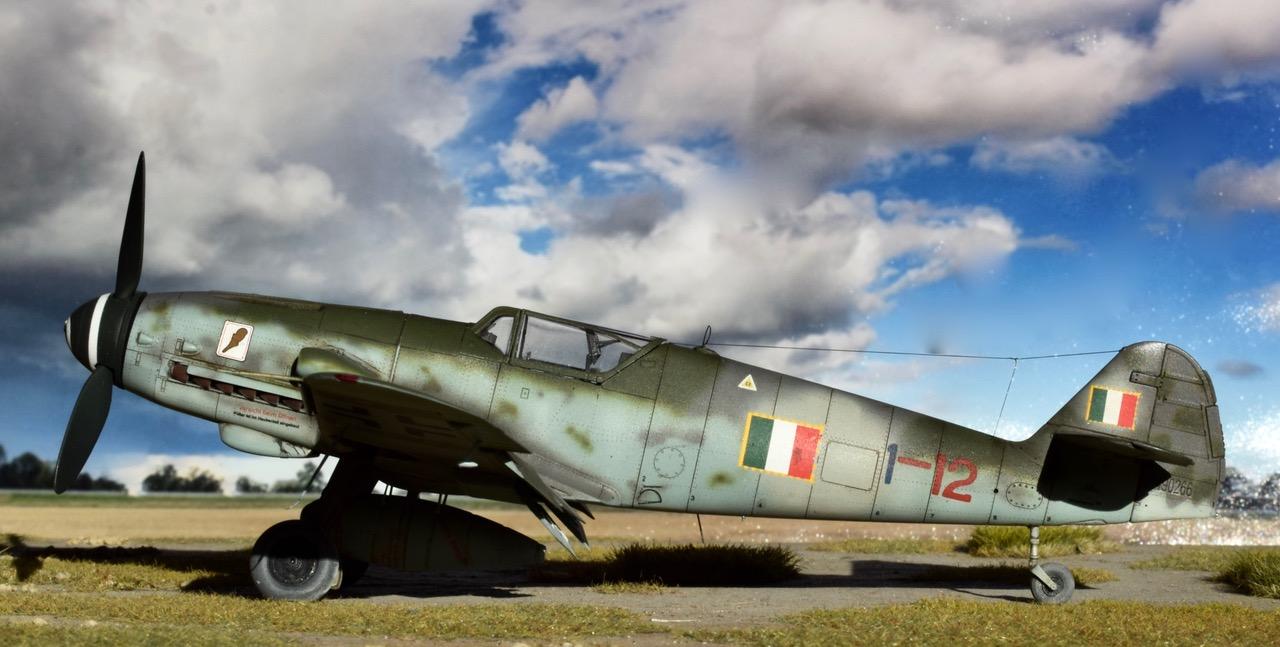
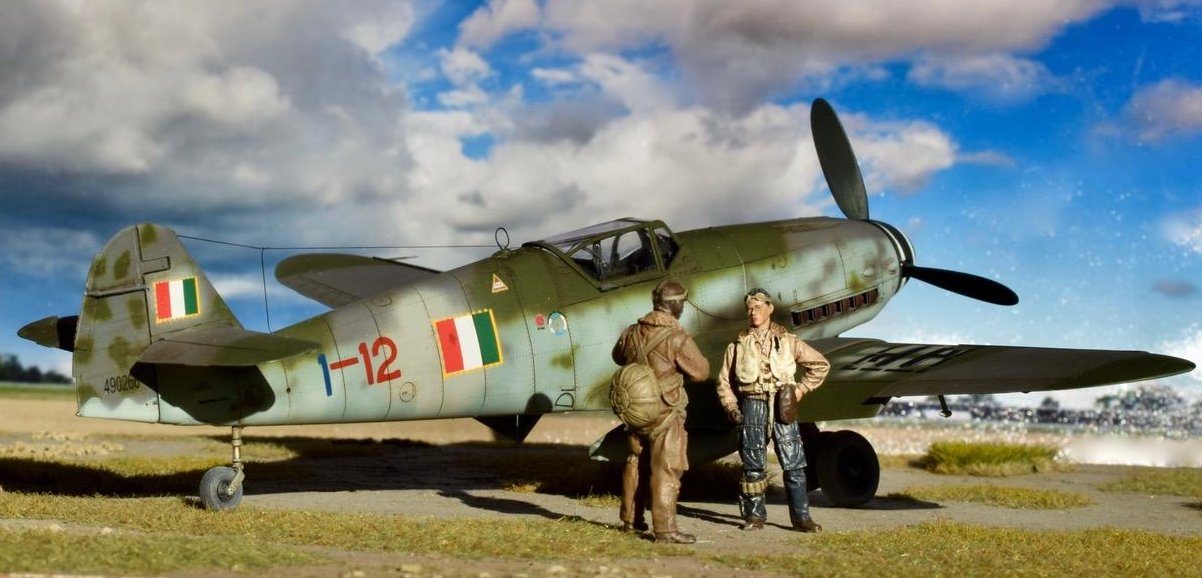
Aircraft of Italian Ace Dino Forlani Bf.109 G10U4R3 1-12, 1a Squadrigla, 1o Gruppo di Caccia received those late Erla machines which included the last refinements, large blisters on the wings to accommodate the larger wheels, long tail wheel, no antenna mast and a 75/83/76 with unpainted undersurfaces. German markings were first painted, then they received an overspray of Grigio Azzurro Chiaro 1 like in reality. Stormo Decals STRM48003 + stensciles for markings. |

|
Aircraft: Messerschmitt Bf.109 G10 Manufacturer: Messerschmitt A. G. Type: Fighter Year: 1944 Engine: Damiler Benz DB 605D, 12-cylinder V, liquid-cooled 2,000hp Wingspan: 32ft 8 ½ in (9.95m) Length: 29ft (8.84m) Height: 8ft 2 ½ in (2.49m) Weight: 7,475lb (3,386 kg) (Loaded) Maximum Speed: 452mph (727km/h) at 19,685ft (6,000m) Ceiling: 41,000ft (12,500m) Range: 356miles (573km) Armament: 2 x 15mm cannons, 1 x 30mm cannon Crew: 1 |
|




|
|
|
|


|


|
|
|
|
|
|
December, 2022 STORMO! © 2022 |