|
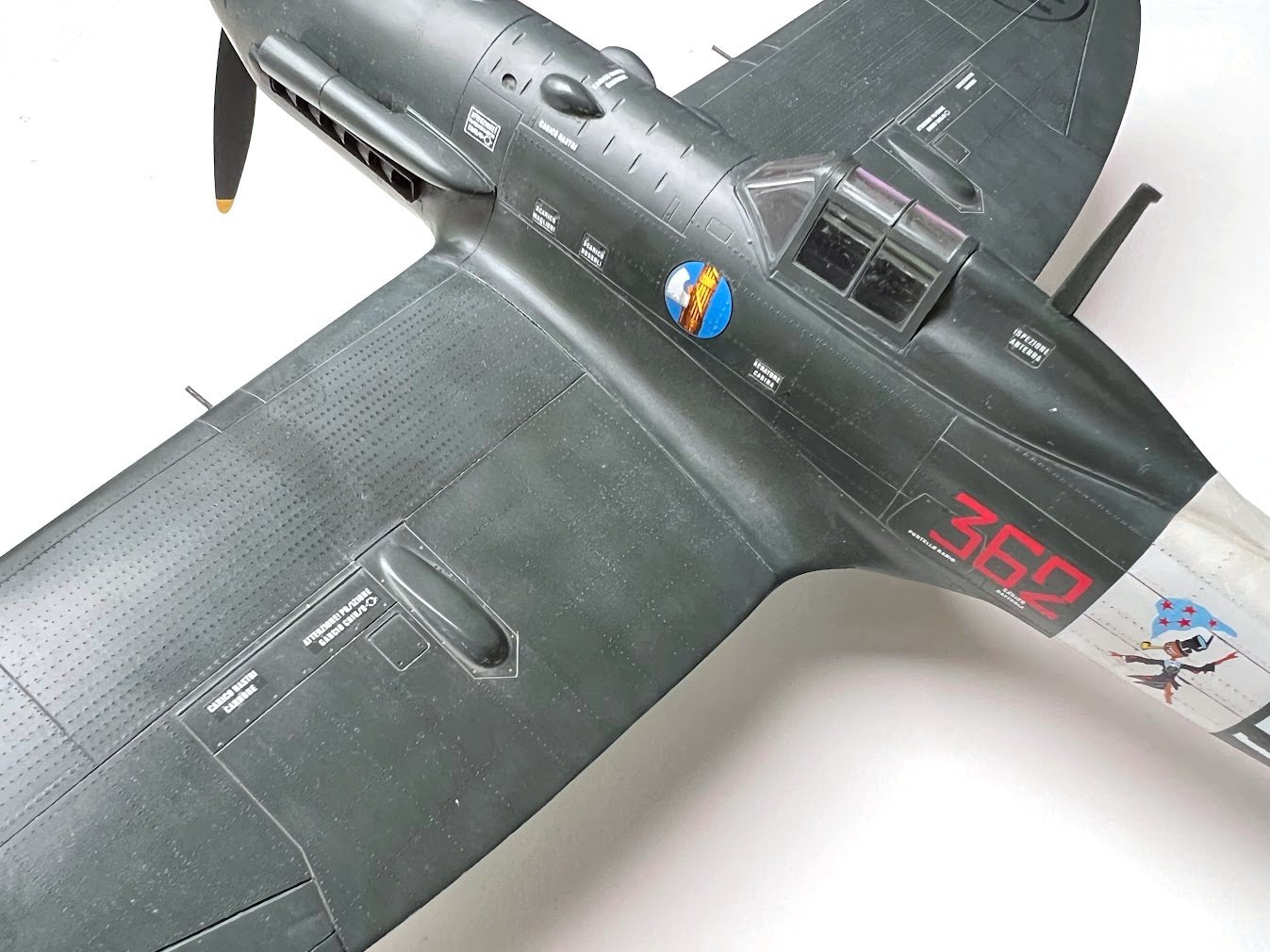
PCM 1/32 Reggiane Re.2005 Sagittario (Archer) by Bogdan Zajączkowski |

 |

Click the STORMO! Eagle to return to the Gallery |
|
The Brilliant Re.2005 Sagittario
The record books say that the first prototype Re 2005 made its first flight on May 9, 1942 - the facts say otherwise. It was actually carried out a few days before, with Tullio de Prato as pilot; on landing, one main undercarriage leg was found to be not properly locked "down" and de Prato avoided serious damage to the aircraft by the simple expedient of retracting the other leg and letting the Re 2005 slide in on its belly. The aircraft was not damaged and de Prato then made the "official" first flight on May 9. In July 1942, the aircraft went to Guidonia for official evaluation and then, the following month, to Furbara for armament trials. The Re 2005 proved to have a maximum speed of 421 m.p.h. at 22,800 ft. (678.5 km/h. at 6,950 m.) and to be excellent in every way. However, large-scale production was not immediately ordered by the Air Ministry. By the end of 1942, Reggiane had contracts for three prototypes (MM.494, MM.495 and one non-flying example for static testing) and a "zero series" of 16 aircraft, to be hand-built by the Reggiane Experimental Department rather than on production jigs. The Air Ministry went into action in February 1943, ordering 18 pre-production and no less than 750 production Re 2005s. In addition, the Ministry was considering placing orders for another 1,000 - their manufacture would have been assigned to Breda (Milan), Aerfer (Naples) and Caproni (Bergamo) - at the time of the Armistice. Sweden, which figured in an abortive attempt to get a licence to manufacture the Re 2001 Falco II, was very interested in acquiring licence production rights for the Re 2005. A licence to build the Daimler-Benz DB 605A had been negotiated by the Swedes in 1941. Their quest for permission to build the Re 2005, started in late-1942, dragged on until June 1943 when Reggiane was allowed to begin definitive negotiations. These came to an end with the September 1943 Armistice without success for the Swedes. The Germans were also watching the Re 2005 programme with interest and, in April 1943, sent a special DB 605 engine with a VDM propeller (a Piaggio unit was fitted to production models) for installation in the second prototype (serial MM.495). This aircraft proved to have a maximum speed of 447 m.p.h. at 23,950 ft. (720 km/h. at 7,300 m.). Work on the "zero series" aircraft (serials MM.092343-092358) pushed ahead rapidly early in 1943, the Reggiane workers being encouraged by special cash bonuses. These aircraft, and all production examples were to be powered by the Fiat RA 1050 RC 58 Tifone engine, rated at 1,475 h.p. for take-off, the licence-built DB 605 A. Deliveries of "zero series" Re 2005s began in May 1943 and of pre-production aircraft (serials MM.096100-096117) a couple of months later. At the time of the Armistice, on September 8, 1943, all the "zero series" aircraft and 13 of the pre-production batch had been completed. The first few of the order for 750 were approaching completion. The Germans then set about acquiring as many of the few Re 2005s which had been completed as they could locate. The two prototypes were flown away in September 1943 by the Germans, the second (MM.495) reputedly going to Romania. Eleven of the pre-production batch were requisitioned and, after certain modifications (the installation of German-built DB 605 A engines and VDM propellers, for example), they were flown to Germany during the period October 6-10, 1943. Reggiane was also asked to complete a small number of additional Re 2005s, but there is no evidence that this was order was completed. It is not clear what happened to the Re 2005s which the Germans acquired, although they were certainly used by the Luftwaffe in some capacity. There are reports that they were used for the defence of Bucharest and Berlin. The five or six Re 2005s used by the Aviazione della Repubblica Sociale Italiana after the Armistice served only as trainers.
The first Re 2005 to be issued to the Regia Aeronautica was the first prototype which was assigned to the 362a Squadriglia 22° Gruppo in the spring of 1943. The squadron was then based at Naples-Capodichino and the opportunity was taken to evaluate the new fighter under active service conditions. "Zero series" Re 2005s were issued to the 362a Squadriglia from May 1943 as they became available and they operated, from Naples and Capua, in the defence of Rome and Naples. On July 10 eight of the squadron's aircraft were transferred to Sigonella, near Catania in Sicily, to take part in the defence against the Allied invasion of the island. Only two Re 2005s were still in flying condition on July 14 when the 362a Squadriglia withdrew from Sicily. These two survivors were handed over to the 371a Squadriglia, based at Reggio Calabria, in southern Italy. Shortly afterwards, the two Re 2005s were destroyed during a bombing raid on Reggio Calabria. The 362a Squadriglia re-equipped with 10 Re 2005s at Capua at the end of July 1943, these being mostly pre-production examples. The squadron developed its own method of attacking the Boeing B-17 Fortress, which had proved to be a dangerous adversary because of its heavy defensive armament. The Re 2005s would attack the B-17s head on while in a shallow dive, with all guns firing; just short of a collision, the Italian fighters would flip over onto their backs and dive away under the B-17s. The aircraft would then climb rapidly to repeat the process. At the Armistice, the 362a Squadriglia was at Naples-Capodichino with two aircraft, neither serviceable. They were burned by the squadron's personnel to prevent them falling into German hands, thus ending the Re 2005's career in combat. None were used by the Co-Belligerent Air Force and the last survivors were, presumably, those in German hands, whose fate is obscure. Sources: 1) Brindley J. F., "Caproni Reggiane Re 2001 Falco II, Re 2002 Ariete & Re 2005 Sagittario", Aircraft Profiles, Profile Publications, Windsor, England, 1972. 2) Alegi G., "Reggiane Re 2005", Ali D'Italia #16, La Bancarella Aeronautioca,Torino, Italy 2001. |

|

|
|
|
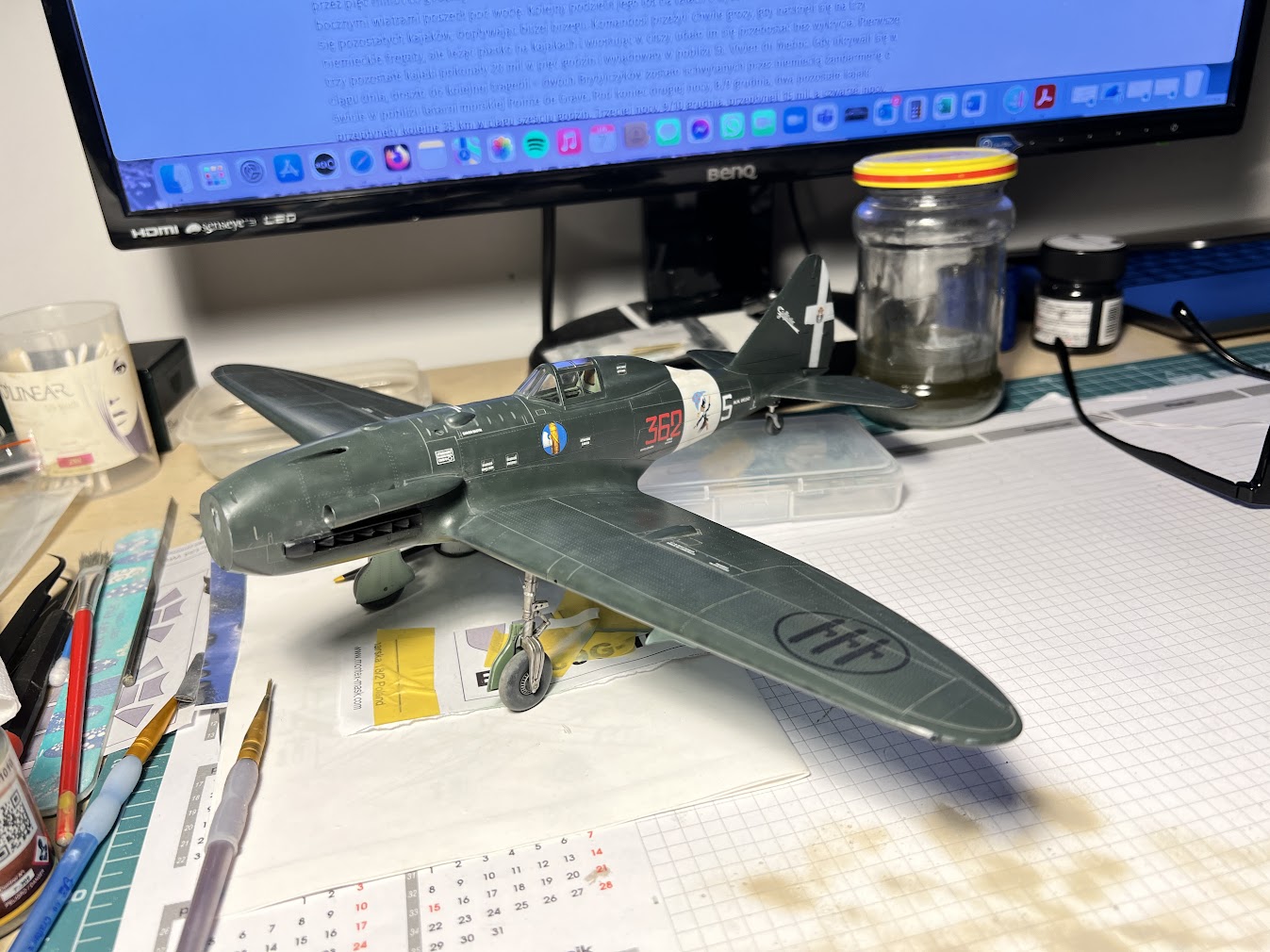
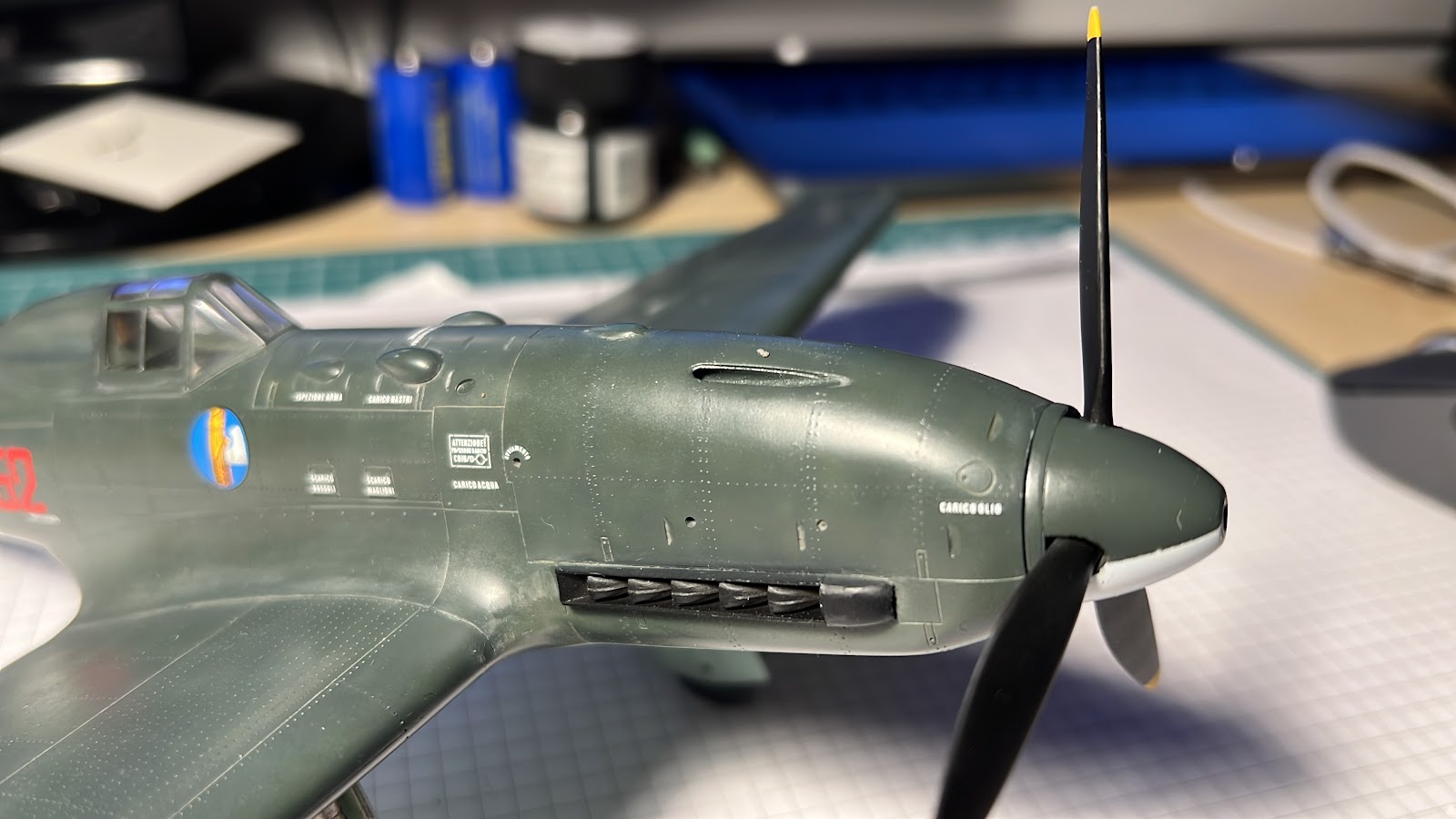
I will not repeat the historical or technical description of this beautiful aircraft. I will just focus on the build. The kit is of really
good quality - as for a short run. Glossy hard plastic with recessed panel lines, very good resin parts, photo-etched fret plus decals. First
of all - the kit is not difficult. As with any short run, of course, you need to clean the parts carefully and check the fit several times before
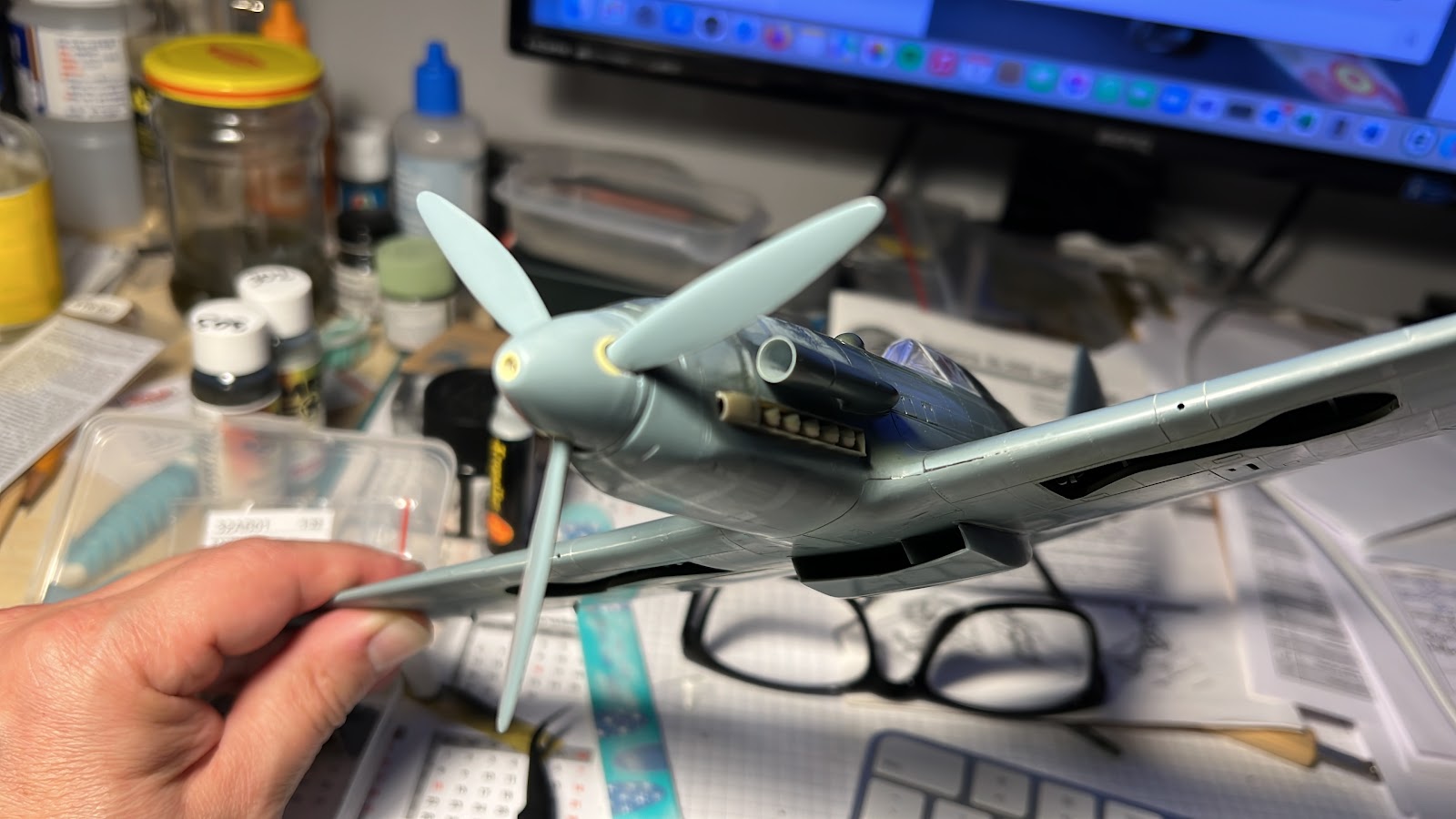
gluing parts together. The wings trailing edges are quite thick and require thinning. The propeller spinner also needed adjustments - the holes
for the propeller blades were far too large. The shape of it should also be improved - but I decided to accept it. The entire model was riveted
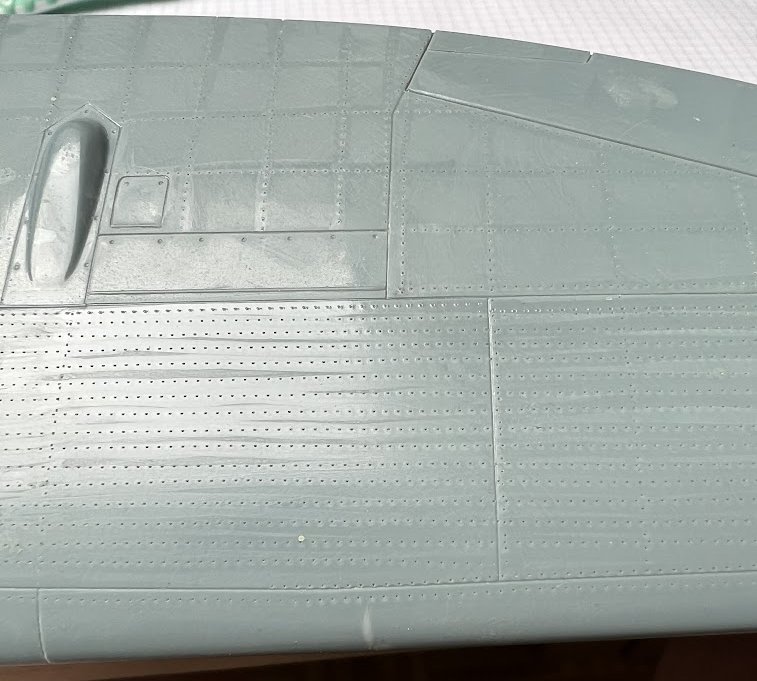
- thousands of "rivets" - especially on the wings. In fact, it turned out to be much easier than I thought. A certain challenge was to make negative
rivets on the wings and positive rivets on the fuselage. The solution is ridiculously simple - traces of riveting on the wings should be treated with
very fine sandpaper and "painted" gently with Tamiya extra thin cement to clean them. Rivets on the fuselage - well... I just left them as they were
after using Rosie the Riveter. I assumed that airbrushing them with Mr. Surfacer 1500 will give a good final result. And it worked. A very simple and
efficient method. 









|
|
|
Aircraft: Caproni-Reggaine Re.2005 Manufacturer: Officine Meccaniche 'Reggaine' S.p.A. (Caproni) Type: Fighter Year: 1943 Engine: Damiler Benz DB 605A, 12-cyclinder V, liquid-cooled, 1,475hp Wingspan: 36 ft 1 in (11.0 m) Length: 28 ft 8 in (8.73 m) Height: 10 ft 4 in (3.15 m) Weight: 7,970 lb (3,610 kg) (Loaded) Maximum Speed: 421 mph (678 km/h) at 22,800 ft (6,949 m) Ceiling: 39,400 ft (12,000 m) Range: 780 miles (1,250 km) Armament: 2 x 12.7mm (0.5 in) SAFAT machine guns; 3 x 20mm cannons Crew: 1 |

|
|
|
|
|
|

|
|
|


|


|
|
|
|
January, 2023 STORMO! © 2023 |


