|
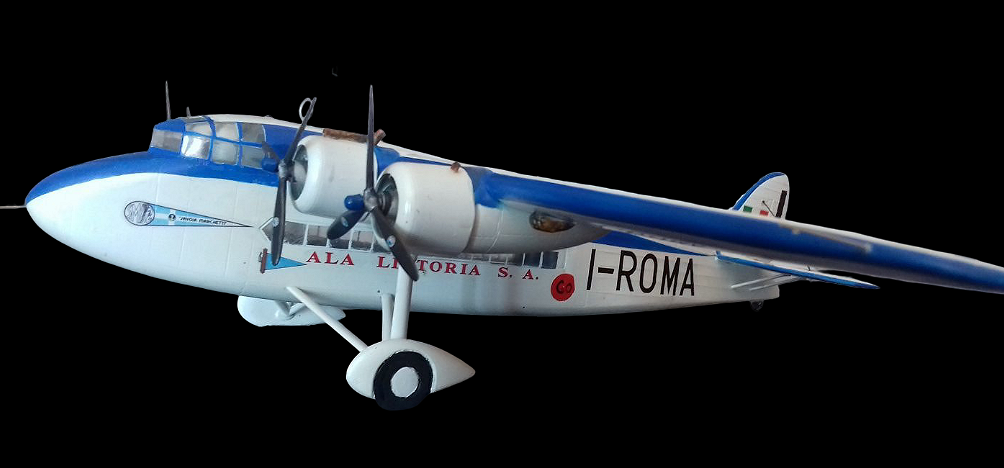
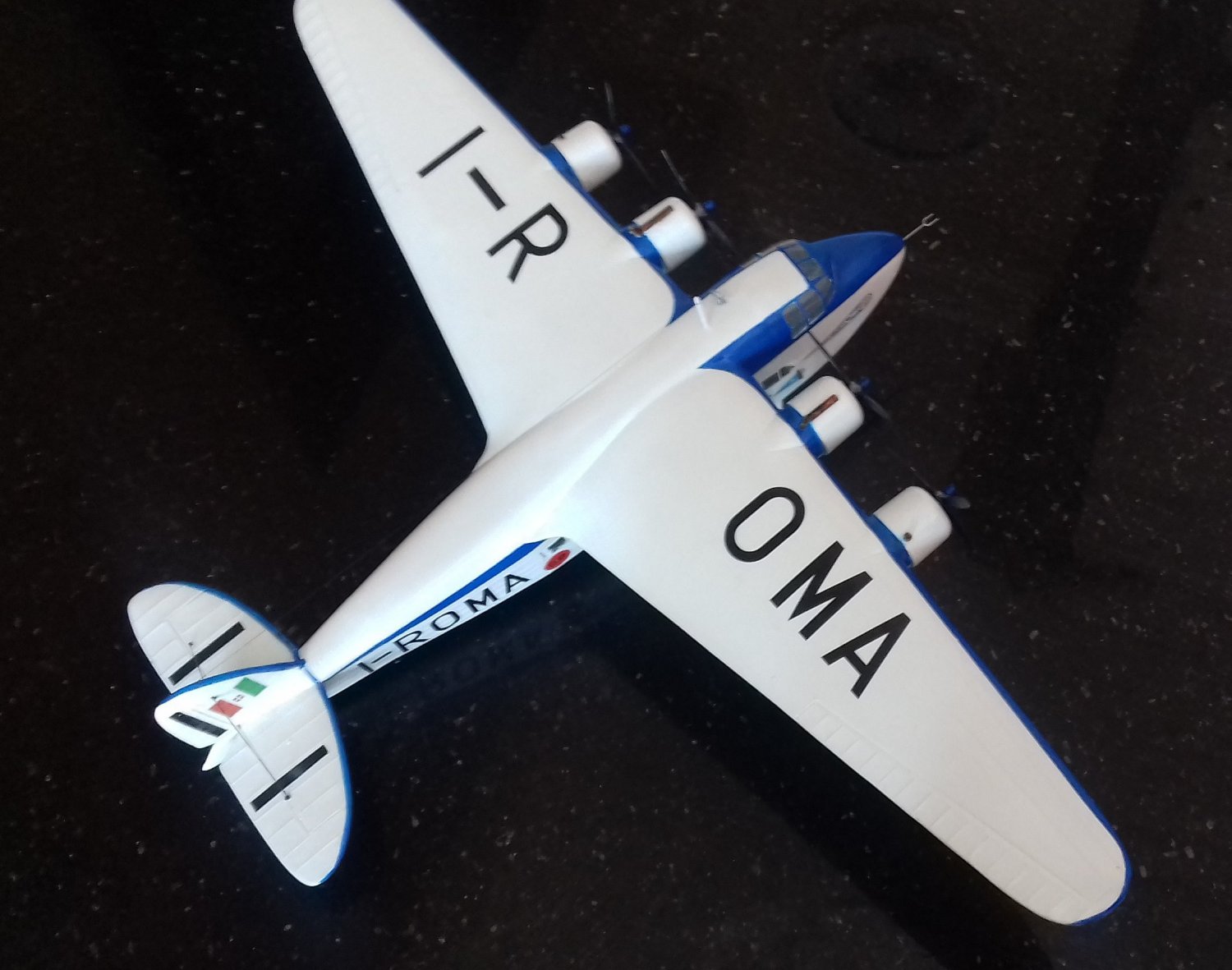
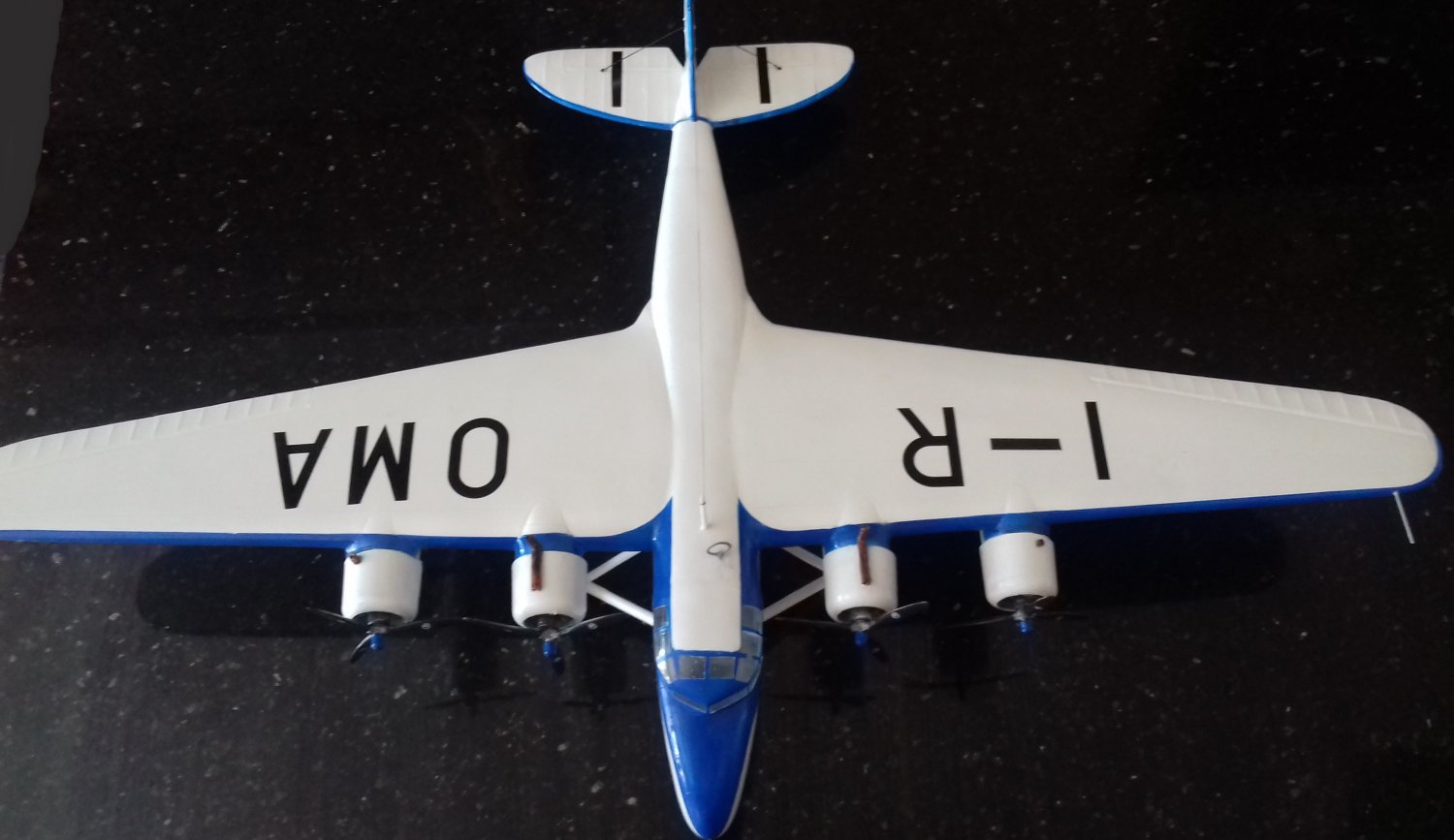
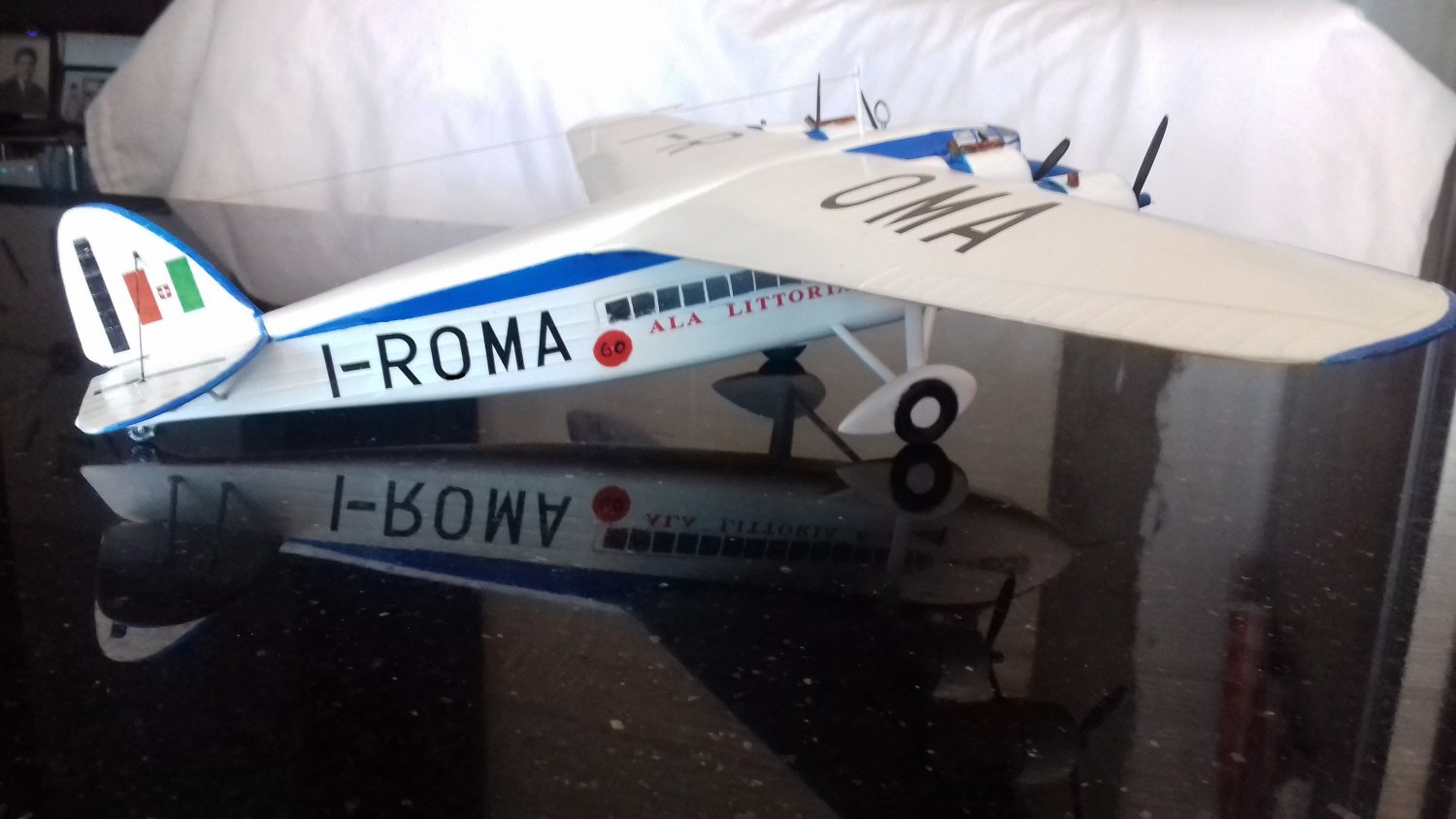
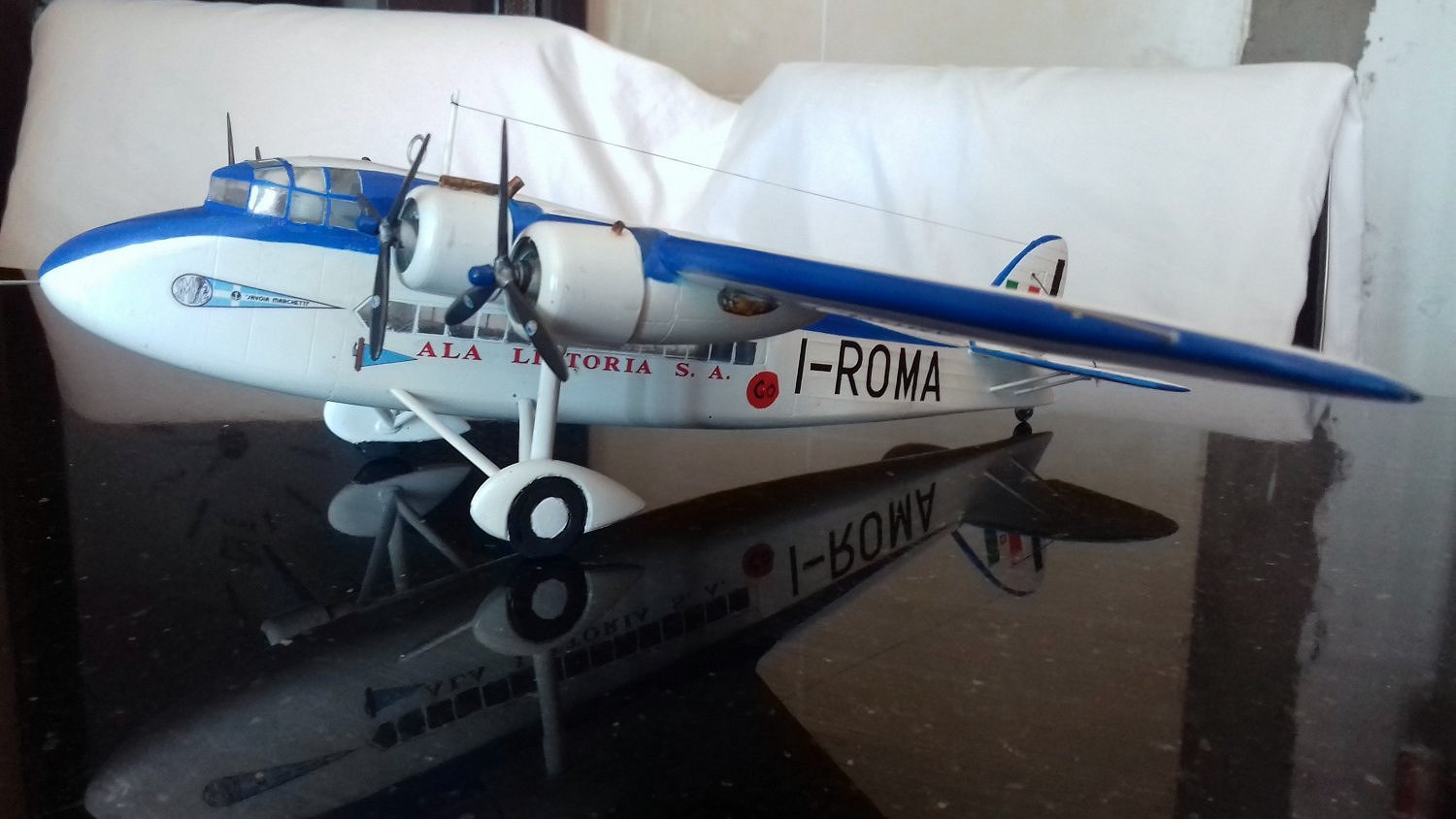
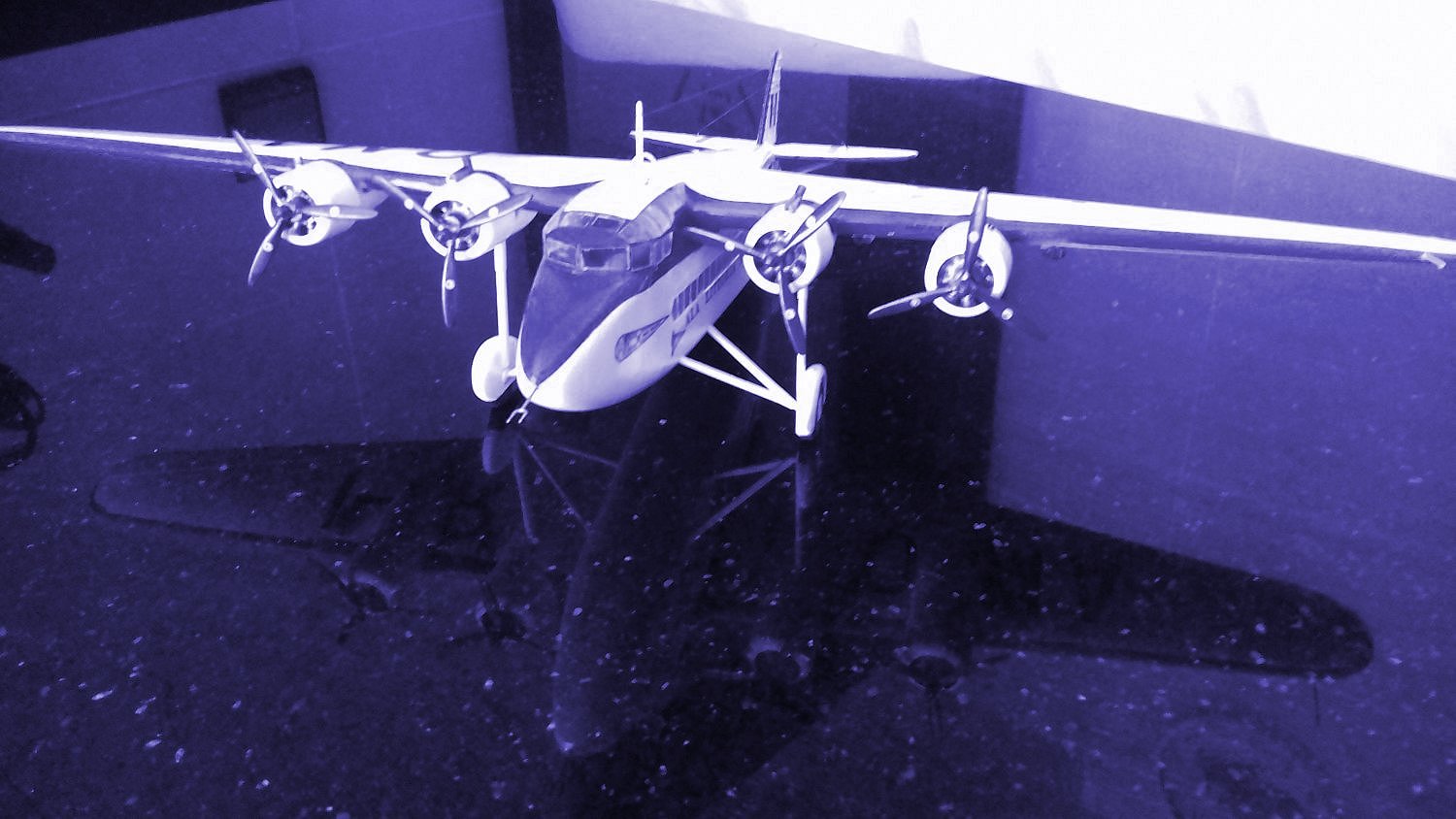
BroPlan 1/72 SIAI-Marchetti S.74 Civil Transport - Ala Littoria I-ROMA by Vincent Fiore |
|

Click the STORMO! Eagle to return to the Gallery 
|
|
The SM.74 was the first four-engine plane that the SIAI-Marchetti company ever manufactured. Only three aircraft were constructed (I-URBE, I-ROMA, I-ALPE), but they saw long years of service in peace and war. The SM.74 was flown by Ala Littoria first on the Rome-Marseilles-Lyons-Paris route and then on the Rorne-Brindisi line. The planes were distinguished by comfort and luxury, they were were fast, safe and sturdy. When World War II broke out, the three planes were transferred to the military. They saw service in Africa as troop and cargo carriers (carrying more than 5,000 kg (11,000 lbs) of material, the planes revealed themselves as one of the best Italian cargo aircraft), and then were used to evacuate civilians and wounded. All three were destroyed in military action. The last one was damaged during a bombing raid over the Rorne-Urbe airport on July 19, 1943. The prototype first took to the air on November 16, 1943, and during its test flights established a world record. It flew some 620 miles (1,000 km) at 200 mph (322 km/h) with a load of ten tons. The SM.74 was a high-wing monoplane. The wing was constructed of wood, while the fuselage was built of metal with wood and fabric covering. Two of the aircraft were powered by four 700 hp Piaggio Stella X.RC engines; the third was powered by 845 hp Alfa Romeo Pegasus III engines. Lodged in NACA cowls, the engines drove two-position three-blade metal propellers. The passenger cabin was about 26 feet (8 m) long and had a bar as well as sanitary facilities. Passenger capacity varied from a maximum of 27, for distances up to 620 miles (1,000 km), to a minimum of 16, for distances up to 1,200 miles (2,000 km). Since the plane had to climb to high altitudes in order to cross the Alps, the passengers were equipped with individual oxygen masks. The SM.74's test flight performances were excellent. The aircraft could reach about 3,000 feet (1,000 m) in two minutes and forty-eight seconds; 9,000 feet (3,000 m) in eight minutes and fifty-five seconds; and 15,000 feet (5,000 m) in nineteen minutes and forty-three seconds. The first SM. 74 was delivered to the Rome Urbe airport on March 27, 1935, and inaugurated the Rome-Marseilles-Lyons-Paris route on July 18. The other two aircraft were delivered later in the year. Beginning in the summer of 1936, the three SM.74s flew the Rorne-Brindisi line and later made flights to Libya. On the eve of the war the planes were transferred to the Regia Aeronautica. Soon the planes were sent to the vicinity of Benghazi, which was their base during the war. The first SM.74 to be destroyed (the second that was built) crashed into a mountain on October 23, 1941. The second was destroyed on the ground during an air raid on November 2, 1941. The last SM.74 survived until July 1943. |
|
|
|
|
|
|
|
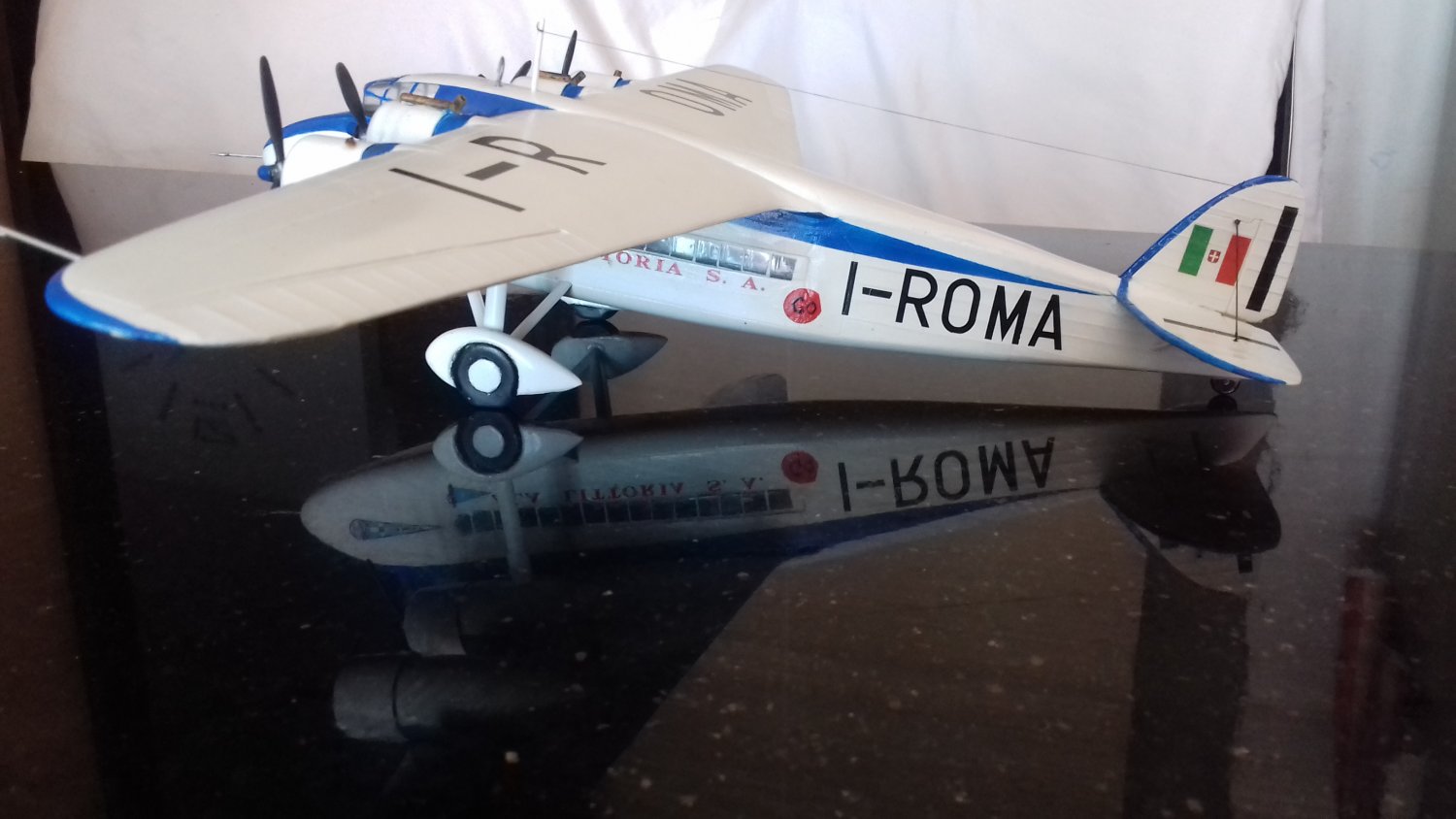
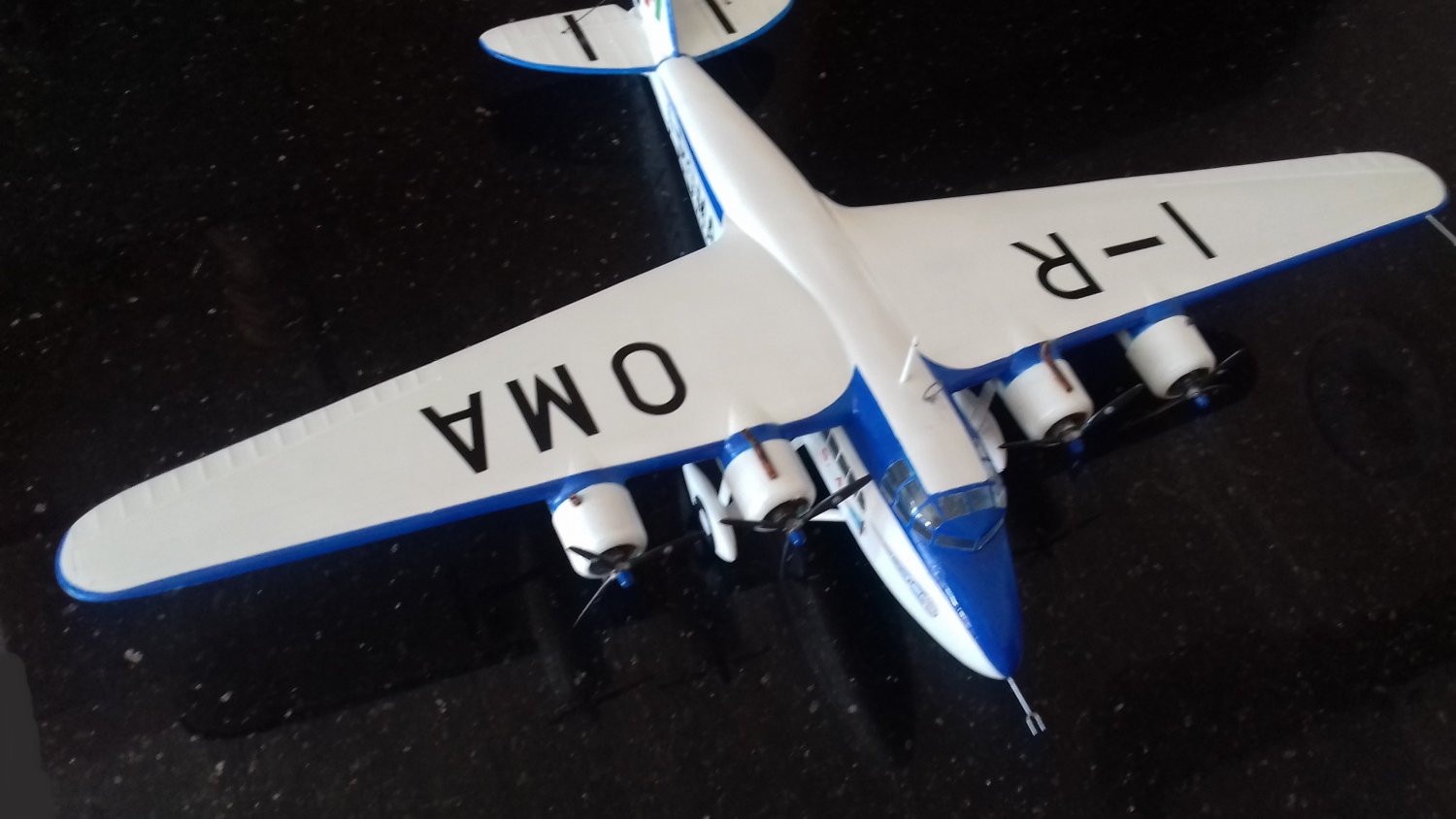
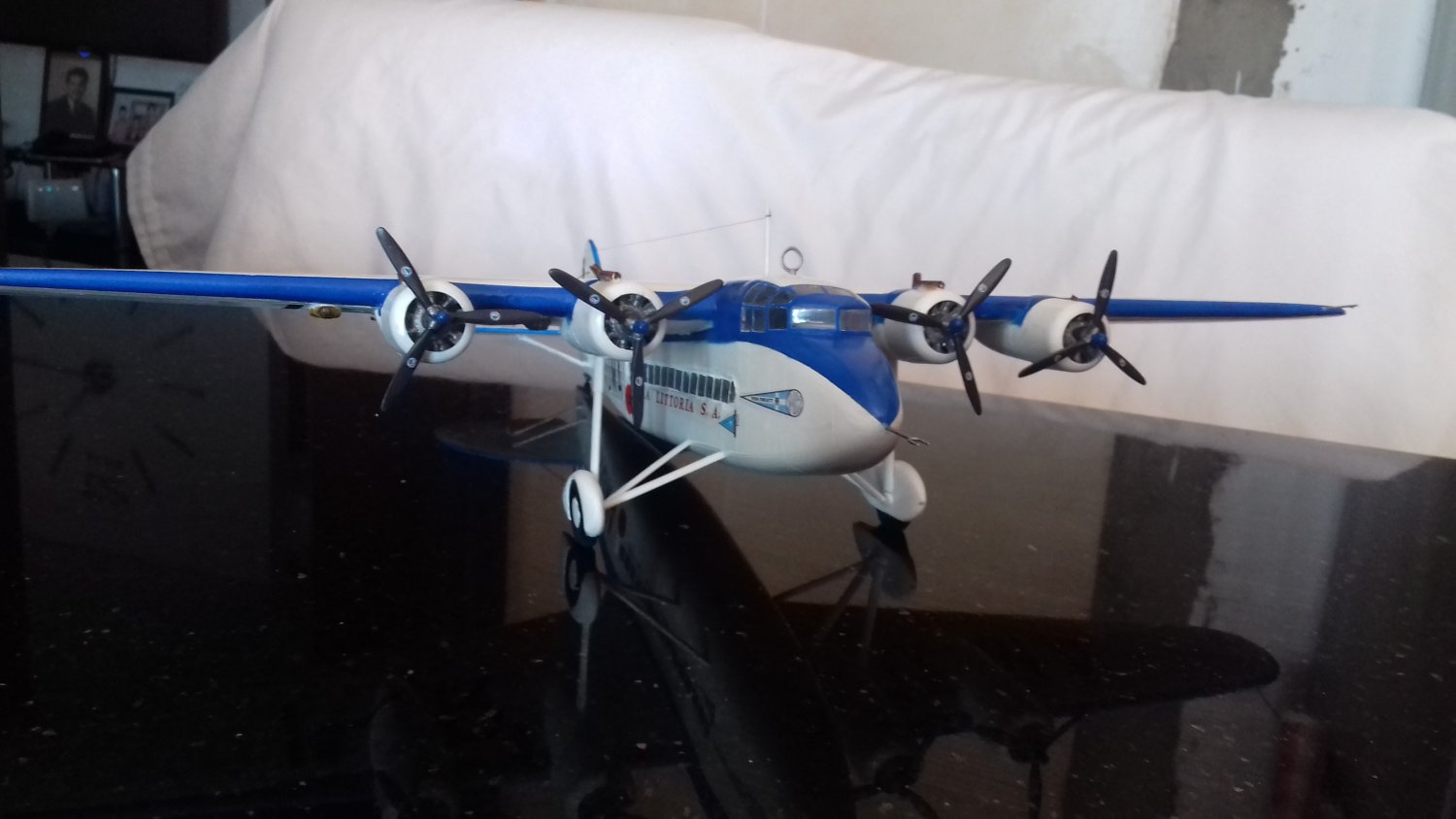
This kit is a BroPlan Vac. There are several shortcomings in the kit. The most glaring are the vents on top of the wing which, as hard as I tried I could not duplicate. I was able to fashion the exhaust for the engine. I reproduced these by cutting round toothpicks of wood, and cut to length and drilled out at the ends. However, the biggest problem was the cabin windows when the openings were cut out and the clear plastic part was put into place, the surface of the clear part was not fit flush with the outside of the fuselage. To correct this problem I used epoxy and clamps to fasten the clear part in place and clamped them to ensure a strong bond. The reason I needed a strong bond was I planned to sand the exterior sides of the fuselage until I reduced the thickness of the sides until flush with the clear parts. The sanding was achieved with a disc sander in my Dremel tool. Because I have problems getting supplies I was unable to use MRP pants and instead had to use Mr.Hobby paints, these paints are good but I prefer MRP. After several coats of primer and sanding in between I painted, and when dry I sanded with 1500 sanding sponge and applied another coat. After a light sanding, using a very soft wide brush, brushed a coat of pledge floor wax on the entire model. Several things from spare box were now added such as a radio, loop and pitot tube, Please excuse the oversized registration letters as I was unable to obtain the correct size. As I did not have the red Go decals I had to improvise. I found some large RAF decals and with a circle cutter I cut a smaller circle out of the center part. I then carefully painted the word Go in the center and applied a clear varnish over it. I wish the kit came with the vents and intakes needed for the top and bottom of the wing however, I am pleased with the results.
|
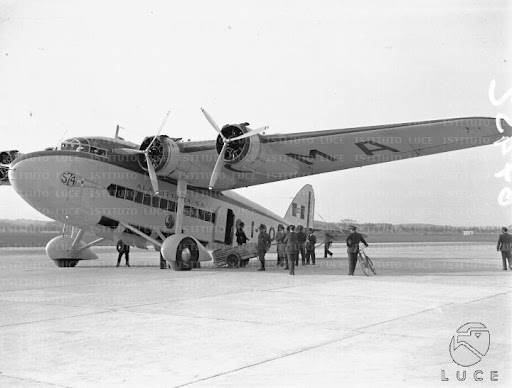
Aircraft: SIAI-Marchetti SM.74 Manufacturer: SIAI-Marchetti Type: Civil Transport Year: 1935 Engine: Four Piaggio Stella X.RC. 9-cylinder radial, air-cooled, 700 hp each Wingspan: 97 ft 4 in (29.68 m) Length: 70 ft 1 in (21.36 m) Height: 18ft 1 in (5.50m) Weight: 30,8001b (14,000kg) Cruising speed:186 mph (300km/h) Ceiling: 23,000 ft (7,000 m) Range: 620 mile (1,000 km) Crew: 4 Passengers: 27
|
|
|
|
|
|
|
|

|





|


|
|
|
|
|
|
November, 2021 STORMO! © 2021 |