|
Balaton Modell 1/72 SIAI-Marchetti S.75 Military Transport by Richard Mendes |
|

Click the STORMO! Eagle to return to the Gallery |
|
The Savoia-Marchetti SM.75 Marsupiale (Marsupial) tri-motor transport - the last such designed by Alessandro Marchetti (1884-1966) - resulted from a 1935 request from Ala Littoria S.A. airline for a modern aircraft with retractable main landing gear to compete with other domestic airlines on European and transatlantic routes as well as replacing their older fixed-geared S.73 tri-motors. First flown in November 1937 at Novara Piedmont with 750hp Alfa Romeo 126 RC.34 nine-cylinder radial engines (11 aircraft later fitted with 860hp Alfa Romeo 126 RC.18s as the S.75bis) up to 25 passengers and crew could be carried in a steel, plywood and canvas airframe similar to S.73 transports and S.81 bomber/transports. SM.75 variants included the SM.75 GA (see below), SM.76 (ditto) SM.87 floatplane (4 built) and SM.90 with 1,400hp Alfa Romeo 135 R.C.32 engines and longer fuselage (1 built). SM.75 civil airliners easily could carry 17 passengers with baggage and 4 crew members 1,721km (1,069 miles) at 4,000 meters (13,123 feet) at a spedd of 362kmh (225 mph) some establishing world records for speed-over-distance-with-payload and closed-circuit distances including an endurance world record covering 12,000 km (7,500 miles) in 1939. Keenly interested in the SM.75 the Regia Aeronautica Italia (RAI) subsequently requested an enlarged version powered by 860-962hp Alfa Romeo 128 RC.18/21 radials as well as installation of a Caproni-Lanciani dorsal gun turret with a 12.7mm Breda-SAFAT machine gun as the SM.82 Canguro (Kangaro). In 1938 Ala Littoria commenced SM.75 operations on its European, South American and Rome-Addis Ababa airline routes, Linee Aeree Transcontinentali Italiane commencing operations with them as the SM.76 in 1939. After Italy entered WWII in June 1940 SM.75s continued flying airliner service to South America until December 1941 when Italy declared war on the United States. Flights continued to Italian overseas territories till the September 8, 1943 Armistice, also in June 1940 the RAI impressed several airliners converting them to military transports carrying up to 24 troops. After the September 8, 1943 Italian Armistice surviving SM.75s continued flying with the Aeronautica Militare Co-Belligerante and post-war Aeronautica Militare as passenger and cargo transports until 1949. SM.75s seized by the Germans continued to fly with the Luftwaffe until the war’s end. Before WWII Savoia-Marchetti exported five SM.75s fitted with Hungarian-made Gnome-Rhone licensed Manfréd Weiss K-14 870hp fourteen-cylinder radial engines to Magyar Légiforgalmi R.T. (MALERT) airlines flying them till 1939 when the Magyar Királyi Honvéd Légierő (Royal Hungarian Army Air Force) impressed and fitted four of them with two armed dorsal turrets and retractable ventral observation bay for paratrooper operations the fifth as a red cross-marked medical transport. |

|
|
|
|
|
|
|
|
|
SM.75s flew throughout WWII as passenger and cargo transports on several Italian
combat fronts, robustly constructed they flew with their S.73, S.81 and SM.82 cousins operating
from primitive field conditions carrying substantial passenger and cargo loads over very long
distances, some truly epical. In January 1942 RAI Commander in Chief General Rino Corso
Fougier (1894-1963) initiated plans for a Rome to Tokyo flight, consulting with pilots having
long-range flying experience to South America and East Africa, the SM.75 was judged best
suited with superior endurance MM.60537 subsequently being modified as the first SM.75 GA
(Grande Autonoma) long-range aircraft. May 1942 Asmara, Eritrea Leaflet Mission The first and only mission with MM.60537 however was to drop leaflets over British-held territory in East Africa to stranded colonialists. Departing Rome for Benghazi, Libya 17:30 May 7, 1942 five men including pilot Lieutenant Colonel Amadeo Paradisi flew non-stop to Asmara arriving 10 hours and 20 minutes later to release the leaflets then flying directly back to Rome instead of Benghazi, the entire mission lasted 28 hours. On May 11th Paradisi whilst flying MM.60537 to Guidonia Montecelio, Italy lost power in all engines making an emergency landing. June-July 1942 Rome to Tokyo Flight After the loss of MM.60537 a second civil SM.75 I-BUBA impressed by the RAI in 1940 as MM.60539 was modified to GA standards by June 9, 1942 for the long-planned Rome-to-Tokyo flight as the SM.75 GA RT (“Rome-Tokyo”) piloted by Lieutenant Colonel Antonio Moscatelli. An extremely dangerous journey over thousands of kilometers of hostile Soviet Union territory the flight if successful would be of immense propaganda value though more critically it involved transporting new communication codes to the Japanese the Italians believing the British had broken their existing ones. Departing Guidonia Montecelio 05:30 June 29, 1942 MM.60539 and arriving at Zaporozhe airfield 2,030km (1,260 miles) in German-occupied Ukraine late that day. At 18:00 June 30th Moscatelli piloting MM.60539 weighing in at 21,500kg (47,400 pounds) 11,000kg (24,250lbs) of it fuel, laboriously lifted her off the grassy 700-meter (2,297-foot) Zaporozhye airfield runway carrying no documents or correspondence, under strict orders to burn the aircraft and communication codes if forced down. Flying in strict radio silence MM.60539 flew unscathed throughout the night despite encountering Soviet anti-aircraft fire, bad weather and a Soviet Yakovlev Yak-1 fighter while flying towards the Caspian and Aral Sea coasts thence easterly towards Lake Balkhash, Tarbagatai Mountains and Gobi Desert. Maps of Soviet civilian and military positions were inaccurate forcing Moscatelli to climb up to 5,000 meters (16,404 feet) to avoid detection depleting the aircraft's crew oxygen supply earlier than planned, a sandstorm over Mongolia endangering MM.60539’s engines as well. At 22:00 June 30, 1942 MM.60539's crew sighted the Huang He (Yellow River), running low on fuel at 15:30 July 1, 1942 Moscatelli safely landed MM.60539 on the 1,300-meter (4,270-foot) Pao Tow Chien (Baotou, Inner Mongolia) runway 1,000 meters (3,280 feet) above sea level in Japanese-occupied inner Mongolia 6,000 km (3,700 miles). To safely fly over Japanese-held airspace, MM.60539 was repainted with Japanese markings flying non-stop the final 2,700 km (1,700 mi) leg of the journey to Tokyo with an interpreter aboard. With the epic Rome-Tokyo flight under his belt on July 16, 1942 Colonel Moscatelli and crew departed Tokyo in MM.60539 on the just as epic a flight to Rome arriving at Pao Tow Chien many hours later. With Japanese markings now removed and replaced with Italian ones at 21:45 July 18, 1942 MM.60539 laboriously took off, Moscatelli retracing most of the original flight route over Soviet territory though this time flying to Odessa on the Black Sea arriving 29 hours and 25 minutes later covering 6,350km (3,950 miles). Back in the air scant 10 hours later on July 20th MM.60539 arrived at Guidonia Montecelio Moscatelli and crew personally being greeted by Benito Mussolini. The Italian press publicized the flight although the Japanese were reluctant to do so to avoid antagonizing the Soviets. May 23-24, 1943 Abyssinian Bombing Missions In April-May 1943 civil SM.75 I-TAMO, impressed as RAI MM.60543, and MM.60539 of the Rome-Tokyo flight were modified to GA standard with bomb bays capable of carrying 1,200kg (2,650 pounds) of bombs and Jozza bombsights, tanks carrying 11,000kg (24,250 pounds) of fuel, to undertake the only wartime bombing mission by SM.75s to destroy American bombers stored at an airbase in Gura, Abyssinia 3,000km-plus (1,900 miles-plus) distant from Rhodes in the Dodecanese, the RAI's most experienced long-distance flying aircrews selected for the mission led by flight officers Villa and Peroli. Departing Rhodes at 06:30 May 23, 1943 each S.75 GA (no bomber sub-variant designation was assigned) weighed in at 24,000kg (52,910 pounds), engines optimized for endurance and economy rather than power, initially flying at low altitude at 10:00 the climbed to 3,000m (9,842 feet). Peroli’s aircraft was using large amounts of fuel so in consequence decided to bomb Port Sudan instead, doing so successfully he then flew back to Rhodes arriving at 05:30 May 23, 1943. Villa now on his own pressed on to bomb heavily defended Gura, releasing bombs on target at 18:45 flying back to Rhodes with it landing safely at 06:45 May 24, 1943 seventy-five minutes after Peroli having covered 6,600km (4,100 miles) in 24 hours and 15 minutes. |
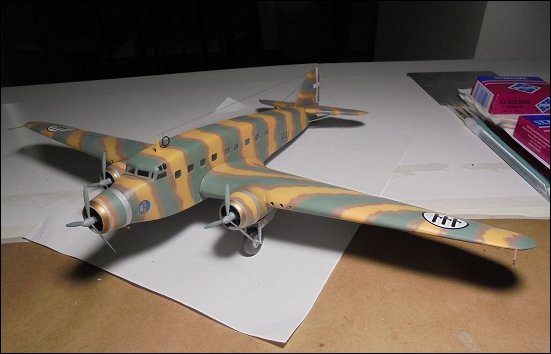
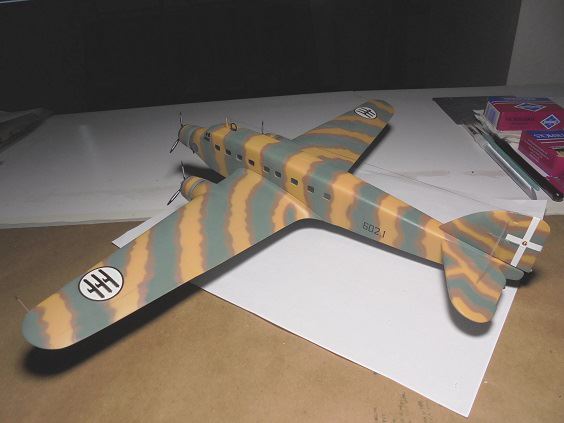
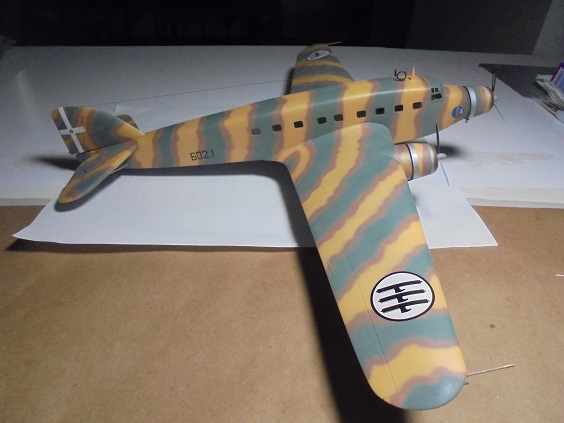
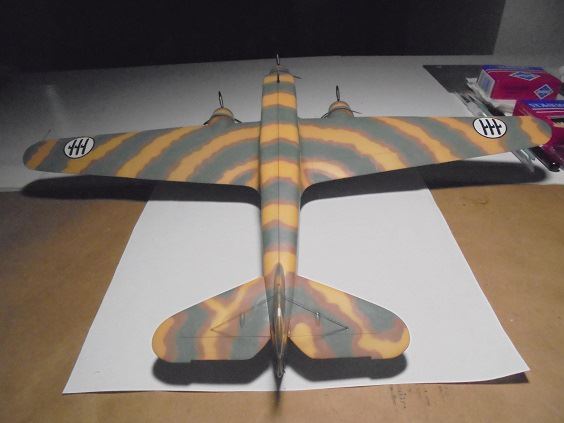
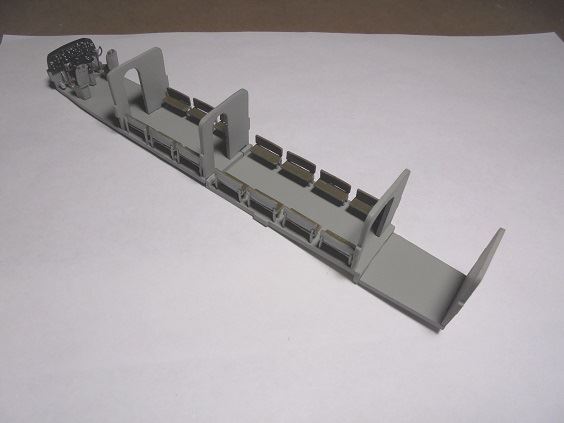
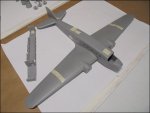
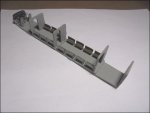
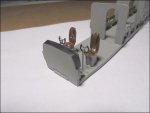
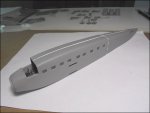
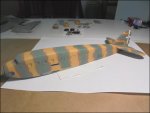
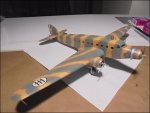
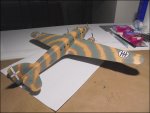
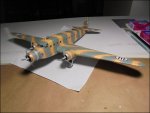
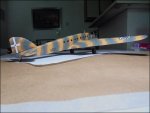
The 2017/18-vintage Balaton Modell BM7264/7265 SM.75 Italian Civil Airliner/Hungarian, RAI Military Transport resins with clear vacuform and sheet plastic parts along with the early 2000s-vintage BroPlan MS-78 SM.75 GA RT with vacuform and injected plastic parts are the only complete model kits of the Marsupiale in any scale, Italian Kits Wings alternatively offering the IKW-7212 SM.75 multi-media parts conversion of the Italeri SM.82 injected plastic kit. Wholly unwilling to build the BroPlan nor chance the Italian Kits Wings S.82 conversion chose the BM7265 kit intending to build the Hungarian parachute troop transport version but couldn't because I wasn't able to buy all the enamel paint colors necessary, settling instead on building an unarmed RAI transport version of a converted Italian civil airliner. Well molded with adequate surface detailing the Balaton Modell SM.75 kit lacked good assembly instructions particularly with respect to interior fuselage bulkhead placements (near none) relying instead on exploded parts diagrams. Presumably to save on packaging size all fuselage and mainwing parts were molded in sections complicating the build, i.e. improperly aligned section casting side joins having to be "fudged-fitted" via filing, sanding and putty filling particularly those for the fuselage and port mainwing. No effort was spared detailing the Alfa Romeo 126 engines by the mold makers though several badly molded kit parts had to be replaced with fabricated styrene sheet plastic ones, more passenger cabin kit parts were included than expected though the mold makers came up way short on crew cabin ones particularly the radio navigator's (none). Perplexingly the Balaton Modell SM.75 kit lacked Pitot tubes, D/F loop, radio mast, mainwing navigation lights, engine exhausts et. al. parts for the RAI military transport variant, fabricated them from scratch or from spare kit parts. A printed clear plastic sheet to cut out fuselage windows from was included though too thin to be of any use, fabricated windows from clear styrene sheet plastic instead. The Balaton Modell SM.75 kit build generally went well though fuselage-tailplane and mainwing root fits were very poor some because of poorly engineered and/or warped parts castings, upper starboard tailplane and both underside mainwing ones in particular latters not caught till after they’d been glued together! Fill puttying, sanding and overpainting covered up the upper starboard fuselage-tailplane root gap; nothing could be done about the underneath fuselage-mainwings root gaps, not without damaging paint finishes nor risk destroying the model though over-handling! Mounting the Alfa Romeo engines on fuselage and mainwings required fabricating cylindrical extenders from scrap plastic sprues, not easy work properly aligning them well as their cowlings! The well-detailed Balaton Modell SM.75 kit landing gear parts could take the massive weight of the model though mounting the tailwheel yoke required fabricating a glued on circular styrene plastic part extension to fit inside the fuselage. Kit instructions were vague on assembling mainwing landing gear units, made "educated guesses" in doing so after consulting Internet photos of SM.75s, mainwing landing gear covers could not be glued on next to the wheel wells, fabricated cut and painted over styrene plastic tabs to "hang"” them over the wheel wells. Painting the Balaton Modell SM.75 model was straightforward assorted Humbrol, Testors and Model Master enamels well as "special mixes" of them being employed, the rare CMPR/IPMS-Italy Giallo Mimetico 3, Marrone Mimetico 53192, Verde Mimetico 2 Schema E6 "lizard" chosen given its documented use on camouflaging SM.75 exteriors. Spray painting on the lizard bands was speculative though based on photos of similar "herringbone" pattern-painted Savoia-Marchetti S.79s and SM.82s. Kit water decals, Tauro Models well as spare House of Savoy crests latters over spray painted on Distintivo di Guerra rudder crosses were applied generically representing a civil converted SM.75 RAI military transport in early-WWII 605° Squadriglia Transporto livery the entire model over sprayed afterwards with Testors Semi-Gloss Lacquer to improve visual aesthetics. |
|
Aircraft: SIAI Marchetti S.M. 75 Manufacturer: SIAI Marchetti Type: Civil Transport Year: 1937 Engine: Three Alfa Romeo A.R.126 RC 34, radial with 9 cylinders, 750 hp each Wingspan: 97 ft 5 in (29.68 m) Length: 70 ft 10 in (21.60 m) Height: 16 ft 9 in (5.1 0 m) Weight: 31,967 lb (14,500 kg) (Loaded) Cruising Speed: 202 mph (325 km/h) Ceiling: 23,000 ft (7,000 m) Range: 1,420 miles (2,280 km) Crew: 4 Passengers: 18-24 |
|












|
|
|
|
|
|
|
|


|


|
|
|
|
|
|
December, 2020 STORMO! © 2020 |