|
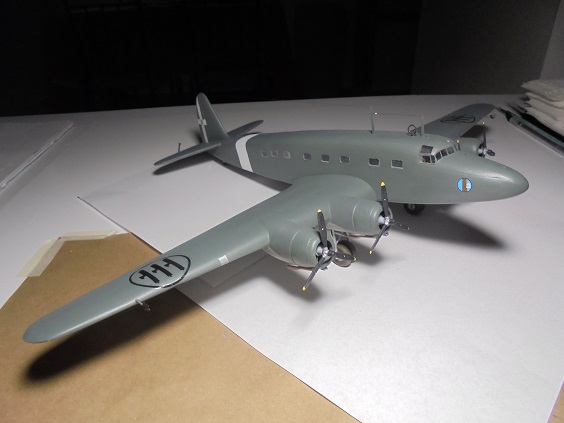
BroPlan 1/72 Savoia Marchetti SM.95 Transport by Richard Mendes |
|

Click the STORMO! Eagle to return to the Gallery 
|
|
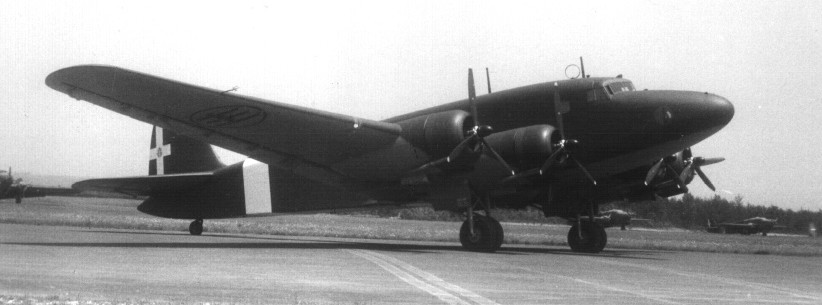
The S.M.95 was the last commercial transport aeroplane built by SIAI Marchetti to go into regular service, and it was also the second type of four-engined aeroplane produced by the Sesto Calende works, after the S.M.74 in 1934. In all fifteen aircraft were completed, and these were used up until 1951 by Alitalia and LATI, and up to 1952 (three aircraft) by the Egyptian company SAIDE. The origins of the S.M.95 date back to the early stages of the war, when SIAI Marchetti started the preliminary studies for the production of a large long-range transport model, capable of being used as both a military and civil aircraft, designed, in the latter case, for use across the South Atlantic. The design and development stage continued until the spring of 1943 when the first of the four aircraft ordered by the Regia Aeronautica as strategic transport aircraft made its maiden flight, in May. However the war slowed down the production programme and only two aircraft were completed during that year. These were requisitioned by the Germans and moved to Germany, where they were assigned to two units of the Luftwaffe, which was already using the transport models of the four-engined Piaggio P.108. The other two S.M.95s ordered did not appear until the latter half of 1945: one was requisitioned by the Royal Air Force, and the other managed to remain in Italy and pass its military tests and trials. It was officially shown at Guidonia in April 1946, and immediately included in 240 Squadron of Transport Command (Stormo Trasporto). This aircraft was used as a military mail transporter and inaugurated the flight from Milan to Rome on April 10, 1946. In the meantime SIAI Marchetti had prepared a production line for six more aircraft, with structural modifications and a shortened nose, designed for the Air Force (Aeronautica Militare). The first of these took to the air in December 1946. It was in fact with these aircraft that the civil career of the S.M.95 began, after the cancellation of the order by the military.
The newly established Alitalia was the first to acquire these large four-engined aeroplanes which, in the now permanent civil version, took on the designation S.M.95C. The first four of the six aircraft which were to form the most prestigious fleet belonging to the Italian company went into service during 1947. On August 6, the S.M.95C christened Marco Polo and registered I-DALM inaugurated the first international service run by Alitalia, from Rome to Oslo. on April 3, 1948 the first flight to Great Britain, from Rome to Northolt, was started, and four days later the Rome-Milan-London-Manchester service was also inaugurated. The SIAI Marchetti four-engined aeroplanes showed themselves to be quite robust and had good all-round features. In particular, their capacity ranged from 30 to 38 passengers. One particular technical characteristic of these aircraft was the interchangeability of the engines: there was a transition from the original Alfa Romeo A.R.131 engine with 1,140 hp at take-off, to the English Bristol Pegasus 990 hp radial engine, and then to the American Pratt & Whitney R-1830-SIC3-G 1,215 hp engine. The second Italian airline inaugurated a weekly flight to Caracas in July 1949, using three S.M.95C models christened Sant'Antonio, San Francesco and San Cristoforo. This was a fairly testing flight, the last leg of more than 2,450 miles (4,000 km) being made non-stop; these aircraft nevertheless showed themselves to be well up to the task. |
|
|
|
|
|
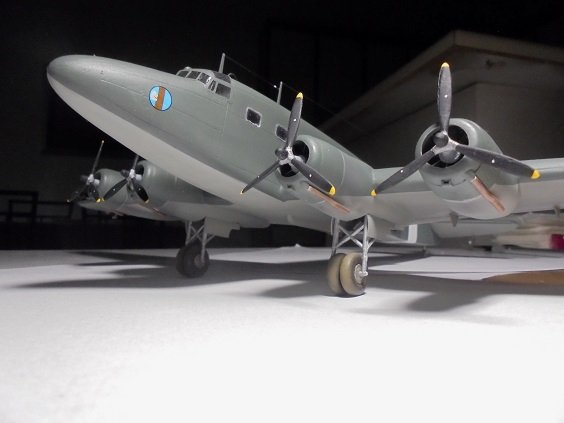
|
|
|
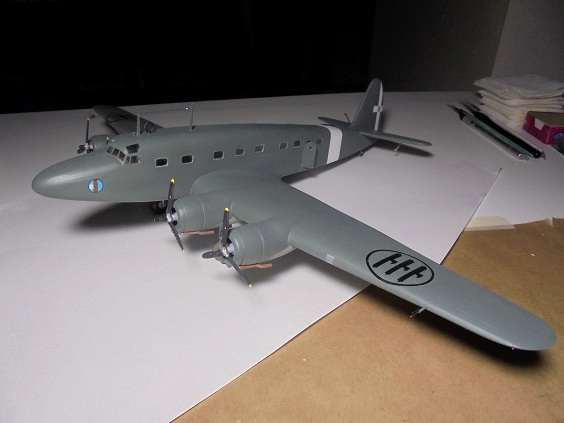
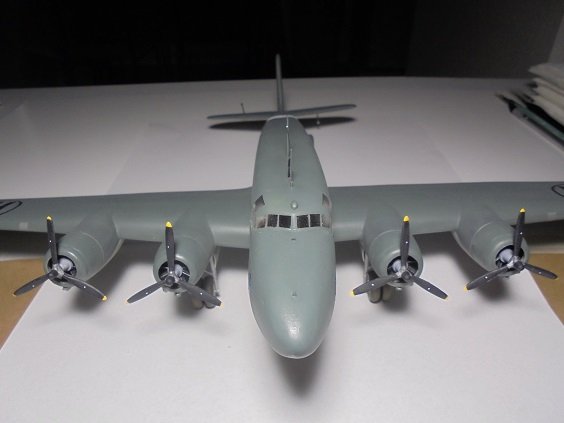
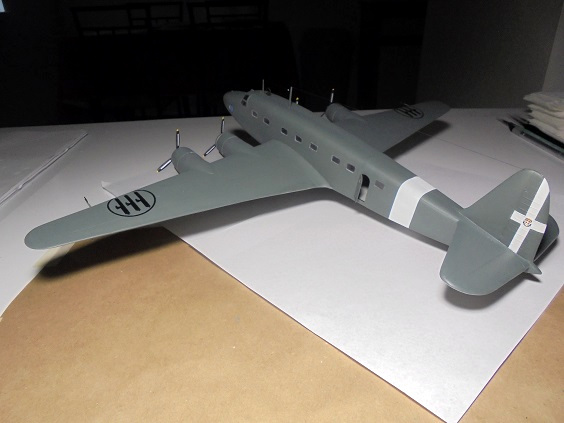
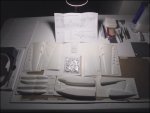
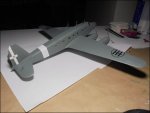
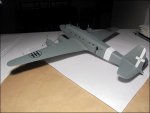
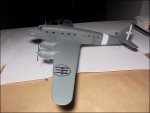
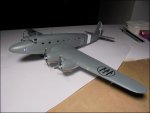
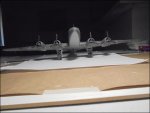
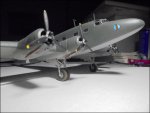
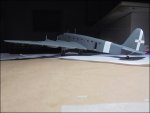
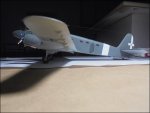
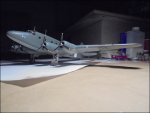
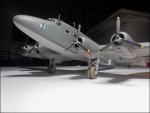
The 2016-vintage 1/72 scale BroPlan MS-193 Savoia-Marchetti SM.95 and MS-192 SM.95C (Civile) vacuform styrene plastic kits with injected-plastic detail parts are the only ones available in any scale, largest in dimensional size of any Italian aircraft model in that scale including the Special Hobby Piaggio P.108 series and Cunarmodel P.108T Conversion kits. Near impossible to find on March 19. 2018 miraculously was able to buy one MS-193 SM.95 post-WWII military version kit off the Internet “at a good price” intending to construct it in WW-II livery, vacuform molded in several sections, potentially the most challenging Italian aircraft model build attempted to date.
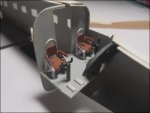
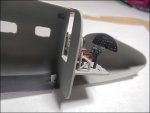
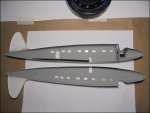
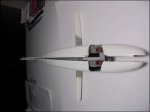
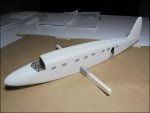
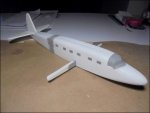
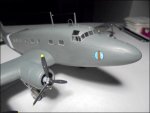
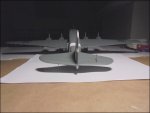
Fuselage shell construction entailed joining two vacuform sections per halve and properly aligning them proved difficult; vacuformed plastic surrounding aft fuselage join areas uneven and paper-thin, cut sheet plastic shimming and puttying re-enforcements necessary. The crudely vacuformed and injected-plastic cockpit parts required good deal of trimming; kit lacked rudder control pedals fabricated set from cut sheet plastic; kit lacked fuselage passenger cabin floor, fabricated basic one from sheet plastic. Individually cut clear plastic cabin windows were glued in place later discovering doing so wasn’t necessary, i.e. easier and better appearing gluing them inside the fuselage halves – oh well! Joining the halves entailed gluing on cut sheet plastic alignment tabs along inside port halve edges, systematically gluing halves together, slow difficult work made frustrating later discovering entire aft fuselage skewed starboard due to poorly scaled vacuform molding!
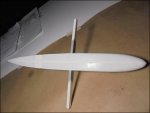
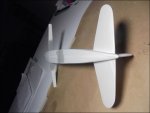
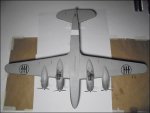
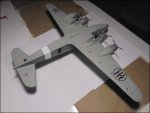
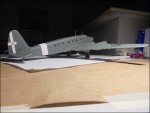
Mainwing, tailplane and engine nacelle construction entailed joining one-piece vacuform halves with cut sheet plastic alignment tabs glued along inside edges, joining work easier than anticipated though good deal of trimming and seam puttying was necessary. Fuselage-mainwing and tailplane alignments and joins came off good except for aft fuselage skewing starboard; crudely injected-plastic mainwing landing gear parts required good deal of trimming dual wheel sets in particular, i.e. one wheel in each set smaller in width and diameter, sets arranged with them facing inwards towards fuselage for better aesthetics. Model painting was straightforward; fuselage interiors spray painted Testors Model Master 1726 Light Sea Gray enamel approximating color Savoia-Marchetti employed in painting aircraft, exteriors representing one of two aircraft in WWII RAI livery Humbrol 91 Matt Black Green (Verde Oliva Scuro 2) and Testors 1726 Light Sea Gray (Giorgio Azzurro Chiaro 1) each lightened 36% with Testors Flat White enamels, cockpit interiors, landing gear units, engines, propellers etc. painted assorted Humbrol and Testors enamels and “special mix” colors the entire model over sprayed Testors Clear Semi-Gloss lacquer.
No water decal sets were available for SM.95s in WWII RAI and Luftwaffe service various spare decals taken from stocks well as Classic Airframes 48-462 Savoia-Marchetti S.79 outline tri-fasci decals they large enough replicating those see on wartime aircraft were applied the entire model subsequently spray painted Testors Clear Semi-Gloss Lacquer for better aesthetics. |
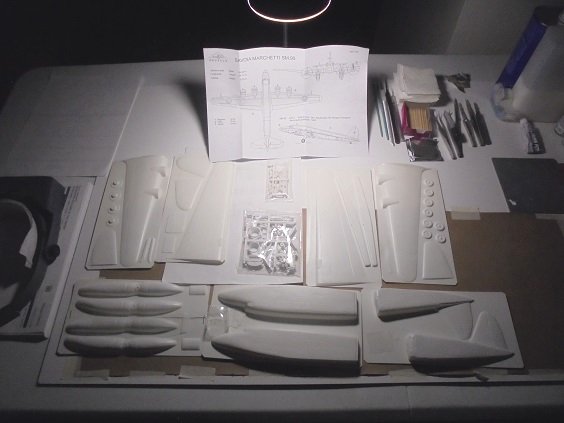
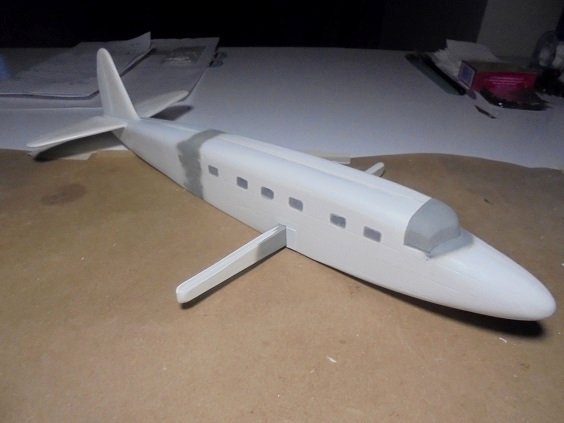
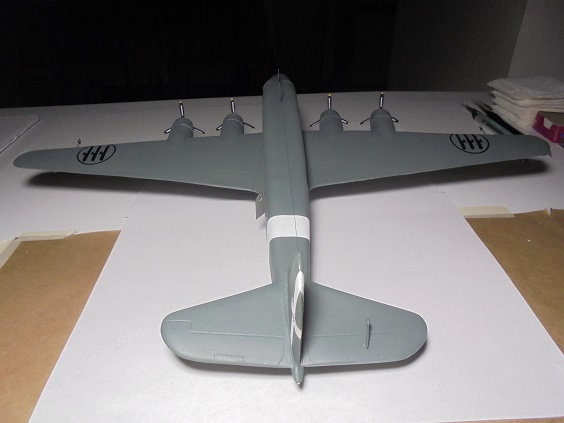
Aircraft: SIAI-Marchetti SM.95C Manufacturer: SIAI-Marchetti Type: Civil Transport Year: 1947 Engine: Four Bristol Pegasus 48, radial with 9 cylinders, air-cooled, 990 hp each Wingspan: 112 ft 5 in (34.28 m) Length: 81 ft 3 in (24.77 m) Height: 18 ft 8 in (5.70 m) Weight: 48,500 Ib (22,000 kg) (Loaded) Maximum Speed: 196 mph at 10,000 ft (315 km/h at 3,000 m) Ceiling: 22,300 ft (6,800 m) Range: 1,250 miles (2,000 km) Crew: 5 Passengers:38 |
|





|
|
|

|




|


|
|
|
|
|
|
November, 2021 STORMO! © 2021 |